Biocentrism: how biology explains the universe
For many years, scientists have been trying to develop a universal “theory of everything.” Physicists predict that it will be open within 20 years. However, the key to unlocking the deepest mysteries of the universe may not be physics — perhaps the answers are stored in the plane of biology. Hence, the theory of biocentrism arises, which forces a person to completely reconsider his most important views about time, space, space and the origin of the world. According to the biocentrists, it is life, not physical laws, that creates the universe.
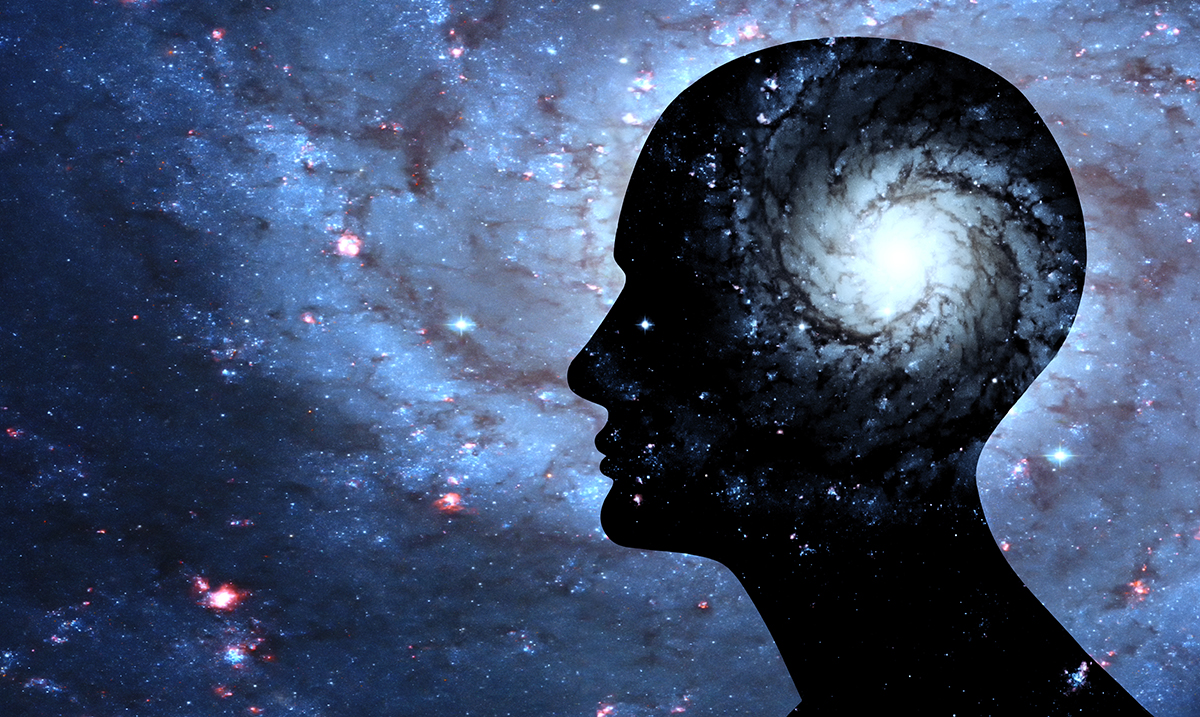
A new perspective on the world and everything around it
The world around us is far from what it is described in school textbooks. It’s incredibly complex. An approximate knowledge of how the universe is organized began to take shape since the Renaissance and since that time it has proved very useful, as it has allowed a person to make many scientific discoveries. Classical physics has explained many processes in the universe, and since the 1930s, experimental findings from quantum physics have been the subject of heated debate. However, none of this yet provides clear answers to the global questions of the universe. The existing model of the universe is imperfect, moreover, it is crumbling before our eyes.: The more information scientists collect, the more they have to adjust existing theories. There are many problems that physical science simply cannot explain. And if we rethink the understanding of concepts such as the Big Bang, the categories of space and time, death, and other phenomena using a biocentric approach, then perhaps we can create a unified “theory of everything.”
The biocentric Universe, or the theory of biocentrism (from the Greek βοος — “life” and κέντρον — “center”), was proposed in 2007 by American scientist Robert Lanza, one of the leading experts in the field of stem cells and regenerative medicine. Biocentrism is based on quantum theories and allows us to look at the world and a person’s location in it from a different angle. In his view, life is not a by—product of physical processes, but on the contrary, it creates the universe.
At one time, everyone taught that the world is a collection of atoms and molecules, and that billions of years ago, some of them came together to create the first forms of life on the planet. Biocentrists believe that all these are unfounded assumptions that are not supported by any empirical data. This is too simple a beginning and development of the universe, while today it seems too complex and even “finely tuned” in order for life to exist in it. And no theories will work, followers of biocentrism are sure, until the two most important components of the world are taken into account: life and consciousness.
Don’t miss the most important science and health updates!
Subscribe to our newsletter and get the most important news straight to your inbox
Reality and the conscious brain
So, if life is primary, then a person creates a world around himself. But not in the sense that he manages natural resources as he pleases, but by perceiving the world through consciousness.
The problem is that modern physics does not explain at all how the sum of molecules is formed in the human brain, on the basis of which consciousness is formed. On what material basis are such phenomena as the beauty of a woman, love, affection, and the taste of a favorite delicacy formed?
Reality is a process that requires the participation of consciousness. To see a rainbow, for example, you need a correct geometric position, raindrops, eyes, and a brain. But more importantly, a human presence is needed, a conscious observer. While there is no one, there is no rainbow. Otherwise, all the “puzzles” of reality exist only in a probabilistic state.
One can believe that the universe would exist like this if there were not a single living organism in it. However, as Robert Lanza says, this idea could only arise in a thinking head. So, the scientist gives an example, in the morning a person enters the kitchen and expects to see familiar objects in their places there. But what are these items: a stove, a refrigerator, and a kitchen set? — Just an innumerable collection of eternally moving particles, matter and energy. From the point of view of quantum theory, none of these subatomic particles are in a specific place at any given time. All of them exist only in the range of implicit probabilities. And in the presence of an observer, each wave function is compressed to the point where it is currently located, and becomes part of physical reality. Up to this point, reality does not exist, but there are only a large number of possibilities. That is, we can assume that the kitchen remained in place and did not change, but the reality turned out to be completely different.
Robert Lanza argues that the world around us does not exist “by itself” and it does not look the way it appears. And if there is still a tree outside the window, and the Moon is shining in the sky, then this is only a subjective perception, no matter how realistic these objects look.
So, the idea of time and space, which are not tangible objects, is subjective, a person just thinks that they really are. Everything that a person is observing right now — the entire vortex of information — passes through consciousness, and space and time are just tools for measuring abstract and concrete things. The entire world around us is driven only by the mind, and the human mind uses all its resources to combine these two categories into one conscious flow.
The Seven Principles of Biocentrism
Robert Lanza identifies seven key principles of his theory:
- Perception of reality is a process in which human consciousness is directly involved.
- A person’s external and internal feelings are inextricably linked and cannot be separated.
- The behavior of elementary particles depends on the presence of a conscious observer. In its absence, all the elements of reality exist only in an indefinite state and represent probability waves.
- Without the participation of consciousness, “matter” remains in an indefinite probabilistic state.
- The organization of the universe is explained only from the standpoint of biocentrism. And if it is designed for life to exist in it, then it is completely logical to assume that life creates the universe, and not vice versa.
- Time as such does not exist outside of the sensory perception of humans and animals. It is a process of comprehending the changes that are constantly taking place in the surrounding universe.
- Space, like time, is also a form of perception, not an independent component of reality. It is a subjective relative construct created by an observer.
The Future of Biocentrism
This theory is increasingly becoming part of modern research disciplines. Her followers believe that she can become a kind of “springboard” towards understanding some hitherto incomprehensible aspects of physical and biological science.
To date, more and more new experiments are being conducted to study the brain, progress from which is expected in the short term. In addition, the development of schemes for artificial intelligence may reveal even earlier the dependence of reality on the presence of an observer. Experiments with superposition at the macro scale to track quantum effects can be a real revelation for researchers.
Currently, physical research into human consciousness is proceeding rather slowly and often does not lead to successful results. But biocentrists are sure that if the role of a conscious observer is taken into account in creating the universal equation of the universe, then this can give an interesting fusion of the living and the inanimate, which will explain a lot. And perhaps in the future, knowing how consciousness works, it will be possible to influence the entire course of life, and hence biological processes such as old age and death.
Literature
Lanza R. “Biocentrism. How life creates the universe.”
Frequently asked questions about the theory / Exploring the theory of the biocentric universe. biocentricity.net
Photo: awarenessact.com
Published
July, 2024
Duration of reading
About 3-4 minutes
Category
The Quantum World
Share

