This approach provides a comprehensive effect on the body by working with both the mind and physiology simultaneously.
The methods and exercises are designed to be used regularly, in a convenient format, and without overloading.
Product
Courses
Subscription
Psychotechnics is a practical psychology that provides specific solutions for managing stress, emotions, and behavior. It is not an abstract theory, but rather a proven method of working with attention, thinking, and inner state based on scientific research.
Modern psychotechnical approaches, including meditation, visualization, and self-hypnosis, are suitable for everyday use. With their help, you can quickly reduce stress, improve concentration, and achieve sustainable mental well-being.
We have created an online practice system for self-guided work with your state, to help you regain calmness and restore your energy.
The practices are compiled into ready-made programs:
VSH25 single subscription access

In the VSH25 system, psychotechnics are practical methods of state management that help you work with intense stress, emotions, and attention in your daily life.
These are not separate exercises, but rather part of a systematic approach aimed at restoring resources, reducing anxiety, and increasing resilience.
Psychotechniques produce an effect through regular application, forming a self-regulation skill. Over time, you begin to better understand your reactions and learn to manage them.
These techniques are used in psychology, sports, and education, from stress management to improving concentration and productivity.
Psychotechnics is suitable if you:
Psychotechniques in the system do not exist separately!
They are built into sequential programs, where each practice enhances the effect of the previous one.
The VSH25 system combines several types of impact:
psychotechnics – working with thinking and consciousness;
body practices – working through the body and physiology;
mode and recovery – building sustainable habits.
This approach provides a comprehensive effect on the body by working with both the mind and physiology simultaneously.
The methods and exercises are designed to be used regularly, in a convenient format, and without overloading.
By purchasing a subscription, you gain access to all courses at once
Each course is designed to solve a specific problem:
Meditation is one of the basic psychotechniques aimed at managing attention and state through concentration and awareness.
It is a practical method that helps to reduce stress levels, decrease anxiety, and improve the overall mental state.
You can learn these psychotechniques as part of the VSH25 program, which includes ready-made exercises and a consistent practice system.

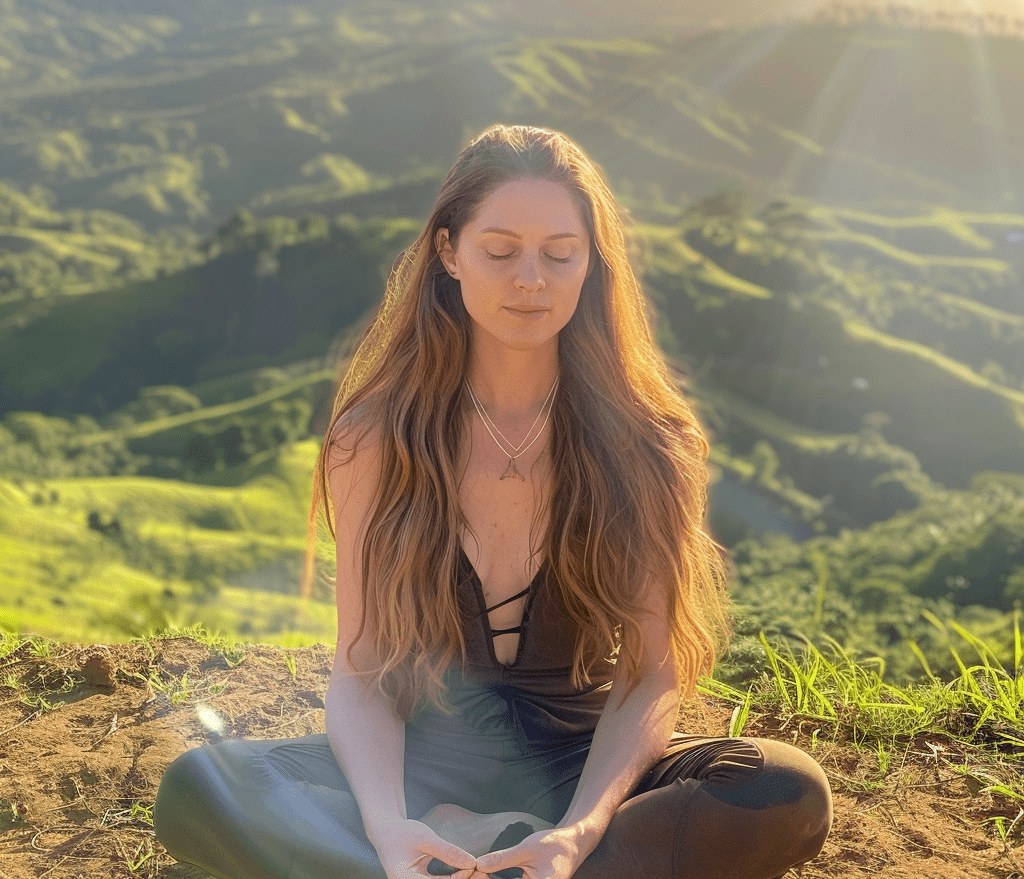

The term “meditation” combines the disciplines of attention training and mindfulness. Originally derived from Latin. meditatio (mental contemplation), in modern psychology, is the practice of intentionally focusing on the present moment without evaluation.
The main rule is to take a comfortable position and pay more attention to breathing (relaxation is achieved naturally).
The MBSR (Mindfulness-based Stress Reduction) manual, created by psychologist John Kabat-Zinn back in 1979, gave a powerful impetus to the spread of medical practices.
The main reason is the desire to reduce the discomfort of constant anxiety, fatigue, and severe stress. People want to remain calm in difficult circumstances and improve their memory and concentration.
Meditation helps to become aware of automatic reactions and pause before taking action, becoming a useful tool for daily self-regulation.
This is supported by data: according to the WIN World Survey 2025 (including 40 countries), 35% of the global population reported incorporating meditation into their lives.
Scientifically proven effects include a decrease in the activity of the amygdala (the center of emotional response) and an increase in the density of gray matter in the prefrontal cortex, which is responsible for control and decision-making.
Meditation strengthens connections between different parts of the nervous system and provides feedback for self-adjustment.
The principle of neuroplasticity and the interaction of autonomic systems is at the core. Focusing on breathing activates the parasympathetic system, causing the body to relax and the heart rate to even out. At the same time, the activity of the “default mode network” (DMN), which leads to the search for negative thoughts, decreases. This is not just about relaxation, but about training mindfulness skills.
Although the advertising of quick methods often distorts the mechanism, science clearly identifies the main reason: regular practice rearranges the connections between neurons.
Sources:

Visualization is a psychotechnique of working with mental images and emotions, which allows you to influence your inner state and behavior.
With its help, you can model the desired reactions, increase motivation, and work with goals, habits, and sensations.

Visualization is a technique of mentally reproducing desired actions or states. It is necessary to prepare for real events, reduce anxiety and improve results.
In management and sports, this method is used to develop strategies: the responsibility for the quality of the image lies with the person himself.
The main goals are to increase motivation, evaluate possible mistakes in advance and find a profitable solution.
A professional athlete (Michael Phelps) proposed the technique of “mental training” as a mandatory part of training, which confirms its practical value.
Neuroimaging expert Stephen Kosslyn (Harvard) proved in 2005: mental movement activates the same areas of the cortex as real. This leads to improved motor skills and accelerated learning (Pascal-Leon study, in the Journal of Neurophysiology, 1995).
German psychologist Hugo Münsterberg (early 20th century) was one of the first to apply visualization for professional selection in the army and in production. During the World War, this gave a powerful impetus to the development of the applied branch of psychodiagnostics.
Today, it has been proven that mental practice leads to increased skill without physical effort.
The work of visualization is based on mirror neurons, brain cells that are activated both when an action is performed and when it is imagined. This creates a feedback loop between intention and movement.
From sports to stroke rehabilitation, the quality of imagery matters: the more detailed the content (including sensations and sounds), the stronger the effect.
Psychologist Alan Richardson (1967) found that students who mentally threw a ball improved their performance to a similar extent as those who practiced physically.
Visualization involves the active use of one’s own neural networks, making it accessible to anyone without specialized equipment.
Sources:
Self-hypnosis is a psychotechnique based on self-suggestion and working with the subconscious.
The method allows you to change your internal attitudes, reactions, and behavioral patterns, reinforcing new states and habits at a deeper level.


Self-hypnosis is a purposeful self-suggestion, introducing yourself into an altered state of consciousness to work out specific tasks.
The term comes from the Greek. hypnos (sleep), but the initial state is wakefulness with a narrowed focus of attention.
The main rule is to learn to relax and control breathing beforehand to effectively manage the process.
Unlike hypnosis with a therapist, here the whole responsibility for the result lies with the person himself.
Hypnosis (hetero-hypnosis) is induced by a professional hypnotherapist, while the client’s role is passive.
Self-hypnosis is an active technique where the individual induces the state and formulates suggestions.
The main difference is that self-hypnosis does not involve direct commands from an external source, instead relying on anchors and personal imagery. In the 1920s, the German psychiatrist Stern proposed a distinction based on the level of control.
Psychologist Milton Erickson called self-hypnosis “a tool for self-growth,” where the key difference lies in the source of internal power: external (the therapist) or internal (you).
Self-hypnosis is effective for relieving severe stress, managing chronic pain, correcting insomnia, and working with bad habits. This technique allows you to quickly enter a state of deep relaxation at home, without having to make an appointment with a specialist.
Research data (Psychology of Consciousness, 2019) confirms that self-hypnosis reduces anxiety as effectively as cognitive-behavioral therapy, which explains its widespread use in dentistry, sports, and prenatal preparation. The main goal is to become aware of your resources and maintain calmness in a crisis situation.
Sources:
Self-hypnosis, 2019 – Eason: Psychol Conscious 2019;6:262.
Psychotechniques give a sustainable result precisely when they become part of a system, and not a one-time exercise.
An important emphasis of the VSH25 approach is structured: we have collected proven practices into consistent lessons so that you can master the skills well without unnecessary searches.
age determination tests;
a map of youth with biomarkers;
ready-made programs of psychotechnical practices: the material is adapted to different problems and tasks;
exercises for working with attention, emotions, and the subconscious;
individual protocol for improving condition and health;
track your progress using achievements and the youth timer.
You can:
choose the right direction to study;
study online at a convenient time;
gradually enhance the effect without overloading.
All programs are available in one place, without the need to click on dozens of links, read scattered articles, or subscribe to different sources.
If you want to get a clear result instead of just trying, then go for a full-fledged program.
Start subscription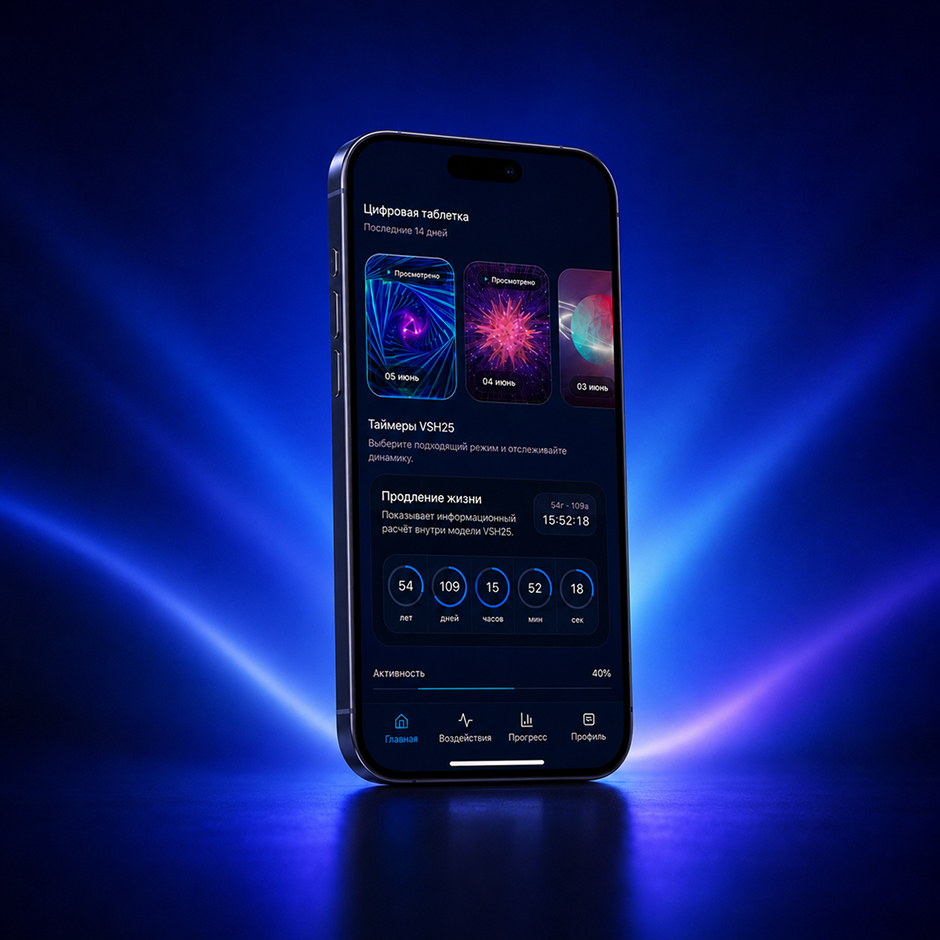
Replenish your body’s resources and stay young anytime, anywhere with the mobile version of VSH25.


Just scan the QR code with your smartphone or click the link.