What to know about biomarkers
The term ‘biomarker’ is not particularly clear-cut. In general, all tests that quantitatively measure the levels of biological molecules and from this level allow to judge the state of the organism are called biomarker tests.
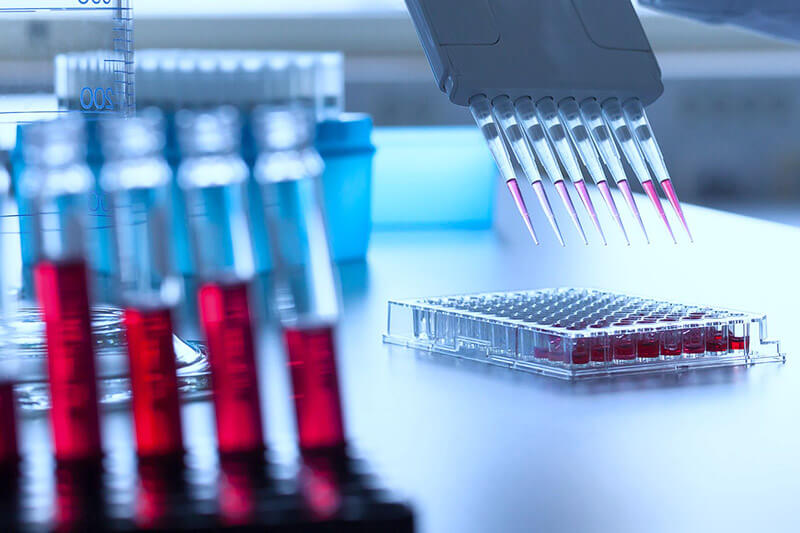
Most clinicians define biomarkers as substances, usually proteins or parts of proteins, that are produced in the body only in the presence of a disease, such as a tumour, and that can be analytically detected in serum, urine or other body fluids and tissues. Such biomarkers tell us with a certain sensitivity and specificity about the presence or absence of some disease or other discrete condition. In the case of aging, a biomarker is understood as something quite different, namely, a certain substance, trait or group of substances (traits) that change their level (expression) in a combined manner in parallel with the development of the main pathophysiological components of the aging process. These biomarkers are reflections of a longitudinal process rather than a discrete state, so it is much more difficult to apply the concepts of sensitivity and specificity to them. The degree of adequacy of the description of the aging process using these biomarkers is assessed by constructing complex curves separately for the aging process and separately for changes in the level (or expression) of a biomarker, followed by mathematical comparison of the degree of coincidence of these curves at each site. As can be seen from the description, selecting a biomarker that describes aging well is not an easy task!
Nevertheless, discrete state biomarkers and process biomarkers have one thing in common – the desirability of the biomarker measurement method being as minimally invasive as possible. Even in the case of a tumour biomarker, a regular biopsy procedure is neither pleasant nor useful. In the case of ageing biomarkers, the requirements for low invasiveness are even higher – a healthy person is unlikely to be recommended for regular referral for biopsies of, for example, the brain or even the skin.
In order to understand the ‘sea’ of already described biomarkers, it is necessary to divide biomarkers into separate groups with some common characteristics. For example, there are antecedent biomarkers (determining the risk of disease development), screening biomarkers (used to detect subclinical stages of disease during general examination), diagnostic biomarkers (confirming the presence of disease), so-called state biomarkers characterising the relative severity of disease, and prognostic biomarkers (reflecting the dynamics of the course of the disease, including those that allow predicting the effectiveness of treatment). This classification is based on the clinical purpose of the biomarkers. For example, some biomarkers of ageing are biomarkers of the state, indicating how far this process has gone, and some are prognostic biomarkers, with some probability estimating the degree of its reversibility.
There are other ways of classifying biomarkers, namely by the degree to which they are related to the underlying pathophysiological or therapeutic process. So-called type 0 biomarkers reflect the natural evolution of the disease and are directly related to certain clinical characteristics. Examples of type 0 biomarkers are urine albumin concentration for kidney disease, fasting glucose levels for diabetes, and markers of endothelial dysfunction for cardiovascular disease. In the case of aging, the selection of ‘direct’ biomarkers of this process is hampered by the frequent presence of comorbidities that also influence the level of potential biomarkers of this type.
Type 1 biomarkers reflect the effect of a particular therapeutic intervention, such as the administration of a geroprotector. Type 2 biomarkers are surrogate (surrogate endpoint biomarkers) – they reflect the probability of success of the chosen therapy based on extrapolation of evidence from studies of the relationship between a given level of this marker and the severity (and sometimes the probability of development) of a particular disease. Such biomarkers are used when ‘direct’ organ assessment is impossible, expensive or highly invasive. An example of surrogate biomarkers is the activity of aspartate aminotransferase (AsAT) and alanine aminotransferase (ALAT) in liver disease. In this case, the doctor ‘monitors’ the serum levels of these enzymes rather than subjecting the patient to an annual liver biopsy. In much the same way, an indirect assessment of brain ageing can also be carried out – instead of regular biopsies, the level of certain molecules in patients’ blood can be measured.
According to Markets and Markets industry research, the global biomarker market is estimated to be worth $13.6bn as of 2013. It is expected to grow to $30.2bn by 2019 at a compound annual growth rate of 14.6 per cent. Many companies have already turned biomarker tests using various technologies into a source of profit. Engineers are constantly improving the sensitivity of equipment to measure levels of individual biomarkers. Scientists and clinicians are working to identify and validate new biomarker molecules, for many of which the link to pathogenesis is not obvious.
As a result, the number of published reports on the discovery of new biomarkers has grown exponentially over the past 15 years, which, in part, has led to the fact that many physicians have ‘drowned’ in the flow of information without getting practical benefit from the accumulated post-genomic data.
Source: A. Fomenko, A. Baranova, A. Mitnitsky, S. Zhikrivetskaya, A. Moskalev. ‘Biomarkers of human aging’
Photo: www.mindrayco.ru
Don’t miss the most important science and health updates!
Subscribe to our newsletter and get the most important news straight to your inbox
Published
June, 2024
Продолжительность чтения
About 2-3 minutes
Category
Aging and youth
Share

