The Miracle cell
Olga Belokoneva, Candidate of Chemical Sciences, spoke about stem cells and their importance in the treatment of diseases.
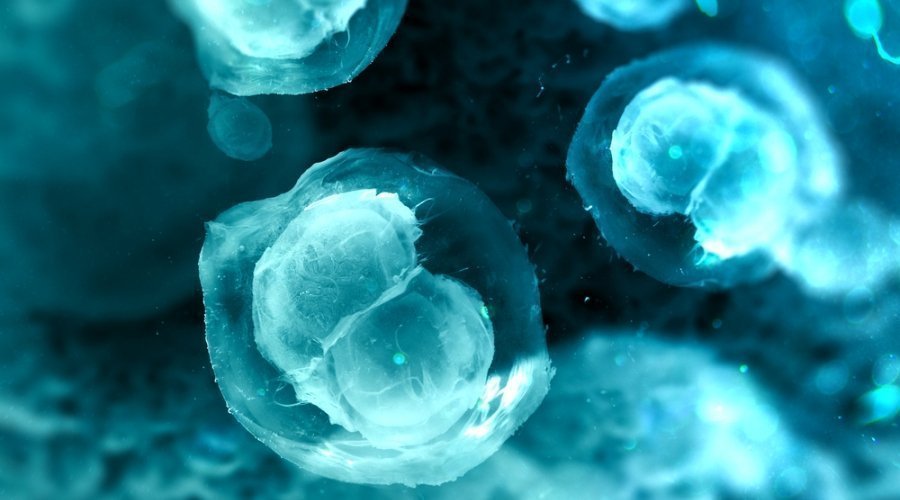
All living nature, both animals and plants, are made up of cells. Humans are no exception. His muscles are made up of muscle cells, his skin is made up of skin cells, his liver is made up of liver cells, etc. Each cell contains a genetic code — complete information about the entire body. The shape of the ear, the color of the iris, and musical abilities are “recorded” in the genes. But just as you can’t grow a live fish out of a fishtail, you can’t recreate a human out of a piece of human tissue. Although plants have this kind of phenomenon. For example, a whole plant grows from a piece of ginseng root. But this is the exception rather than the rule.
Animal cells, despite carrying the same genes, perform different functions: some form the skeleton, others are responsible for immunity, and others conduct nerve impulses. And it is unlikely that a liver cell can be grown from a nerve cell. The question arises: are there, in principle, such cells from which it would be possible to recreate any organ of a human or animal? Scientists have been puzzling over this issue for decades.
In 1981, American scientist Evans was lucky enough to isolate from the mouse embryo a precursor cell of the entire mouse organism, the so—called stem cell. Not so long ago, in 1998, American researchers Thompson and Becker obtained human stem cells for the first time. Since that moment, the science of the stem cell has been developing at an unprecedented pace.
Don’t miss the most important science and health updates!
Subscribe to our newsletter and get the most important news straight to your inbox
What is a stem cell?
The term stem cell comes from the English word “stem”, which means the stem of a tree. Its meaning is that other types of cells branch off from the stem cell, like from the trunk of a tree. Which of the “branches” will grow depends on the type of chemical signal received by the stem cell.
The stem cell is the precursor of all cells in the body. It is very “young”, immature, and capable of turning into any other cell, such as a liver, skin, or muscle cell.
A special “signal” triggers a cascade of amazing transformations. The role of such a signal is usually played by molecules of substances that scientists call growth factors.
Where do stem cells come from?
Most of the “young” stem cells are found in the human embryo. After birth, the number of stem cells in the body begins to decrease. The older a person is, the fewer stem cells they have. But they are also present in the adult body, for example, in the bone marrow. There are stem cells there that can transform into any blood cell.
Why is it so important to study stem cells?
Stem cells become immortal after they are isolated from the body. They grow endlessly, without changing at all. Therefore, they can be grown in the laboratory in unlimited quantities. But it is only necessary to add a special substance to the nutrient medium, as a cascade of transformations of stem cells into any other cells of the body begins. Whatever “chemical signal” the cell receives, transformations will begin in this direction. This property gives scientists the opportunity to use stem cells to grow human organs and tissues. There is a chance to grow and transplant a new liver or a piece of pancreas to replace diseased or destroyed organs. Or cultivate nerve cells in a test tube to replace the destroyed neurons of the brain or spinal cord. Then the patient, who has been confined to a wheelchair for years, will get back on his feet, the burn patient will heal wounds and scars, and the diabetic will live a full life of a healthy person. The list of “miracles” can be continued.
Miracle cells delight scientists and doctors. Hundreds of laboratories around the world and many medical institutions are involved in the research. New discoveries and breakthroughs in the treatment of diseases are just around the corner.
Published
July, 2024
Duration of reading
About 1-2 minutes
Category
Body
Share

