Dopamine, noradrenaline, serotonin
Neurotransmitters are a feast that is always with you. We hear all the time that they are the ones that give us feelings of joy and pleasure, but we know little about how they work. In the first part of a small educational course, Atlas talks about three of the most famous neurotransmitters, without which our lives would be just plain ugly.
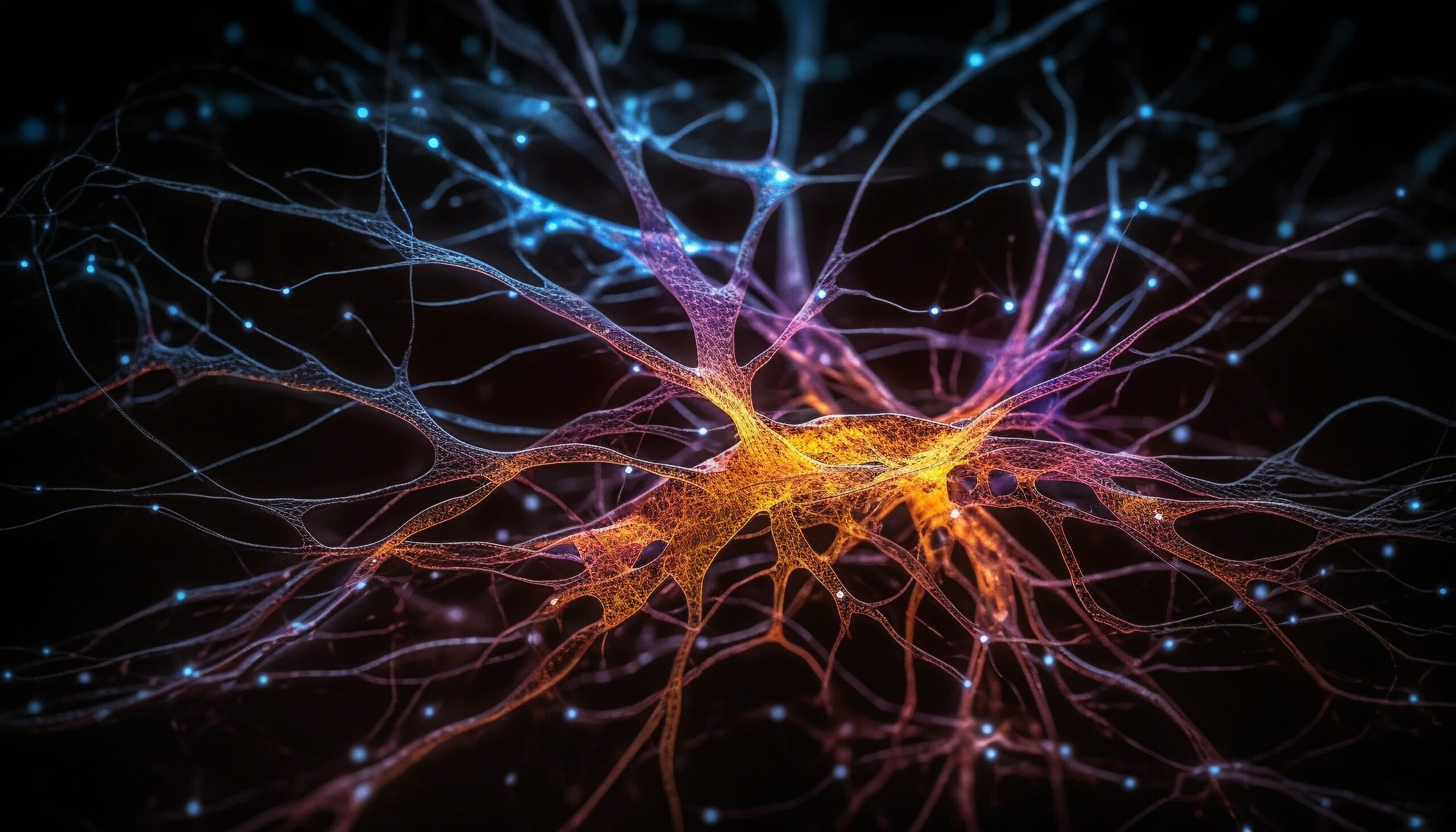
How neurotransmitters work
Nerve cells communicate with each other by means of branches – axons and dendrites. There is a gap between them – the so-called synaptic gap. This is where neurons interact.
Mediators are synthesised in the cell and delivered to the end of the axon – to the presynaptic membrane. There, under the influence of electrical impulses, they enter the synaptic cleft and activate the receptors of the next neuron. After activation of the receptors, the neurotransmitter is returned back to the cell (so-called recapture) or destroyed.
Neurotransmitters themselves are not proteins, so there is no “dopamine gene” or “adrenaline gene”. Proteins do all the supporting work: enzyme proteins synthesise the neurotransmitter substance, transporter proteins are responsible for delivery, and receptor proteins activate the nerve cell. Several proteins – and therefore several different genes – may be responsible for the proper functioning of a single neurotransmitter.
Don’t miss the most important science and health updates!
Subscribe to our newsletter and get the most important news straight to your inbox
Dopamine
By activating neurons in different areas of the brain, dopamine plays several roles. Firstly, it is responsible for motor activity and gives the joy of movement. Secondly, it gives an almost childlike sense of excitement about learning new things – and the desire to seek out novelty. Thirdly, dopamine has an important function in rewarding and reinforcing motivation: as soon as we do something useful for the life of the human species, neurons give us a prize – a feeling of satisfaction (sometimes called pleasure). At a basic level, we are rewarded for simple human pleasures such as food and sex, but in general the options for achieving satisfaction depend on the tastes of each individual – some people get a carrot for finishing code, others for this article.
The reward system is connected with learning: a person gets pleasure, and new causal associations are formed in his brain. And then, when the pleasure is gone and the question of how to get it again arises, the simple solution is to write another article.
Dopamine looks like a great stimulant for work and study, as well as an ideal drug – it is the action of dopamine that most drugs (amphetamine, cocaine) are associated with, except there are serious side effects. “Overdose” of dopamine leads to schizophrenia (the brain works so actively that it begins to manifest itself in auditory and visual hallucinations), and the lack – to depressive disorder or the development of Parkinson’s disease.
Dopamine has five receptors, numbered D1 to D5. The fourth receptor is responsible for novelty seeking. It is encoded by the DRD4 gene, the length of which determines the intensity of dopamine perception. The smaller the number of repetitions, the easier it is for a person to reach the peak of pleasure. A good dinner and a good film are likely to be enough for such people.
The greater the number of repetitions – which can be up to ten – the more difficult it is to get pleasure. Such people have to try hard to get a reward: to go on a round-the-world trip, to conquer the top of a mountain, to do a somersault on a motorbike or to bet their entire fortune on red in Las Vegas. Such genotype is associated with the distance of migration of ancient people from Africa across Eurasia. There is also a sad statistic: the “unsatisfactory” DRD4 variant is more common in those convicted in prisons for serious crimes.
Noradrenaline
Norepinephrine is a neurotransmitter of wakefulness and rapid decision-making. It is activated under stress and in extreme situations and is involved in the “fight or flight” response. Noradrenaline causes a surge of energy, reduces the feeling of fear, increases the level of aggression. On a somatic level, noradrenaline increases heart rate and blood pressure.
Noradrenaline is a favourite mediator of surfers, snowboarders, motorcyclists and other extreme sports enthusiasts, as well as their colleagues in casinos and gambling clubs – the brain makes no difference between real events and imaginary ones, so the life-threatening risk of losing your fortune in cards is enough to activate noradrenaline.
High levels of norepinephrine lead to decreased vision and analytical skills, while a lack of norepinephrine leads to boredom and apathy.
The SLC6A2 gene encodes a norepinephrine transporter protein. It ensures that norepinephrine is taken back into the presynaptic membrane. It determines how long norepinephrine will be active in the human body after it has successfully coped with a dangerous situation. Mutations in this gene can cause attention deficit disorder (ADHD).
Serotonin
We are used to hearing about it as the “happiness hormone”, but serotonin is not a hormone, and “happiness” is not so clear-cut. Serotonin is a neurotransmitter that does not so much bring positive emotions as reduce the susceptibility to negative ones. It supports the “neighbouring” neurotransmitters norepinephrine and dopamine; serotonin is involved in motor activity, reduces general pain, and helps the body in the fight against inflammation. Serotonin also increases the accuracy of active signals in the brain and helps concentration.
An overabundance of serotonin (such as with LSD use) increases the “loudness” of secondary signals in the brain, and hallucinations occur. Lack of serotonin and an imbalance between positive and negative emotions is a major cause of depression.
The 5-HTTLPR gene encodes a serotonin transporter protein. The gene sequence contains a stretch of repeats, the number of which can vary. The longer the chain, the easier it is for a person to maintain a positive attitude and switch from negative emotions. The shorter it is, the more likely a negative experience will be traumatic. The “long” variant of the gene is also associated with sudden infant death syndrome, aggressive behaviour in the development of Alzheimer’s disease and a tendency to depression.
Destruction of neurotransmitters
The effect of neurotransmitters is like a celebration, as if everyone went out in a joyful crowd to watch fireworks. But the holiday cannot (and should not) last forever, and the neon roses in the night sky must give way to the usual constellations and the dawn.For this purpose, the body has a neurotransmitter reuptake function – when the substance returns from the synaptic cleft back to the presynaptic membrane of the axon and the action of the neurotransmitter stops. But sometimes reuptake is not enough, and more effective measures are needed – the destruction of the neurotransmitter molecule. Proteins also perform these functions.
The COMT gene encodes the enzyme catechol‑O-methyltransferase, which breaks down norepinephrine and dopamine. It depends on the protein’s performance how well you will cope with stressful situations. Owners of the active form of the COMT gene– warriors by nature – receive reduced levels of dopamine in the frontal lobe of the brain, which is responsible for information processing and pleasant sensations. Such people adapt better to stressful situations, they are open to communication, they have a better memory. But because of their low dopamine levels, they enjoy life less, are more prone to depression, and have poorer motor function. An inactive variant of the COMT gene reverses the situation. Owners of the inactive mutation have good fine motor skills, are more creative, but they do not tolerate pain well, and as soon as they get into a stressful situation, they plunge into irritability, impulsivity and anxiety. Mutations in the COMT gene are also associated with Parkinson’s disease and hypertension.
The gene of the enzyme monoamine oxidase A MAOA is responsible for the deactivation of monoamines, neurotransmitters with one amino group, which include adrenaline, norepinephrine, serotonin, melatonin, histamine, dopamine. The better the MAOA gene works, the faster the “clouding of reason” caused by a stressful situation is neutralized and the faster a person is able to make informed decisions.
Sometimes even the MAOA gene is called the “criminal gene”: certain mutations of the gene contribute to the emergence of pathological aggression. Due to the fact that the gene is located on the X chromosome, and girls have two copies of this gene, while boys have only one, there are statistically more “born criminals” among men.
Let’s not blame everything on genetics – even with regard to the “furious” MAOA gene, everything is not easy: a study by New Zealand scientists has shown that the link between the gene and aggressive behavior manifests itself only in the presence of traumatic experiences.
Understanding how neurotransmitters work allows us to take a fresh look at habitual emotions, mood swings, and even rethink ideas about what really shapes our personality. You can continue the fascinating process of self–discovery together with the Atlas genetic test – a great opportunity to find out your variant of the DRD4, COMT and MAOA genes.
Source: Atlas company blog, Geektimes.
Published
June, 2024
Duration of reading
About 3-4 minutes
Category
Brain and nervous system
Share

