Heuristics
Having too little precious time to process a huge amount of information, our cognitive system develops mental tools to save time and effort. The ease with which we form impressions, make judgments, and find explanations is amazing. We do this using heuristics, which are simple and effective thinking strategies. In many situations, our lightning—fast generalizations—”It’s dangerous!”-are adaptive. The speed of these implicit rules is conducive to our survival. The biological purpose of thinking is not so much that we don’t make mistakes, but rather that we survive.
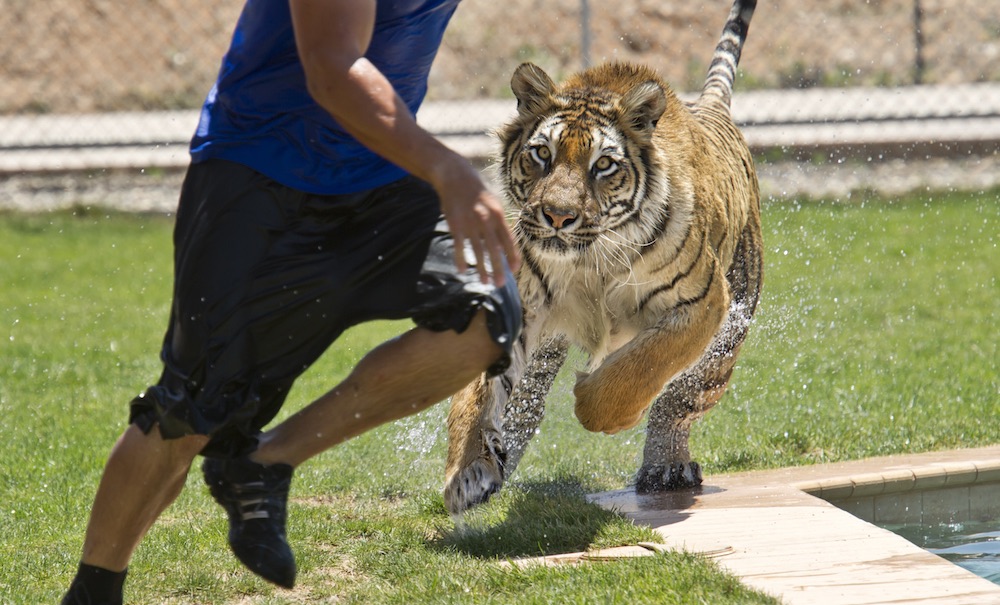
The heuristic of representativeness
A group of psychologists interviewed a sample of 30 engineers and 70 lawyers and presented their impressions in the form of short descriptions. Here is one of them, taken at random.
“Frank is divorced twice. He spends most of his free time at the country club. The main topic of his conversations with the visitors of the club bar is regret that he followed in the footsteps of his respected father. It would be much better if, instead of gnawing at the granite of science, he learned to be more accommodating and tolerant towards other people.
Question. What is the probability that Frank is a lawyer and not an engineer?”
When students at the University of Oregon were asked to answer the question “Who is Frank by profession?”, more than 80% of respondents said that he was a lawyer (Fischhoff & Bar-Hillet, 1984). An understandable result. But do you think their conclusions have changed after it was said that 70% of the surveyed engineers were not 30%, but 70%? Not at all. The students did not take into account the ratio of engineers and lawyers in the sample at all; according to the description, Frank corresponded more to the idea of lawyers that they had formed than to the idea of engineers, and the rest, apparently, did not matter to them at all.
To judge something by intuitively comparing it with one’s mental representation of the category to which it belongs is to use the representativeness heuristic.Like most heuristics, the heuristic of representativeness (typicality) usually allows you to correctly navigate reality. But not always. Consider this example. Linda is 31 years old, she is single, sincere and very pretty. She graduated from college, and her major is philosophy. While in college, she became seriously interested in discrimination and other social issues, and also participated in demonstrations against nuclear weapons. Based on this description, what would you say? Is Linda a bank teller or is she a bank teller and a member of the feminist movement? Most believe that the latter is more likely; in part, this is due to the fact that Linda fits their ideas of feminists better. Tell me, is it more likely that Linda is both a bank teller and a feminist than it is that she is just a bank teller (it doesn’t matter if she is a feminist or not)? As Amos Tversky and Daniel Kahneman remind us, the probability of a combination of two events cannot be greater than the probability of each of these events individually (Tverski & Kahneman, 1983).
Don’t miss the most important science and health updates!
Subscribe to our newsletter and get the most important news straight to your inbox
Availability of heuristics
Let’s think about it: which words in the English language are more numerous — those in which the letter k is the first or the third? Is there a larger population in Cambodia or Tanzania? (The answers are given below).
[Answer to question 1. There are about three times as many words in which the letter k is the third letter as there are words that begin with it. However, most people hold the diametrically opposite opinion. Words that begin with the letter k are cognitively more accessible and easier to recall (Tversky & Kahneman, 1974). Our judgments about the frequency of events are determined by the availability of heuristics. The answer to question 2. The population of Tanzania is 24 million people, which is significantly higher than the population of Cambodia (7 million). Most people have more vivid ideas about Cambodia than about Tanzania, and therefore give the wrong answer.
Perhaps your answers to these questions depended on how quickly the relevant examples came to mind. If the examples stored in your memory are easily accessible, as are most likely examples of words starting with the letter k and information about Cambodia, then we assume that this is an ordinary event. This is most often the case, and this cognitive rule, called accessibility heuristics, serves us quite well in many cases.
In 2000, Americans, shocked by the horrific scenes of school shootings committed by their classmates, decided that juvenile delinquency had increased. In fact, in the period from 1960 to 2000, the peak of juvenile delinquency occurred in 1994, after which it began to decline.>
However, sometimes it misleads us. If people hear a list of names of celebrities of the same sex (Mother Teresa, Jane Fonda, Tina Turner) mixed with an equally extensive list of unknown people of the other sex (Donald Scarr, William Wood, Mel Jasper), then famous names will be more cognitively accessible to them. In this particular case, people will say that they have heard more female names (McKelvie, 1995, 1997; Tversky & Kahneman, 1973). Vivid events that are easy to imagine (for example, diseases with obvious symptoms) may also seem more likely than events that are more difficult to imagine (MacLeod & Campbell, 1992; Sherman et al., 1985). Even fictional episodes in novels, TV shows, and movies leave images that later permeate our judgments (Gerrig & Prentice, 1991).
The way we use the availability of heuristics underscores the basic principle of social thinking: people move slowly from the general to the particular, but quickly from the real case to the generally accepted truths. It is not surprising that, after listening to and reading all kinds of stories about rape, robbery and beatings, 9 out of 10 Canadians overestimate — and, as a rule, very significantly — the percentage of crimes committed with violence (Doob & Roberts, 1988).
Witness testimony can be more convincing than mountains of facts and figures (mountains of facts and figures accumulated by social psychology prove this very convincingly). Mark Snyder, 1988>
The availability of heuristics explains why witty anecdotes often become more convincing evidence than statistical information, and why perceived risk often does not correspond at all to real risks (Allison et al., 1992). Since most of us memorize images of plane crashes for a long time, we often think that a commercial flight is a more dangerous undertaking than a car ride. In fact, in the 1980s, Americans who traveled by car were 26 times more likely to risk their lives than Americans who traveled the same distance by air (National Safety Council, 1991). For most air passengers, the most dangerous part of the journey is driving from home to the airport.
Thinking contrary to the facts
Events that can be easily imagined (i.e., cognitively accessible events) also affect how we experience feelings of guilt, regret, frustration, and relief. When our team loses (or wins) an important match by a one-point margin, we can easily imagine that the game could have turned out differently, so we feel either more regret or more relief. Being able to imagine alternatives that are worse for us helps us feel better. Being able to imagine alternatives that are more favorable to us and reflect on what needs to be done differently next time helps us prepare to act better in the future (Boninger et al., 1994; Roese, 1994).
<Most people reason with their hearts, not their minds. Oliver Wendell Holmes Jr., lawyer (1809-1894)>
At the Olympic Games, the bronze medal winners (they could easily imagine the alternative of being outside the prize—winners) were more happy than the silver medal winners, who, in turn, found it easier to imagine that they could well win gold (Medvec et al., 1995). Similarly, the higher a student’s score is within a certain category (for example, B+ category), the worse they feel (Medvec & Savitsky, 1997). A student who has a B+ grade and has not achieved one point to A feels worse than a student who has done objectively worse at work, but who has received not a B, but a B+ due to one point. The direction of thinking that contradicts the facts is determined by what people are closer to — the worst or the best possible alternative.
This kind of evidence—based thinking-the mental modeling of what might have been—occurs when we can easily imagine an alternative (Kahneman & Viller, 1986; Gavanski & Wells, 1989; Roese, 1997). When a bus door slams in our face or boarding a plane stops, we start thinking about what would have happened if we had just left the house on time, followed the usual road and did not stop along the way. If we are half an hour late, or it happens even when we were traveling along the usual route, it is more difficult for us to imagine a different result, and therefore we are less upset. A sports team or a politician who did not have enough to win “just a little bit” and who lost, will imagine their possible success over and over again. If only…
a mindset that contradicts the facts is at the heart of the experience of luck. If we miraculously manage to avoid trouble — a goal in the last minute of a match, meaning our defeat, or an icicle falling from a roof — it is not difficult for us to imagine their negative consequences (the bitterness of defeat, injury), and therefore we think that we are lucky (Teigen et al., 1999). On the contrary, the troubles that have happened, but which may well not have happened, make us consider ourselves losers.
(— I will learn everything I need to know about life from the “Piquant News Digests”! (“Blacks believe O.J. Simpson!”)
— A guy and a girl were kicked out of a gay bar for kissing and hugging too openly! — Conclusion: homosexuals discriminate against us!
— A six-year-old boy who kissed his classmate was accused of sexual harassment. — Ha! I told you that sexual harassment is just an invention of feminists, these crazy nerds!
— A McDonald’s customer who poured hot coffee on herself sued the company. — Any lawsuit against any corporation is a frivolous extortion attempt!
— A murder has been committed in Florida (or Texas). The killer is a man released from prison on parole on parole. — All criminals should be sentenced to at least life imprisonment! (“Shoplifting”)
— This information is quickly absorbed, well remembered and permanently stored in memory! “Piquant news Digests” — my path to enlightenment! (“Children choose a beauty queen”))
The more significant the event, the more intense the contrary thinking (Roese & Hur, 1997). It is known that a person who has lost a spouse or child in a car accident, or someone whose child died suddenly, constantly returns to this event, replaying and reconstructing it (Davis et al., 1995, 1996). A friend of mine, whose wife, daughter, and mother were killed in a head-on collision between their car and a car driven by a drunk driver, said: “For many months I have been constantly going over the events of that day in my memory and changing their sequence in such a way as to prevent a tragedy” (Sittser, 1994).
However, people are more likely to apologize for their actions than for inaction. Silenberg et al.,1998>
{When the contentious issue of the winner of the 2000 presidential election was being resolved, both George W. Bush’s supporters and Al Gore’s supporters applauded the recount of votes in Florida as future proof of their candidate’s victory}
And yet, people are much more sorry not for what they did, but for what they did not do. “It’s a pity that I was too frivolous in college.” Or: “My father died, and I still didn’t have time to tell him that I love him. I regret this” (Gilovich & Medvec, 1994; Savitsky et al., 1997). (The results of one survey conducted among adults show that the majority of respondents regret that they did not take their education seriously enough at the time (Kinner & Metha, 1989).) Would we have fewer reasons to regret if we more often tried to go beyond our “comfort zone” — taking risks, failing, but at least trying to achieve something? Those who don’t take risks don’t drink champagne.
Source: Source: Myers D. “Social Psychology”
Photo: kathleenreeder.com
Published
July, 2024
Duration of reading
About 3-4 minutes
Category
Social Psychology
Share

