The immune system: how does the recognition of “strangers” work?
The habitat of humans and other living organisms is very aggressive. We are surrounded by all kinds of viruses and bacteria, waiting in the wings to attack us, so the task of our immune system is to protect us from their attacks.
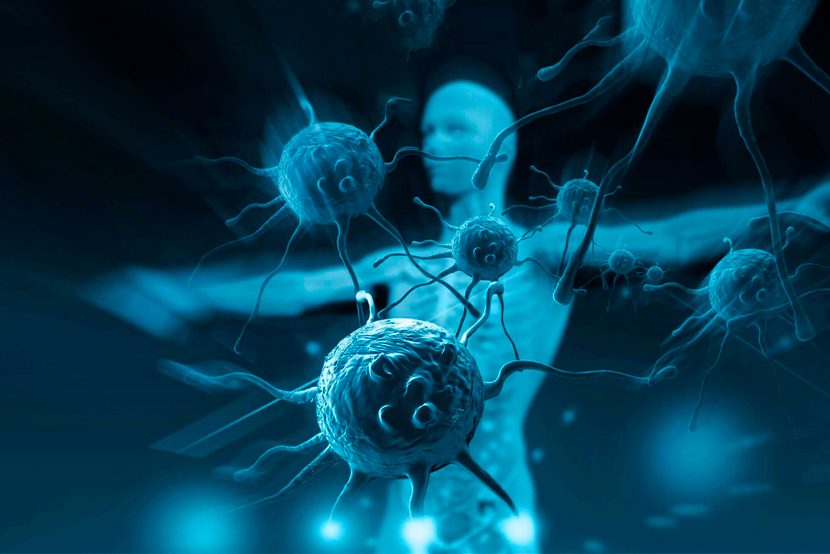
Some lines of defense are purely anatomical: for example, the skin and mucous membranes form a physical barrier that prevents invasion. If these external boundaries are violated, the body often opposes aggression with a generalized inflammatory reaction, which increases blood flow to the affected area. The blood delivers white blood cells, which, penetrating through the capillary wall, capture the invading aggressor. It is this reaction that explains the well-known redness around a small cut.
However, the work of the immune system is based on other principles, namely, on the recruitment of specialized molecular structures, the action of which is directed at specific targets. The most important of these structures are antibodies, Y-shaped molecules. Amino acid molecules (see Proteins) of various shapes are assembled at the ends of the Y-molecules. Each form corresponds to an aggressor, or antigen, of a certain type. In the body of an adult, there are up to 100 million different types of antibodies that differ in shape. In a way, the immune system is like a large ready-to-wear store, where any size of clothing is available. When an alien organism invades, it is highly likely that one of the 100 million outfits available on hangers will fit it. The way antibodies circulate in the body is determined by the location of amino acids in the “leg” of the letter Y. Some of them, for example, circulate in the bloodstream and destroy bacteria and viruses extremely effectively, while others bind to specialized cells in the skin and intestinal mucosa.
B cells, or B lymphocytes, are the main cells responsible for the function of recognizing foreign organisms with antibodies. (The name is due to the fact that the growth and maturation of these cells takes place in the bone marrow — bone marrow.) These cells have a shape close to spherical, and their outer shell contains a variety of specialized antibodies. When a foreign organism is recognized — that is, when the antigen comes into contact with the corresponding antibody on a specific B-lymphocyte — the proliferation of B-lymphocytes begins. The reproduction process has two goals. First, it produces cells (called plasma cells) that synthesize large numbers of antibody molecules specific to the aggressor. Secondly, memory cells are formed that are able to respond to the presence of an antigen months or years after the first invasion.
One plasma cell is capable of producing up to 30,000 antibody molecules per second. These molecules bind to invading bacteria, forcing them to gather in groups, after which these clusters can be removed by other cells from the body. However, it may take several days for plasma cells to mature. The body usually signals the victory of antibodies by the appearance of fever. Plasma cells live only a few days, whereas the lifespan of memory cells is much longer — sometimes they persist until the end of a person’s life. In the case of repeated invasion of the same antigen, these cells immediately engage in battle and immediately synthesize a huge amount of antibodies, bypassing the precious time-consuming recognition process. This explains our immunity to subsequent infections. The main purpose of vaccination is precisely the formation of memory cells.
B cells protect the body mainly from external intruders — from molecules with an “alien” chemical composition. Another type of immune cell, T cells (or T lymphocytes)— deals with cells in the body that have been modified due to infection or cancer. (In fact, only about half of the T-lymphocytes do this; the other half regulate the activity of B-lymphocytes.)
T-lymphocytes are named after the thymus gland, in which they grow and mature. On the outer shell of T-lymphocytes there are proteins that recognize specific molecules, not specific antigens (unlike B-lymphocytes). T-lymphocytes react with antigens after combining with another type of molecule called the histocompatibility complex and present in all cells of an individual. The T-lymphocyte acts as a sentry that moves from one place to another and calls out to other cells, asking them for a password. If the correct histocompatibility complex appears on the cell surface, the T-lymphocyte passes on. If something is wrong, for example, the complex is altered by the viral envelope protein, the T-lymphocyte interacts with the cell and destroys it.
It is this ability of T-lymphocytes to recognize “strangers” that makes organ transplantation such a difficult problem. T-lymphocytes tend to attack the transplanted organ, so they need to be contained with the help of immunosuppressant drugs. In addition, T-lymphocytes are a target for the virus that causes AIDS, which largely coincides with T-lymphocyte receptors. Finally, it happens that the ability of T-lymphocytes to recognize “their own” gradually decreases, and then the immune system can attack the body’s own cells. This is how autoimmune diseases arise, such as rheumatoid arthritis.
Photo: pintofscience.com.br
Don’t miss the most important science and health updates!
Subscribe to our newsletter and get the most important news straight to your inbox
Published
July, 2024
Duration of reading
About 1-2 minutes
Category
The immune system
Share

