Mental models: how to teach the brain to think in a new way
A man dreams of getting rich, makes a couple of unsuccessful attempts, and waves his hand, saying, “We didn’t live rich, there’s nothing to start with.”… A scientist has been struggling for decades in the laboratory to solve the mystery, and the victory goes to a novice who has barely entered science.… Why can’t some people get out of a musty routine for years, while others’ lives are like a fresh wind carrying them to success and prosperity? Scientists say it’s all about mental models.
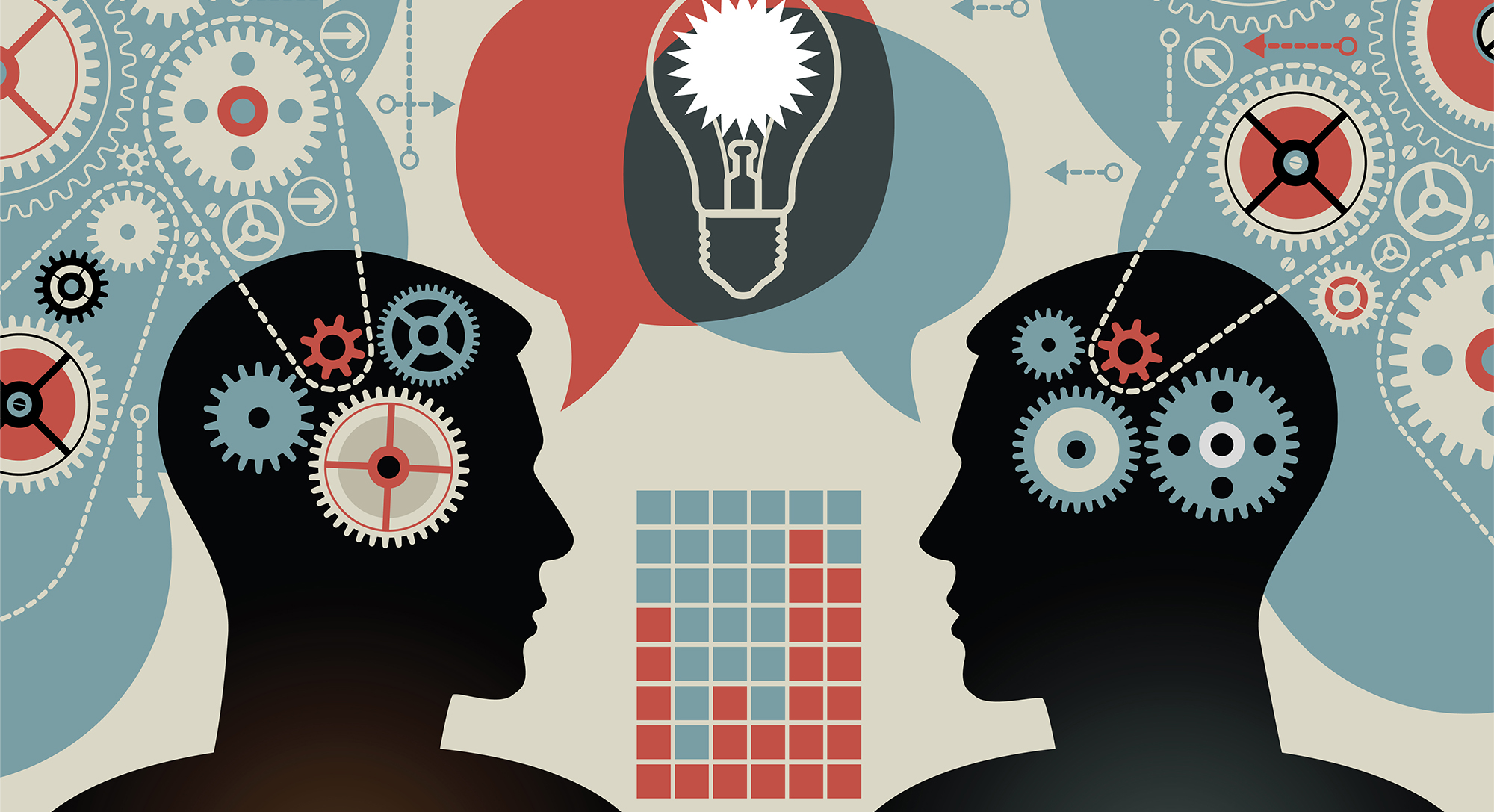
Mental models are representations of a particular person about various processes taking place in the world. Each mental model, like a jigsaw puzzle, consists of information received from the outside and personal experience. On the basis of mental models, human behavior, an approach to solving certain problems, and a lifestyle in general are formed.
The concept of mental models was first proposed by Scottish philosopher and psychologist Kenneth Craik, one of the first practitioners of cognitive psychology. In his work “The Nature of Explanation” (1943), he described how the mind forms “small-scale models of reality” and then, based on them, predicts future events.
Philip Johnson-Laird, a professor of psychology at Princeton University, argued in his book Mental Models (1983) that a person comprehends the world by building internal mental (mental) copies of the relationships between objects and events that concern us. Johnson-Laird considered the mind to be a device for building such models. In 2002, psychologist Ralph Jacobson (Ohio State University, University of Minnesota, etc.), in his book Leadership for Change, spoke of mental models as deeply ingrained ways of thinking and acting that people are “barely aware of.”
Five characteristics of mental models
1. Mental models are based on facts that a person has encountered during his life. At the same time, the facts can be either irrefutable, incomplete or unreliable.
2. Mental models are flexible, meaning they can change and adjust over the course of a lifetime. This happens when confronted with facts that complement or refute the facts on which the mental model was built (provided that the person is willing to accept them)
3. Mental models are based on a selective, that is, selective perception of a person – the tendency to ignore or quickly forget facts that contradict pre-existing beliefs or cause emotional discomfort. People look at the world through an “information filter” that allows them to ignore opposing points of view or interpret them in a way that is convenient for them. An example of selective perception may be the biased attitude of teachers towards students, which allows them to ignore the successes of those who are perceived as “lagging behind” and ignore the failures of students who fall into the “successful” category.
4. Any mental model is limited in comparison with the phenomenon in relation to which it is formed. So, the mental model of the map of the city in which a person lives is only a limited version of the real map of the area: it includes, first of all, objects and routes that are significant for this particular person. This is true even when it comes to extensive scientific models used to visualize and model certain parts or elements of the world. Thus, the mental model of the cosmos that astronomers work with can be very complex, but it does not take into account the infinite diversity characteristic of the “real” cosmos and is therefore limited.
5. Unlike other sources of information about various aspects of life, access to which may be limited at different times, the mental model is available to a person at any time and can be used to evaluate objects or events and make decisions.
Limiting mental models
Mental models can be both a cognitive tool that allows you to organize new information and form an idea about a particular subject or phenomenon, as well as a factor that limits perception and prevents the assimilation of new knowledge. There are signs of limiting mental patterns:
- “Narrow specialization” is a commitment to a limited range of interests that a person does not go beyond.
- Lack of curiosity, fear of something new, the belief that “it used to be better”
- The desire to defend their beliefs even when faced with obvious facts that prove their infidelity, persistence or even aggression when confronted with someone else’s point of view.
- The constant use of the assessments “right”, “wrong”, the use of the words “unacceptable”, “must”, “necessary”
- The habit of generalizing even when faced with a single situation, the frequent use of generalizing concepts “everything”, “everyone”, “no one”, “never”, etc.
- Inability to be in a state of uncertainty, the desire to quickly draw conclusions that fit into the usual picture of the world when faced with an incomprehensible situation
- The inability to see the totality of the factors that led to the appearance of a particular problem, the desire to find someone to blame: such a person may blame the government, parents or himself in the situation, refusing to see the whole picture of what is happening.
Thus, limiting mental models “lock” a person inside very tight boundaries, depriving him of a chance to develop and improve his life. At the same time, we are talking not only about the limiting role of “everyday” mental models, such as the notion that “you can only get rich dishonestly” or “I’m unlucky, there’s nothing to try” based on the experience of previous mistakes.
A narrow professional specialization can also hinder development. For example, Robert Sapolsky, a professor of biology, neurology, and neurosurgery at Stanford University, gave a well-known example when talking about the limiting beliefs of narrow specialists. The professor suggested asking the same question “Why did the chicken cross the road?” to three experts in different fields. Answering this question, an evolutionary biologist will say that the chicken saw a potential sexual partner on the other side, a neurologist will say that its movement was caused by the excitation of neurons in the brain, and a kinesiologist will explain the movement of the chicken by muscle contraction on the legs.
Sapolsky emphasizes that each of the experts is not mistaken, but at the same time demonstrates only one view of reality – this makes it difficult to see the whole picture. Each mental model represents a limited set of tools, so a narrow specialist has to act within a very narrow framework. This blocks the intellectual and creative potential, prevents you from seeing new non-trivial ways to solve problems. Therefore, when talking about limiting mental models, they also often quote the famous psychologist Abraham Maslow – “When you only have a hammer, everything looks like a nail.”
How do you learn to master new mental models?
The more mental models a person has managed to include in his “mental arsenal”, the more complete his picture of the world is, and the more tools he has for working with information and solving problems. How to master new mental models? Psychologists advise you to constantly work with new information that goes beyond the usual range of interests. Thus, it will be very useful for a follower of traditional painting to visit exhibitions of modern art and try to understand the style of thinking of avant-garde painters.
Among professionals, an expert who reads books from areas far from his specialization will get a head start. For example, a biologist can immerse himself in aspects of folk folklore, and an avid humanitarian can try to refresh his memory of the basics of algebra. It’s not about getting a new specialty at a high level, but about mastering new ways of thinking that allow you to go beyond the usual framework and take a fresh look at familiar problems.
Also, a good way to get rid of the inertia of thinking is to search for relationships between information from different fields. People are used to sorting their knowledge by putting it on “mental shelves.” For example, an artist studies new design trends, then searches for a recipe for pizza, and watches a new movie in the evening. Each of these activities is separate from the others: immersed in one thing, a person forgets about the rest.
To master new mental models, it is useful to look for connections between different information flows. So, you can try to understand how the preparation of pizza toppings, the behavior of the hero of the movie or the soundtrack in it will help to create a new design.
Conclusion
In modern Western psychology, there is a term “liquid knowledge”: as a rule, it is remembered when talking about innovative thinking. People who have trained their brains to easily switch (“flow”) from one sphere to another are more likely to find unusual and ingenious solutions to problems that “narrow specialists” have been poring over for years. This is due to the fact that many of the findings lie, as they say, at the junction of ideas. People with “fluid” thinking easily invent “life hacks” both in the household and in the professional sphere. Therefore, performing exercises that help to master new mental models improves life at all levels, stimulates creative processes, and makes life much brighter and more interesting.
Don’t miss the most important science and health updates!
Subscribe to our newsletter and get the most important news straight to your inbox
Published
July, 2024
Duration of reading
About 3-4 minutes
Category
Conscience
Share

