Is it possible to “boost” your immune system?
The idea of improving immunity is at the heart of a rapidly growing number of products, most of which belong to the category of “dietary supplements”. They all promise to do something about your immune system. The word “stimulate” is often used, and sometimes “improve”, “strengthen” or “enhance”. In any case, it sounds very tempting, especially if you don’t know what the immune system is and how vitamin C works.
Promises to boost immunity are usually associated with vitamin C, or ascorbic acid, a chemical that is easy to add to anything. It comes in the form of a tiny white powder, most of which is synthesized in China. The sorbitol obtained from glucose is converted into sorbose, and then genetically modified bacteria convert sorbose into 2-ketogluconic acid. Add a little hydrochloric acid, and here you have ascorbic acid.
The very name “ascorbic” comes from antiscorbutic, because vitamin C was discovered to be a substance capable of preventing the horrors of scurvy (in Latin, scorbutus – scurvy). In the 18th century, about half of the sailors who sailed overseas died of scurvy. Death was accompanied by bleeding from the mucous membranes: blood came from the gums and eyes. At that time, scientists did not yet suspect that scurvy was associated with impaired collagen synthesis (as was Rafi epidermolysis bullosa). Our body is made up of protein, without it we will simply fall apart. Protein is constantly being reproduced, so our body always needs the nutrients necessary for its construction. One of them is ascorbic acid.
Centuries before the discovery of ascorbic acid, sailors who, as a rule, did not eat fruits and vegetables at sea noticed that if you take oranges, lemons or limes with you and suck them from time to time, you can avoid scurvy. Some substance in the citrus fruits was clearly anti-scurvy. In 1933, ascorbic acid was discovered and proved effective in preventing scurvy. The minimum dose was enough.
Ascorbic acid is a coenzyme– a coenzyme that helps enzymes accelerate chemical reactions inside our body. Its presence in the body is vital, as is the presence of other vitamins; otherwise we would suffer from terrible diseases. The role of ascorbic acid is to help convert the precursor into collagen. A microscopic dose is sufficient for this. If you take more vitamin C than necessary, then no additional amount of collagen is formed. Your kidneys will simply excrete the excess vitamin – usually without any complications.
Since ascorbic acid was one of the first chemical compounds discovered that could prevent a terrible disease – people affected by it literally fell apart, bleeding and in excruciating pain – it was easy to imagine that this miracle compound could defeat many diseases. If vitamin C has been able to produce one specific miracle, what other miracles can you expect from it?
The term “immune system” was coined by the Danish researcher Niels Jerne in 1967. At that time, two competing theories tried to explain the work of immunity: one was based on the work of antibodies, the other on white blood cells. The concept of the immune system proposed by Jerna combined various ways in which the body can protect itself from disease, neutralizing not only pathogenic microbes, but also any substance potentially capable of causing disease.
In modern medicine, the concept of the immune system is unprecedented. Unlike the cardiovascular, gastrointestinal, or neurological systems, which traditionally include disparate elements in certain parts of the body, the immune system describes the function of the entire body as a whole. It includes both lymph, which runs through the ducts connecting the lymph nodes, and the spleen, which also filters the blood and creates antibodies responsible for the long-term effect of immunity: thanks to it, the blood “remembers” certain infections and prevents us from falling victim to them again. The immune system is also our blood–producing bones. It remembers and absorbs, or, accordingly, ignores certain compounds. Blood cells act by causing inflammation and oxidation and neutralizing inflammation and oxidation products. The immune system includes the mucous membrane of our mouth, throat, lungs, stomach and intestines, everything that comes into contact with the outside world; and all cells secreted by the surface of the mucous membranes that can destroy some substances while preserving others. The immune system is also located in the skin, not only as a physical barrier to protect against pathogens from the outside, but also as an active organ that secretes molecules that support a population of its own skin microbes that protect us from infections.
After the completion of the first phase of the Human Microbiome project in 2013, carried out on an international initiative and supervised by the US government, it became obvious that there are more microbes in the human body than there are own cells, and the well-known truth that the work of the immune system boils down to simply separating “our own” from “others” turned out to be an oversimplification. The composition of our body is constantly changing, new compounds are absorbed through the intestines, skin and air, and the set of microbes that fill it is changing. Therefore, the fundamental principle of “friends” and “strangers” becomes untenable. This is not to say that microbes can greatly change the immune system, they are an important component of it, as well as substances that enter our body.
The immune system, in fact, is our entire body, including microbes.
When Gallo and his colleagues discovered the human immunodeficiency virus in 1986, the term “immune system”, coined by Jerne, quickly entered everyday life. As AIDS was explained to the frightened public, a weakened immune system began to seem like an absolute evil, as evidenced by the terrible pandemic that unfolded before the eyes of humanity. This means that the immune system must be strengthened. The stronger it is, the better, of course.
Some diseases that undermine the immune system are really fatal. But the immune system is not so unambiguous that it can be labeled “good” or “bad.” By the way, it seems that a number of illnesses are the result of her hyperactivity. Many of the diseases known as inflammatory ones seem to be the result of the activity of pathogens that have long since disappeared from the body. Crohn’s disease, celiac disease, and eczema are all linked to the immune response.
In turn, vitamin C is a coenzyme involved in the reactions for the production of collagen proteins. But it is not able to prevent the flu or even the common cold. This is a harmful fiction that forces people to spend money on supplements, the whole effect of which is to create the impression that a person is terrified of scurvy.
Before you decide to invest in any “immune boosting” products, let me introduce you to Harvard neuroscience researcher Beth Stevens. Her work sheds light on how the immune system is involved in the learning process. The brain contains cells called microglia, which can move around and absorb other cells. Microglia are part of the immune system in its classical sense: it has long been known that they help to clear the brain of debris and waste, especially after injury. However, it has recently been revealed that as we age, these cells also begin to break down the connections between healthy, intact cells.
Neurons in the newborn’s brain are connected by branching connections with many neighboring neurons. Starting from the first years of life, these branches begin to disappear, as a person trains his brain to follow only certain paths. We call it learning, and scientists call it synaptic pruning. By acquiring some skills, we lose the ability to learn others. That’s why it’s so easy to learn at a young age and so difficult at a later age. Apparently, our immune system is responsible for pruning our synaptic trees.
If the human brain is a neatly trimmed hedge, don’t forget that sometimes you can cut off too much. One gene, known as C4, encodes a protein that marks cells to be destroyed. In 2016 Stevens, along with researchers Aswin Sekar and Michael Carroll, revealed in an article in the journal Nature that C4a, a type of the C4 gene, is strongly correlated with schizophrenia. The gene encodes a protein that is involved in the normal learning process, labeling the neural synapses to be pruned, located in areas responsible for cognition and planning. It is unlikely that a single gene can be the cause of such a complex disease as schizophrenia, but the hypothesis of scientists is quite convincing: the “enhanced” immune system cuts off excess human synapses, following the pattern that we observe as the development of schizophrenia.
Apparently, a similar process causes Alzheimer’s disease. Also in 2016 Stevens and her colleagues from the Massachusetts Institute of Technology and Stanford University published a groundbreaking study of the disease in the journal Science, proving that microglial cells actually cause dementia in mice by systematically targeting healthy synapses in the brain and “eating” them. Stevens showed that animals with Alzheimer’s disease have more of a protein known as C1q, and more importantly, she was able to block this protein so that it could not mark synapses that need to be destroyed by microglial cells.
Like many other diseases, this seems to be the case when the natural process has gone the wrong way. If our body didn’t know how to prune synapses, forming clear paths, we wouldn’t be able to learn. We would not form personalities with ingrained likes, dislikes, and ideologies. But if you get carried away and cut off a little more, nothing good will come of it. As Stevens wrote in the journal Science, “Instead of gently plucking synapses, microglia devour what they shouldn’t [touch].”
Loud statements from merchants of vitamins, juices, and tonics that supposedly stimulate the immune system are dangerous, not only because they offer us nonexistent alternatives, but also because they reinforce our ignorance of what immunity really is. Since the “immune system” exists, the issue of its management will be the focus of medical science in the coming decades. It has the potential to treat cancer, dementia, and correct genetic abnormalities. And most likely, the medicine is unlikely to be presented to us in the form of a drink.
Source: Hamblin J. “If only our bodies could talk. Manual for the operation and maintenance of the human body”
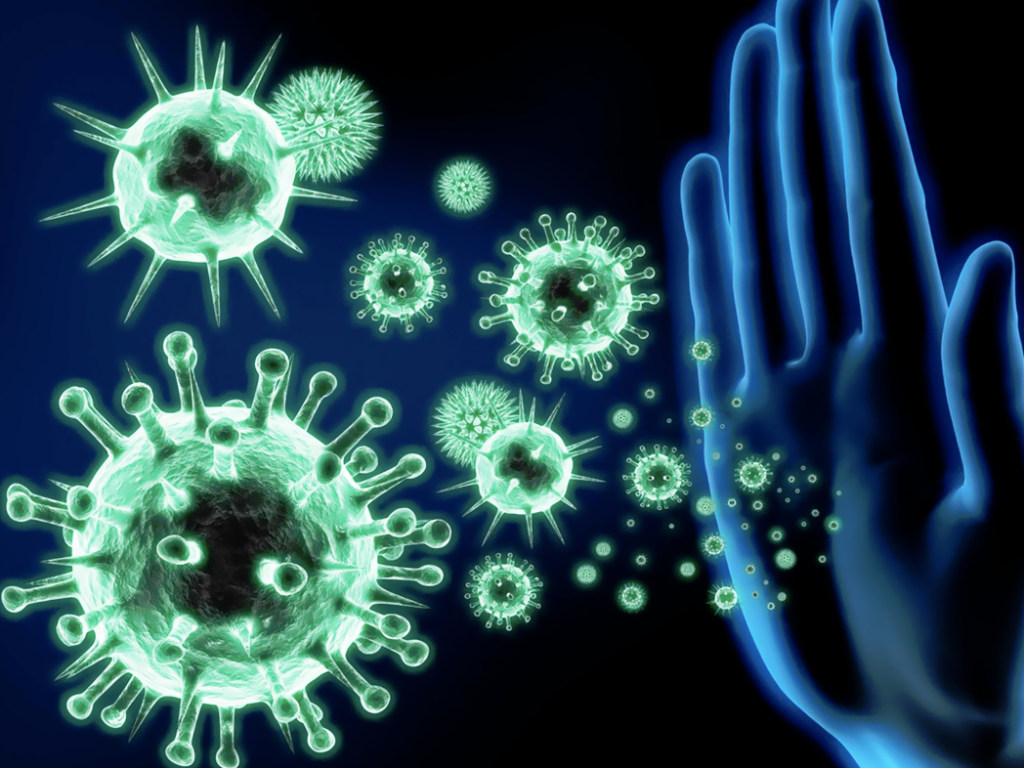
Photo: golos.ua
Don’t miss the most important science and health updates!
Subscribe to our newsletter and get the most important news straight to your inbox
Published
July, 2024
Duration of reading
About 3-4 minutes
Category
The immune system
Share

