Neural interfaces: how to connect your brain to a computer
We live in an exciting era when technologies that seemed like science fiction inventions 10-20 years ago are entering everyday life and becoming an integral part of reality. One of the most striking examples of such technologies are neural interfaces. At first glance, this is just a method of human-machine interaction, but in fact it is something more revolutionary.
What are neural interfaces and what functions do they perform?
A neural interface (neurointerface), or brain-computer interface, is a system that allows a person to communicate with a computer and other devices without using their hands. Communication with the brain does not take place at the muscle level, but directly: either by implanting sensors inside the brain, or using external devices. In the last decade, there has been another upsurge in research in this area: for example, American entrepreneur and inventor Elon Musk recently announced the release of Neuralink interfaces for ultrafast interaction between a computer and the human brain.
The history of the development of such devices began around 1875, when English doctor Richard Cato discovered that there was a weak electric field on the surface of the brains of monkeys and rabbits. If you look at a modern biology textbook, you can see that all body signals are transmitted through nerve impulses. And nerve impulses are nothing more than an electric current. The first theoretical substantiation of these processes was made by Russian scientists Ivan Mikhailovich Sechenov and Ivan Petrovich Pavlov, who studied human physiology and the regulation of behavior through external stimuli. Thus, the theory of conditioned reflexes formulated at the beginning of the last century, in fact, underlies the work of modern neural interfaces.
Don’t miss the most important science and health updates!
Subscribe to our newsletter and get the most important news straight to your inbox
Published
June, 2024
Duration of reading
About 3-4 minutes
Category
The brain and nervous system
Share


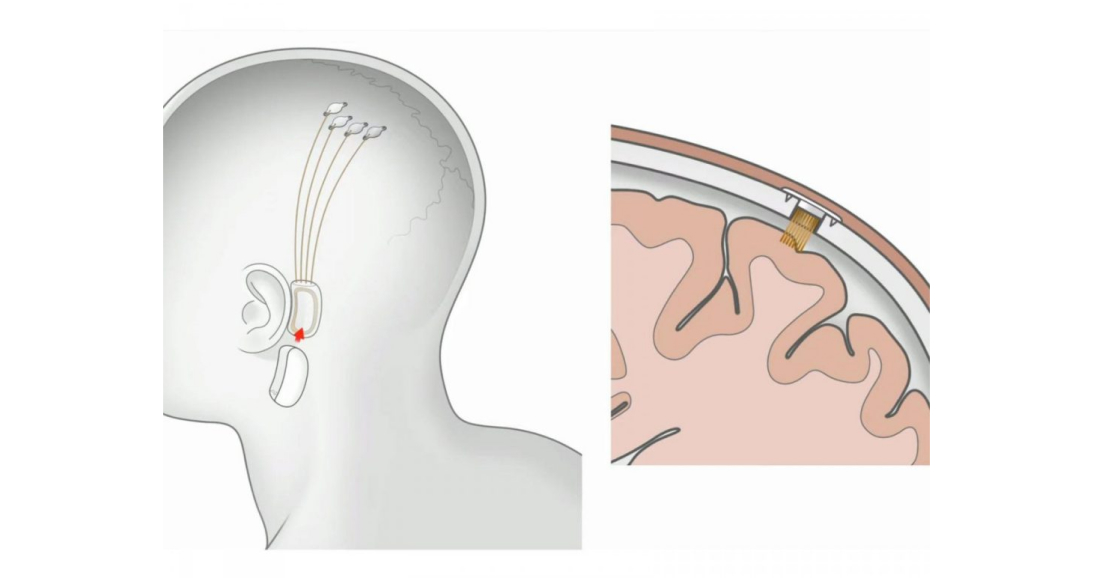
An example of the operation of an invasive Neuralink neuroimplant. Source: sntch.com
In 1950, Spanish neurophysiologist Jose Delgado created the stimosiver, the first neural interface consisting of electrodes implanted in the brain and a remote control. As a result, he could cause the cat to raise its hind leg spontaneously on a signal.
A little later, a stimosiver was implanted in the bull’s brain, which, on command, stopped the attack on the matador. Later, scientists around the world tried to insert various sensors into the bodies of animals as accurately as possible. For example, in an experiment on laboratory chimpanzees, they were forced to manipulate robotic arms with the power of their minds so that they could get real bananas. However, at the time of the development of such interfaces, there was a big problem — the electronic components necessary for the adequate operation of the devices could occupy huge areas, the size of a room. Today, this problem has been solved: most of the necessary parts of the devices now not only fit in the palm of your hand, but are often not visible at first glance!
What problems can this technology solve?
It is well known that the brain can be divided into zones that will be responsible for certain functions. For example, there is the motor cortex, which is responsible for movement. Therefore, the purpose of the neural interface is to capture the signal that goes through the neurons to certain areas of the brain and thus understand what the subject wanted to do. And then you can send commands both to your computer and to external devices, for example, a robot arm. Or you can apply current to such areas of the brain in order, on the contrary, to simulate a nervous impulse and make a person or animal feel something.
In other words, the nervous system generates, transmits, and processes electrochemical signals in different parts of the body. The “electrical part” of these signals can be “read” and “interpreted” by special equipment — neural interfaces.
There are other medical devices that collect signals about the state and structure of the brain, but they have a number of disadvantages: for example, magnetic resonance imaging (MRI) devices are too bulky, and the reagents used to visualize brain processes can be harmful to humans. But with the development of portable neural interfaces, it has become possible to use tiny sensors for these purposes and not damage the body during research, which is a great advantage of this technology.
In everyday life, we can find one of these devices in the neurologist’s office. It consists of a rubber cap with a bunch of sensors and wires attached to it, and is called an electroencephalography (EEG) device. Basically, such a device is used to diagnose physiological disorders, but some of its modifications are also used to solve therapeutic problems.
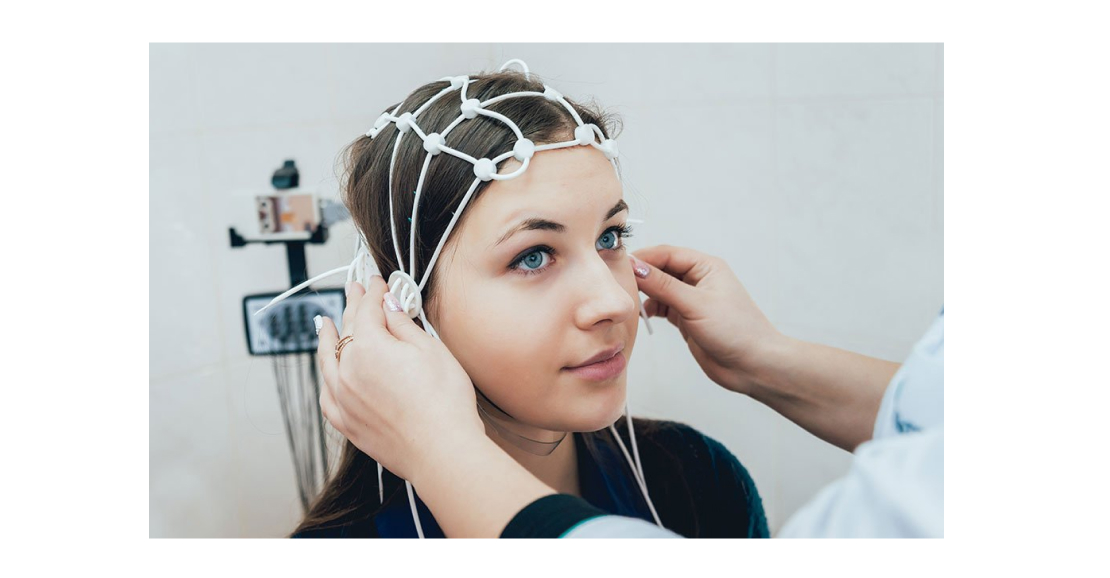
An example of a non-invasive sensor, conducting an EEG. Source: somnologist.ru
Types of neural interfaces
There are many ways to connect a person’s “thoughts” with the behavior of a machine. Thus, there is a distinction between “direct neural interfaces” and “brain—machine” interfaces. The latter type is derived from the former and deals only with the brain. Direct neural interfaces work with different parts of the nervous system. There are also unidirectional neural interfaces that allow only sending signals to the brain or only receiving them. Bidirectional devices can perform both operations simultaneously.
Sensors vary in the level of “immersion” in the body. The following types are distinguished:
- non-invasive sensors: electrodes are located on the surface of the skin or on a special substrate, like those used in the aforementioned “medical cap”;
- semi-invasive sensors that are located on the surface of an open brain or next to nerves;
- invasive sensors that are implanted directly into the brain or nerves. This method has many side effects, but nevertheless it is often used in laboratory and clinical practice.
In all the variants described above, special sensors (electrodes) record the electrical activity of neurons, and then signal processing and machine learning algorithms measure and analyze them. To ensure a higher signal quality, the sensors can be moistened with special liquids. After the registration and processing of neural signals, special software provides visual visualization of the nervous system.
Where are neural interfaces used?
Neural interfaces are most often used in experiments on laboratory animals: mice or chimpanzees are injected with tiny electrodes, and then their brain areas or nervous system activity are monitored. The collected data helps to analyze brain processes and draw analogies with the work of human neurons.
In addition, neural interfaces are very often used in the diagnosis of neurological pathologies. If the person under study receives a result, they can initiate a process called neurobiocontrol (biofeedback). The electrical stimuli provided by the device “turn on” an additional channel responsible for the body’s self-regulation: the signals of the neural interface are similar to real physiological ones and a person simply learns to work with his own body using the example of these artificially entered data.
Another promising application is neuroprosthetics, where scientists have already achieved certain results. If it is not possible to “repair” the damaged conductive nerves in a paralyzed limb, then electrodes can be inserted, which will then serve to transmit signals to the muscles. The same applies to the so-called cochlear implants, which help people restore hearing, and to neural retinal implants, which partially restore vision.
Neural interfaces are actively used in the entertainment industry. Manipulating objects and traveling inside game spaces using these devices is already quite realistic.: The device’s ability to read signals is complemented by the counter-directional process of transmitting them back, which means a lot of exciting possibilities for implementing the gameplay even inside the body itself! Imagine that while staying at home on a bed or in a specially equipped capsule on a gaming platform, using several sensors, you can connect to other amazing worlds and travel through them. It’s like the plots of science fiction films like The Matrix, isn’t it?
Mind reading
Is it possible to read minds using neural interfaces? The signals we receive cannot be considered thoughts as such — they are just traces, fingerprints of the activity of the nervous system, amplified by noise and delivered to the computer a second later. Therefore, you cannot “read” what another person thinks. It seems impossible to capture even one thought in this huge stream of information.
On the other hand, there are studies that “decode” brain scans obtained using magnetic resonance imaging. They show changes in brain activity that occur during certain mental operations. They can be used to combine data into one overall picture: for example, when analyzing information, you can see the activity of the frontal lobe of the brain, and when listening to music, the brain area at the temple will “turn on”.
Recently, scientists from the University of California have developed an invasive way of reading minds. The implanted sensors of such a neural interface can recognize about 250 words, using a specially trained neural network to interpret the signals. So it is quite possible that soon people will be able to communicate through thoughts in such an indirect way.
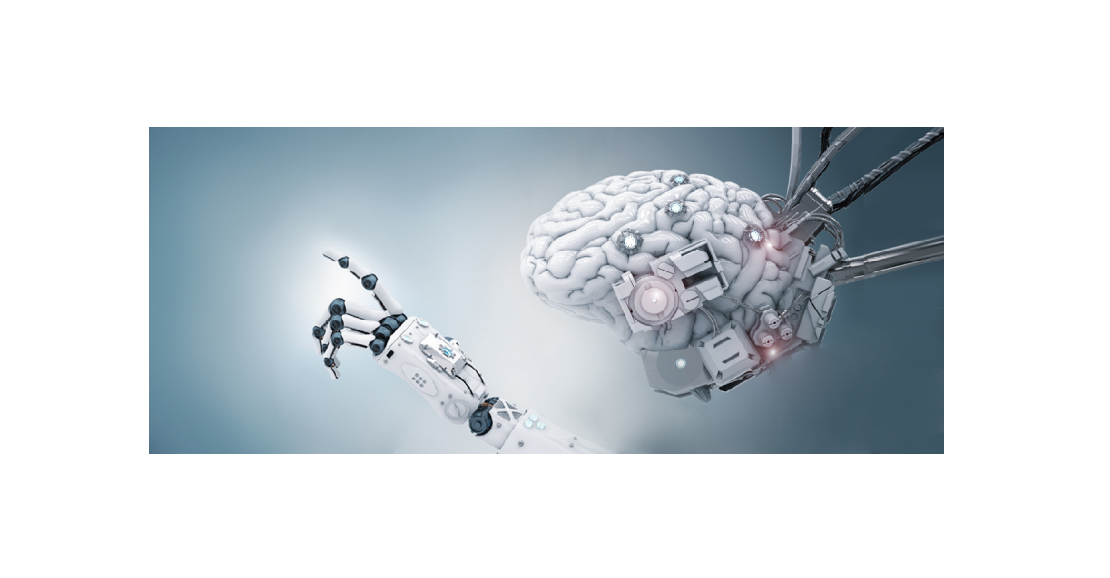
Source: zdrav.fom.ru
How do neural interfaces help in rehabilitation?
Recently, there have been more and more developments aimed at improving the quality of life of patients who have suffered from stroke and other diseases that have affected body mobility and sensitivity. For example, the Russian startup iBrain promotes neurorehabilitation technologies based on methods of stimulating certain areas of the brain, as well as training using biofeedback. The company offers individual neurotraining that helps the body recover faster by stimulating the motor areas of the brain. This technology has already been patented and is used in clinics for the treatment of stroke and traumatic brain injuries.
As for invasive techniques, scientists from the University of Washington were able to insert a biocompatible implant into the brain of animals and control it remotely using a smartphone. In the future, this method may help in the treatment of age-related brain damage.
Many startups and research centers around the world have high hopes for these developments — such technologies will allow people with disabilities to restore lost functions and improve human rehabilitation. However, there are also opponents who claim that their use is fraught with legal and ethical problems.
It must be remembered that, like any other complex tool, such devices must be protected from hacking and the incompetence of ordinary people. Imagine that you use implants to improve your eyesight or hearing abilities, and someone uses them to send spam through visual or auditory advertising, or even to transmit false information (because the computer that supports these interfaces potentially has access to the Internet). And although there are no such possibilities for editing neural interface signals now, it can be assumed that with the development of technology this potential problem will become quite real.
Conclusion
Currently existing neural interfaces can benefit people, as they help restore control of body behavior and motor skills. In the case of patients with vision and hearing problems, the neural interface allows them to restore their ability to communicate. In the future, neural interfaces will be able to help people with physiological disorders improve their quality of life and increase its duration, as well as provide humanity with new ways to receive positive emotions through artificial brain stimulation.