Cortisol disrupts the brain’s internal GPS
The experiment involved 40 healthy men. The study was conducted in two phases: on one day, the participants received 20 mg of cortisol, and on the other day, they received a placebo. While in the MRI scanner, the participants performed a navigation task in a virtual environment. They had to navigate through an open meadow to various trees and then find their way back to the starting point without any guidance. This study by the Ruhr University Bochum explains why we often lose our spatial orientation under stress. Scientists have proven that cortisol destabilizes the work of the brain’s coordinate neurons, the so—called grid cells.
The results showed that when participants were exposed to cortisol, they made significantly more errors when trying to find their way. These errors occurred regardless of whether the virtual environment had consistent landmarks (such as a lighthouse) or was completely empty.
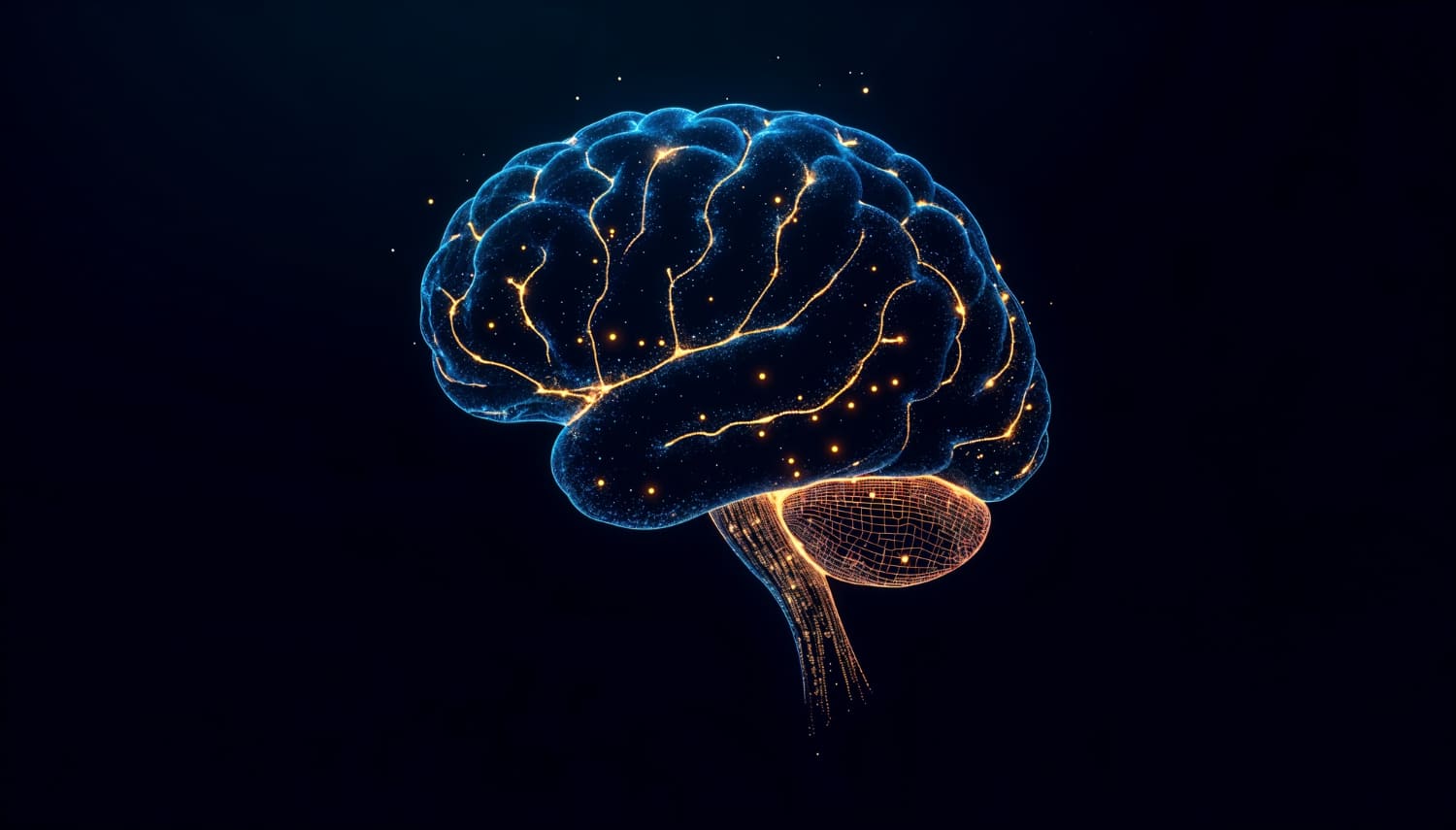
The primary cause of the disorientation was the disruption of the entorhinal cortex, the region of the brain where the grid cells are located. Under normal conditions, these neurons are activated in a precise geometric pattern, creating a kind of coordinate system or internal map of the environment.
Under the influence of cortisol, this clear pattern of activity became fuzzy and blurred. This was especially evident in the absence of external landmarks: the brain almost completely lost the ability to use its internal navigation map.
An interesting discovery was that when the navigation system in the entorhinal cortex was suppressed, the brain tried to activate another area — the caudate nucleus. Scientists believe that this is an attempt by the brain to switch to alternative orientation strategies to compensate for the loss of the main “map”.
This study is important for understanding the development of Alzheimer’s disease, as the entorhinal cortex is one of the first areas affected by this condition. Since chronic stress is considered a risk factor for dementia, the findings provide insight into how stress hormones can destabilize this sensitive region of the brain.
Published
March, 2026
Category
Science
Duration of reading
1-2 minutes
Share


Source
Scientific Journal PLOS Biology. Article: Cortisol treatment impairs path integration and alters grid-like representations in the male human entorhinal cortex
Don’t miss the most important science and health updates!
Subscribe to our newsletter and get the most important news straight to your inbox