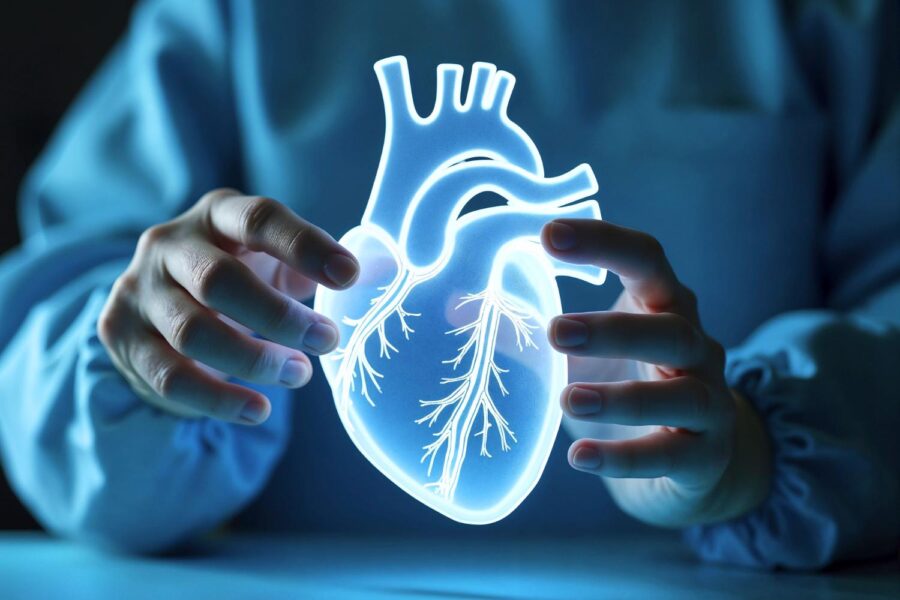
Our liver can grow back
The liver is a real champion among organs in its ability to regenerate. Even after surgery, it can grow back like a lizard’s tail. And now it has become clear what genes and DNA fragments help it to do this. Scientists from the University of Barcelona have looked inside the genome and found regulatory regions of DNA that ‘switch on’ the repair processes. Their study is published in the journal Cell Genomics.
The team studied how the activity of genes in the liver of mice changes after surgical removal of part of the organ. It turned out that special fragments of DNA – enhancers, or enhancers that trigger the necessary genes – come to the rescue. And the most interesting thing is that some of these enhancers are reused from the time when the liver was just forming in the embryo. The adult liver remembers how it was ‘born.’
To recover, the organ temporarily sacrifices some of its functions. The activity of genes responsible for fat metabolism and bile production is muted. This is necessary to free up resources for the most important thing – cell growth and division.
At the first stage of recovery the key role is played by proteins – the so-called transcription factors AP-1 and ATF3. It is as if they flick a toggle switch and start the regeneration programme. A little later, another protein, NRF2, comes into play to keep everything under control.
This discovery is not just important for science. Understanding how the natural mechanism of regeneration works could in the future lead to the creation of drugs that can help trigger or enhance regenerative processes in people. For example, after surgery, injury or in the case of liver disease.
Although there is still a long way to go before applications in clinics, the research offers hope. It’s like mapping out a map with clearly marked routes that can be used to guide the body towards recovery in the future.
So perhaps one day doctors will learn not just how to treat the liver, but how to help it rebuild itself – by pinpointing signals to the right parts of DNA.
Published
June, 2025
Duration of reading
1-2 minutes
Category
Science
Share


Don’t miss the most important science and health updates!
Subscribe to our newsletter and get the most important news straight to your inbox