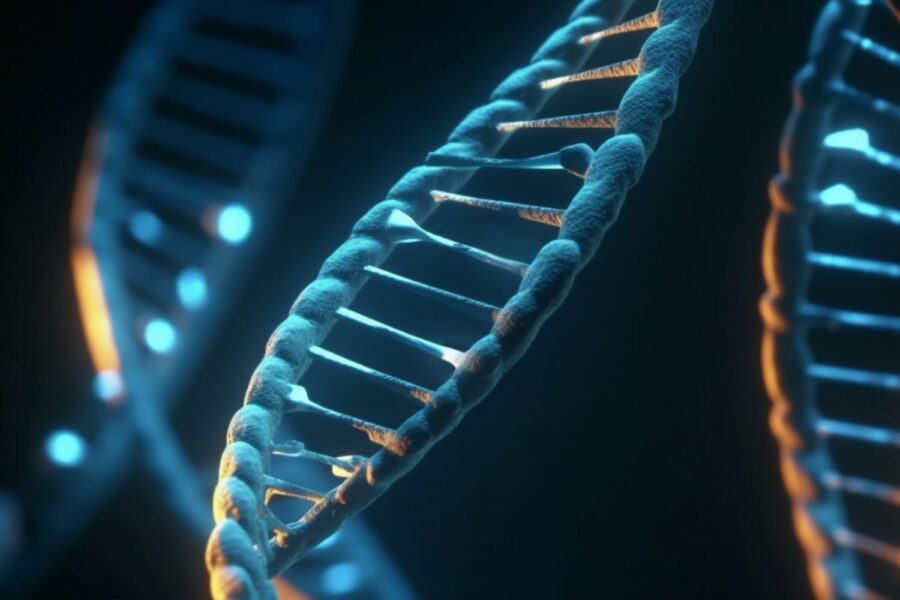
One gene rejuvenated the cells and extended the lifespan of mice
Every organ and tissue gradually loses its function and integrity with age. Science has already described the “signs of aging” — key processes that time affects and that can be considered as levers. If they are properly targeted, it is theoretically possible to reverse aging and rejuvenate tissues. A team from the Wyss Institute at Harvard University has taken an important step in this direction: they found a gene that rejuvenates cells without depriving them of their identity, and they proved its effect on the entire organism.

The starting point was the discovery made by the Japanese scientist Shinya Yamanaka, which was awarded the Nobel Prize: if you force a cell to intensely activate four special genes (“Yamanaka factors”), it can return to an almost infantile state, from which it is capable of becoming any other type of cell. And if you activate these genes only in short pulses, old cells are partially rejuvenated, but continue to do their previous work. This showed that aging is not a unidirectional process, since aged cells retain a hidden reserve for rejuvenation.The constant activation of these factors increases the risk of tumor development. Therefore, scientists are looking for safer ways to restore youthfulness to cells.
To find such solutions, the team first created a special tool — an age predictor. It works based on gene activity; it was trained on skin cell samples from 464 donors of various ages. The algorithm reads which genes are active and to what extent in a cell, and on this basis determines its biological age. That is, just as the mileage and condition of parts can be used to assess the actual wear and tear of a car, regardless of its year of manufacture. The accuracy of the tool was confirmed using cells from donors aged 55, 65, and 79, to which various experimental rejuvenation methods were applied.
Armed with such an age‑counter, the researchers selected a group of genes that could influence aging and tested which of them, when overexpressed, shifts aged cells toward a younger profile. This is how the SRSF1 gene was identified. Its activation reduced several signs of aging at once: the accumulation of old cells that no longer divide but also do not die, disruptions in the renewal and disposal of cellular proteins, and chronic low‑grade inflammation, which is called “inflammaging” — inflammatory aging. In addition, the cells’ programs for repairing damaged DNA were restored.
It is fundamentally important that rejuvenation did not turn the cells into something different; they retained their characteristic shape, continued to perform their usual tasks, and did not launch a reset program, as Yamanaka factors do.
Then came the decisive stage — testing on a living organism. The SRSF1 gene was packaged into a safe viral vector that delivers it primarily to the liver, and it was administered to mice. The results exceeded expectations. The animals lost strength and aged more slowly, and their average lifespan increased by 14% compared to normal mice. This allowed SRSF1 to be called a geroprotective gene, i.e., one that protects against aging.
The molecular work of SRSF1 is quite delicate, as it is involved in “editing” the instructions that the cell uses to assemble its proteins. According to researchers, they have observed a significant shift specifically in these processes, but they are only just beginning to understand how such changes trigger multifaceted tissue rejuvenation. There is also a bold hypothesis: if the liver is targeted, rejuvenation signals may be transmitted to other organs as well, amplifying the effect throughout the body.
Aging research is currently at a turning point, because biotechnologies are advancing so rapidly that they are beginning to influence the very processes that ultimately lead to the death of about 90% of people.
Before we can talk about therapy for humans, we need to address the issues of safe gene delivery and the correct dosages, as well as to study in more detail how SRSF1 affects the entire body. The very idea of reconfiguring an already existing cellular mechanism, rather than rewriting it from scratch, may open up a promising path to restoring youthfulness to tissues.
Published
October, 2026
Updated
Category
Science
Duration of reading
4-5 min
Share


Source
Scientific journal Nature Aging. Article: Transcriptomic reprogramming screen identifies SRSF1 as a regulator of aging
Global health science — in clear language
We select and translate the best international publications. Read 3 key materials about longevity every week!