Feeling younger slows aging
Although aging is a universal phenomenon, everyone perceives and experiences this process differently. Subjective age – how old a person feels – can be more important than chronological age, as it affects a number of health indicators later in life.
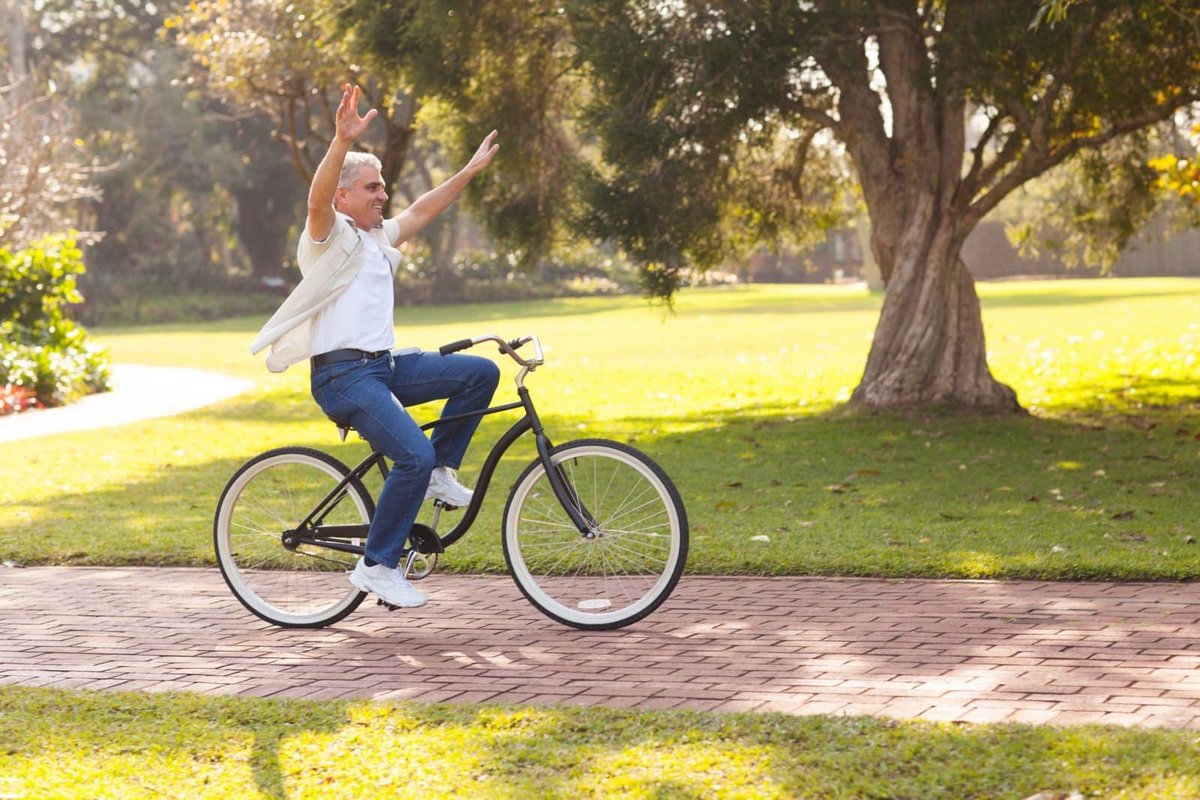
Understand the concept
The aging process can be explained by the gradual decline in health and quality of life with age. However, on the other hand, people may feel “old” because of the cultural stereotype – “I am old, so I must be old and sick”. Thus, some elderly, reaching a certain age, remain active and active, continue to work with a full load, while others stop taking care of themselves, spend more time at home, put up with illnesses, and retire.
In this regard, along with the chronological age, there is a subjective age – a person’s perception of his own age, which is formed as a result of the accumulation of life experience, from deep beliefs and expectations. If the chronological age indicates how many years a person has actually lived, the subjective age indicates how many years he feels himself to be. The former is still the main factor characterizing negative changes in health in the mature period of life, but the latter, in turn, may be the explanation why everyone ages differently.
Don’t miss the most important science and health updates!
Subscribe to our newsletter and get the most important news straight to your inbox
The older, the younger
The perception of age differs greatly among people of different groups. As observations have shown, adolescents from 12 to 17 years old and young people from 18 to 24 years old tend to evaluate themselves older, but after reaching the age of 25, the tendency to evaluate themselves younger than their chronological age increases. Over time, as a rule, the difference between subjective and chronological age only increases: after 40 years of age it can reach 10-15 years, and after 60 – even 30 years and more.
However, not everything is so flawless. There are certain phenomena in life that affect the negative perception of the internal “picture” of health. Such factors as fatigue, financial instability, social isolation, pessimistic mood and others affect a person in such a way that he/she, even if unconsciously, begins to “age”. Dissatisfaction with the quality of life leads to inadequate perception of one’s appearance, general health and, accordingly, one’s own age.
Young subjective age, on the contrary, is determined by quality medical care, availability of a job, financial well-being, social contacts, level of education, emotional well-being, and getting rid of stereotypes of aging. Optimism, demand, and life satisfaction are also associated with a younger self-perception. Thus, people who feel full of life and make plans for the future feel younger than their years, despite their experiences and life obstacles.
Subjective age and health
In psychology, the difference between chronological and subjective age is called a cognitive illusion. When older people subjectively assess themselves as older than their age, then we are talking about a negative cognitive illusion; when older people feel, think, and act like younger people, then we are talking about a positive one.
Older people in the first category rate themselves less happy and also report lower satisfaction with old age. U.S. and Canadian researchers have found that feeling older is associated with negative age-related changes, including declining vision, and psychosocial problems, such as intergenerational disconnection and an inability to absorb and utilize new information. A number of other studies have shown that negative attitudes towards aging and assessment of subjective age as older than chronological age cause corresponding consequences for the body: general physical and mental condition deteriorates, cognitive functions decrease, which contributes to the development of dementia, walking speed slows down, blood concentration of C-reactive protein – a marker of inflammation – increases, the risk of vascular crises, depression and other diseases increases, pathological changes in the brain occur, and the risks of hospitalization increase. In addition, a large study of subjective age, conducted by psychologist Yannick Stephan and colleagues, showed that feeling 8-13 years older increases the risk of premature death by 18-25%.
People in the second category, on the contrary, tend to describe their well-being as good, feeling happy and in demand. Younger subjective age is associated with better cognitive abilities in the elderly: they have better episodic memory, executive function, and cognitive activity – the latter is also consistent with the results of another marketing study: older people who feel younger are more focused on trying new brands, and are active in seeking consumer information. In addition, they are better able to cope with stress, have a more positive attitude towards other people, and adapt more successfully to new life conditions. There is also a low risk of mortality among them.
There are many reasons why subjective age has such an impact on health. All this can be the result of cumulative changes in character. For example, a person who feels younger than their chronological age may continue to enjoy life, new travels, and interesting activities well into old age. Positive thinking can have an epigenetic effect on the body, through which physiological indicators of health are improved.
However, the mechanism linking physical and mental health can work in both directions: if a person is depressed, feeling physically weak, forgetful and inattentive, they will almost certainly feel old. Thus a vicious circle is formed: psychological and physiological factors add years to subjective age, which in turn makes the person feel older and more vulnerable.
Thus, subjective age can predict health much better than the date on a passport.
Defense or infantilism?
Some psychologists argue that feeling younger than one’s age may indicate social immaturity and infantilism. When a person inadequately imagines his or her future, he or she may face a serious crisis and feel that his or her hopes are unfulfilled because they are not supported by anything.
On the other hand, young subjective age can be a kind of defense mechanism – when a person rejects negative stereotypes about aging. Thus, people arbitrarily induce a “feeling of youth” in order to develop a new model of behavior. In particular, this shows the results of a study by German psychologist Anna Kornadt from Bielefeld University.
She suggested that in different spheres of life a person can change his subjective age: for example, at work he feels this way, and with friends – differently. Kornadt found that in financial and health issues people tend to underestimate their age, and this is understandable – it is in these areas old age has a negative connotation. This kind of psychological defense can protect against prejudice against old age and the elderly, provide a boost of optimism and health benefits.
Always be young in mind and body
The conclusion from all the above studies is the same: calendar age is just a figure and not an indicator of old age. If people think that in time they will be doomed to illness, idleness and loneliness, they really begin to have a negative attitude to the aging process and to life in general, than they themselves reduce their opportunities. However, it is always worth remembering that no matter how old one is, the limitations that come with age are very possibly dictated by one’s own self-image.
Literature
Kim N. “How old do you feel yourself to be?”
Melekhin A. I. I., Sergienko E. A. “Subjective age as a predictor of life activity in late ages”
Robson D. “How old do you feel? Your future depends on it”
Ananthaswamy A. “Why you can’t help but act your age”
Photo: yandex.net
Published
June, 2024
Duration of reading
About 3-4 minutes
Category
Aging and youth
Share

