Wu-wei principle: Success is not in fuss, but in observation
Wu Wei is a category of Chinese philosophy and culture, the basic principle of Taoism. In the literal sense, “wu-wei” is translated from ancient Chinese as “absence of doing”, which is the opposite of the concept of “wei” — doing, action, practice, implementation. However, “wei” in a certain context can mean coercion, artificiality, falsity, interference. Wu-wei also has different translations: non-doing, contemplative passivity, lack of motivation, and inspiration.
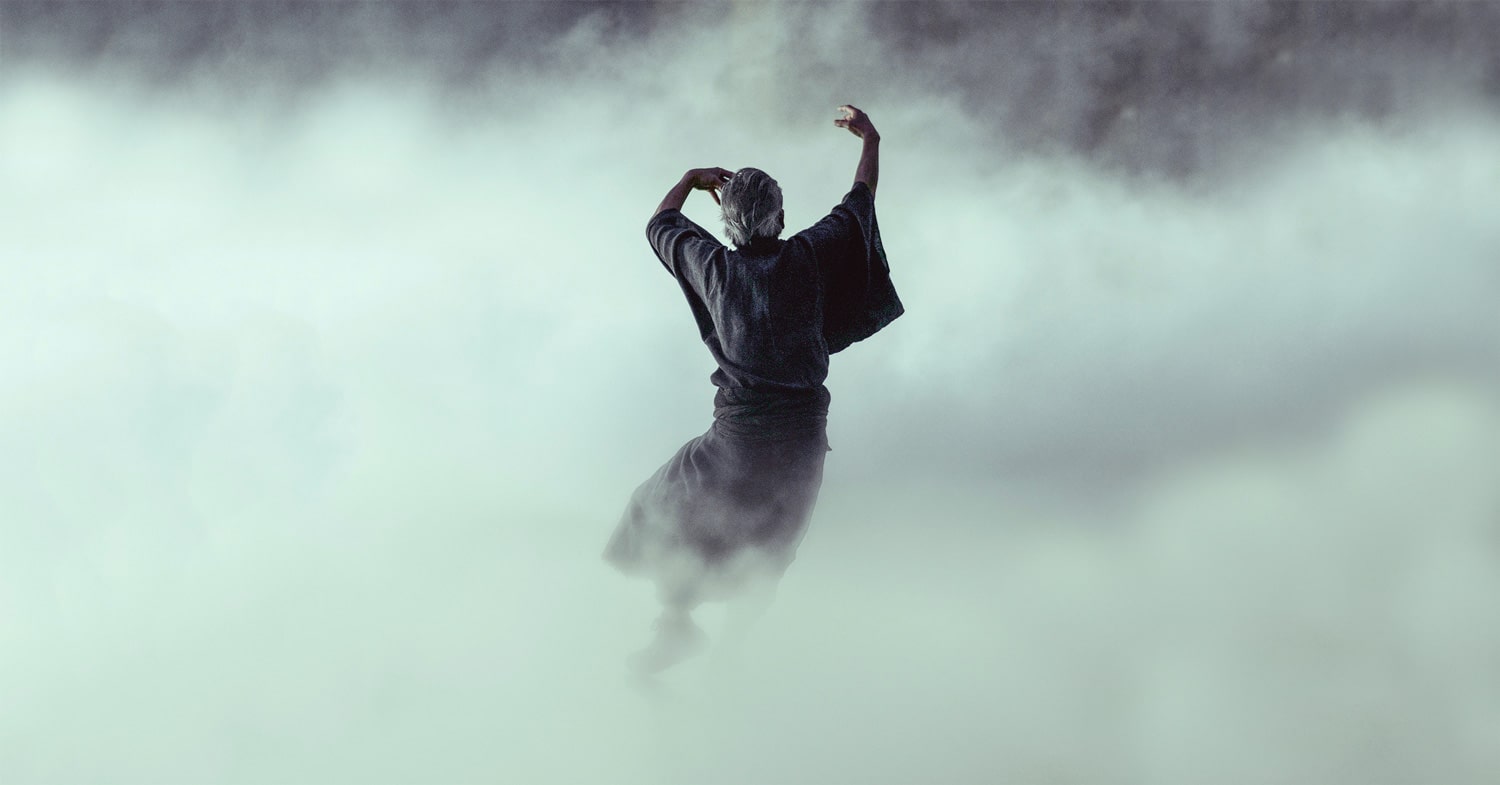
The basic principles of Wu-wei
One of the most famous researchers of the principles of wu-wei and Taoism in general, the British philosopher and writer Alan Watts, who headed the California Institute of Integral Studies and lectured at Harvard, pointed out that the concept of wu-wei should not be identified with lethargy, apathy, connivance or ordinary passivity.
In his book “The Way of Water,” Watts writes: “The word wei can mean “to be,” “to do,” “to produce,” “to practice,” “to carry out,” while the hieroglyph corresponds to the adjectives “false,” “far—fetched,” “fake.” In the context of Taoist writings, wei quite definitely means “coercion”, “interference”, “artificiality” — in other words, attempts to act across the fibers of li [the concept of “li” refers to the principle of the unity of the universe and everything that exists in it — approx. the author]. Therefore, wu-wei as “non-compulsion” implies actions in the direction of the li fibers: falling towards the push, swimming with the current, setting sail to the wind, using the tide for practical purposes, and yielding in order to win.”
Describing the essence of wu-wei, Watts cites martial arts as an example.: “In judo, for example, a wrestler uses muscle strength — but only at the right moment, when the opponent made a careless movement and lost his balance.”
The philosopher also compares following the principles of wu-wei with the flow of water, which always follows gravity: if an obstacle appears in the path of the flow of water, the water rises to find a new channel. Following gravity means not fighting obstacles, not forcing yourself, but being in the flow of life, accumulating energy to use it at the right moment.
Alan Watts emphasizes that in order to live according to the principles of Wu-wei, it is necessary to have a deep knowledge of the principles of existence and development of the external and internal world. It is the knowledge of oneself and the world that allows one to achieve adequacy, thanks to which in all life situations one can spend a minimum of effort and get the best result.
Don’t miss the most important science and health updates!
Subscribe to our newsletter and get the most important news straight to your inbox
The relevance of Wu-wei in the modern world
Edward Slingerland, a specialist in psychology and a professor at the University of British Columbia who studies the wu-wei phenomenon, describes this concept as “like a kind of ‘light action’ or spontaneous action.”
In his book “And don’t try! Ancient wisdom, modern science and the art of spontaneity” is how the professor characterizes modern society.: “Our personal and professional lives are increasingly linked to the accelerating pursuit of productivity, leaving leisure, vacations and simple pleasures behind. As a result, people of all ages spend their days glued to smartphones, immersed in an endless stream of games, emails, texts, tweets, calls; they get up too early, go to bed too late and fall into a restless sleep in the bright light of tiny displays.”
According to Slingerland, the excessive attention paid by modern man to reason, willpower and self—control does not allow us to appreciate the importance of “bodily thinking” – semi-automatic actions stemming from the subconscious mind with little or no involvement of the conscious psyche. As a result, we too often force ourselves to strain harder and move faster where pressure is more likely to be harmful.
How does the brain work in the wu-wei state?
Professor Edward Slingerland describes an experiment: brain function was studied in people who were in a state close to wu-wei. We are talking about conducting an MRI scan of the brain of pianists who, at the first stage of the study, played the scale (a mechanical action requiring attention), and at the second, improvised (creative activity).
At the first stage, the most active part of the brain was the lateral prefrontal cortex, responsible for self-control, critical thinking, problem solving, and organization. When the study participants began to improvise, activity in the prefrontal cortex decreased, but at the same time activity increased in areas of the brain responsible for “conflict recognition”, for example, in the anterior cingulate cortex. This area is closely connected to the prefrontal cortex: it “awakens” it when incomprehensible situations arise.
Edward Slingerland points out that in a spontaneous but skill-honed situation (like jazz improvisation), the anterior cingulate cortex continues to evaluate what is happening, despite the fact that the lateral prefrontal cortex shuts down. It is this combination of brain activity that leads to that relaxed but alert state that we enter when we are engrossed in some difficult task. Thus, a person practicing Wu wei is permanently in a calm, peaceful state and at the same time is ready to respond promptly to any situation at any moment.
How can following the principles of Wu-wei help a modern person?
According to Slingerland, people who follow the principles of wu-wei in their lives are much more likely to be in a state of flow, described by Mikhail Csikszentmihalyi, a professor of psychology at the University of Chicago. Among the similarities between the characteristics of the wu-wei state and flow, Slingerland cites “deep and at the same time relaxed concentration, responsiveness, excellent productivity, deep satisfaction, depersonalization, and a change in the perception of time.”
“Wu Wei is a state in which we can be very active and efficient, while being in absolute relaxation and trust in the world around us,” explains Edward Slingerland. The author of books and scientific papers considers: by making movements only in those moments when they seem natural to us, we will become much more successful in any field, be it business, romantic relationships or creativity.
“People who adopt the wu-wei philosophy believe that they are not doing anything special and at the same time can create brilliant works of art, confidently conduct business negotiations or even bring the whole world into a balanced order,” Slingerland writes in the book “And don’t try!”. “Calm action without stress and worries about future success is the key principle of Wu—wei harmony.” In fact, wu-wei is an inspired, creative state, a feeling of fullness of energy and focus on higher goals. A person following Wu-wei does not waste his strength, but puts his energy into important things at the right time. At the same time, there is a feeling that “the whole world is on your side.”
Wu wei is an inspired state of a person who is filled with vital energy and dedicates his actions only to the highest goal. This person does not expend energy on small things and acts only when the best time comes for it. And then the whole world supports him.
Conclusion: the use of Wu-wei principles in psychology
Currently, there are no areas of psychology and psychotherapy based solely on the Wu-wei philosophy. However, many of the recommendations of psychologists contain aspects close to the principles of Wu-wei.:
- Take a break. Instead of immediately starting to destroy the obstacle that has arisen on the way to the goal, it is important to stop, calm down, “disconnect” from the situation and only then look at the situation from the outside. This will help you understand if this obstacle is currently surmountable or maybe worth waiting for. Observation will provide an opportunity to see the best ways to solve the problem, and in some cases, it will give you an understanding that giving up the fight in this case will be the best option.
- Give spontaneity a chance. Many people build their lives exclusively within the framework of a given program and are simply not accustomed to hearing their own desires. This approach makes it impossible to achieve harmony with the world, even planned successes will not bring joy. Therefore, you should start listening to your desires and allow yourself to follow them, even if it contradicts common sense. Over time, you will be able to make sure that things done with pleasure bring much more dividends: first, moral, and then material.
Photo: craig whitehead
Published
July, 2024
Duration of reading
About 3-4 minutes
Category
Complementary medicine
Share

