Rheumatoid arthritis. Psychosomatics of diseases
Psychosomatic disorders and diseases also include various disorders of the motor system (cases of chronic progressive polyarthritis, rheumatoid arthritis and other collagenoses).
Rheumatoid arthritis is a chronic autoimmune systemic inflammatory disease of connective tissue with a predominant lesion of the joints, such as erosive and destructive polyarthritis, followed by joint deformity and the development of ankylosis. This is the most common chronic polyarthritis. Women get sick three times more often than men. Rheumatoid arthritis most often begins in 30-50 years. In 10-20% of cases, the disease is steadily progressing. The severity of arthritis varies from slight stiffness in the morning to complete disability. More often there is a gradual onset of the disease. Stiffness and pain appear in the small joints of the hands and feet, which increase in the morning after a long stay in one position and disappear with movement. Sleep is disrupted. The duration of stiffness varies: in severe cases, it lasts for several hours. The proximal interphalangeal, metacarpophalangeal, and wrist joints are deformed. The deformation of the interphalangeal joints is especially noticeable, they become fusiform. In 25% of cases, the disease begins with monoarthritis, such as the knee joint.
In rheumatism, the main pathological process occurs in the heart. Joint damage is of a secondary nature: arthritis in rheumatism is called “volatile” because they are not pronounced, do not last long (several days), pass spontaneously, and most importantly, they seem to jump from one joint to another (elbow, ankle, knee).
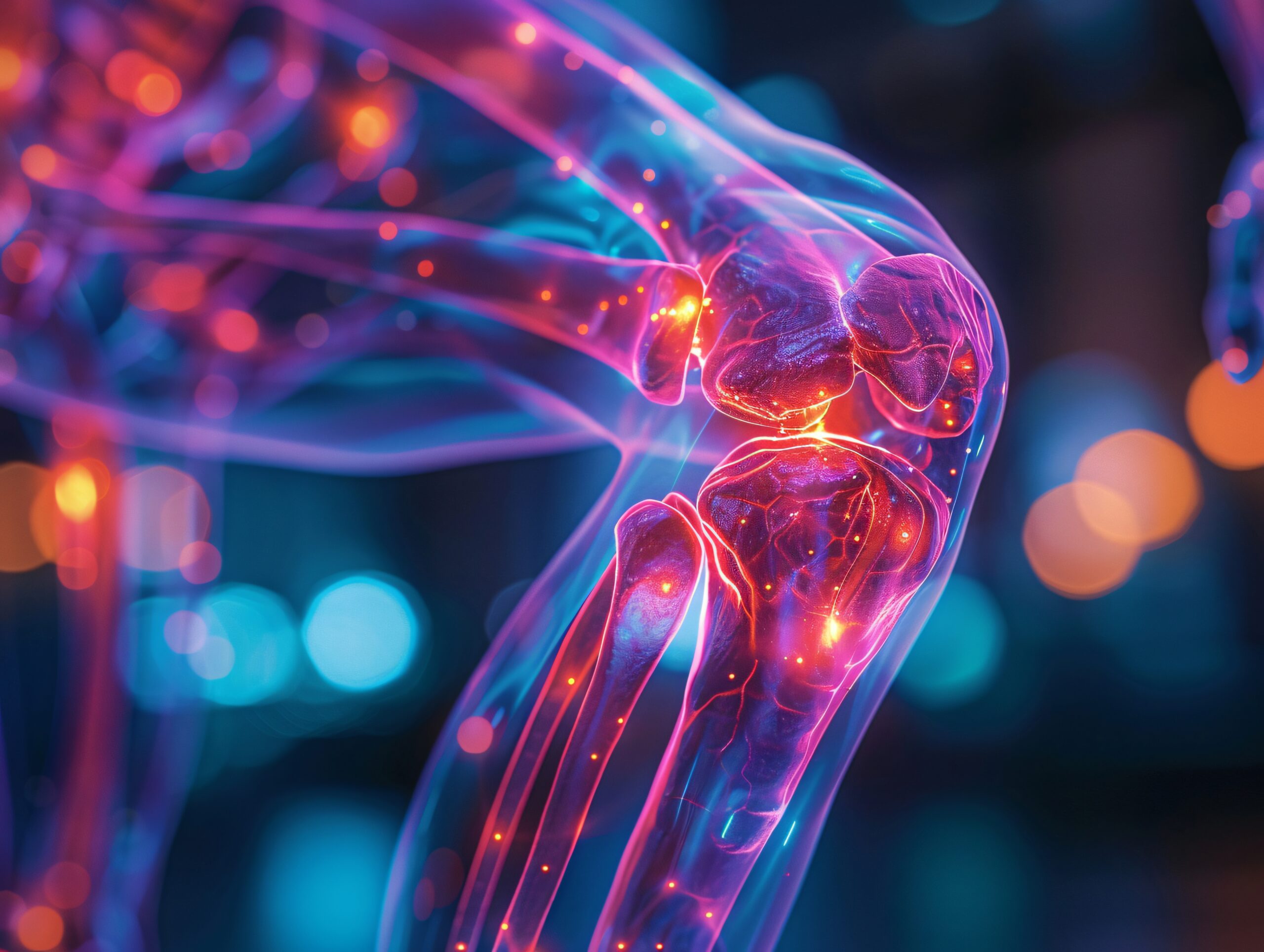
Side view of the knee joint in the section.
Rheumatoid arthritis has special symptoms:
- damage to three or more small joints of the hand for more than three months;
- symmetrical joints of both arms and/or legs are affected.;
- there is stiffness of movements in the affected joints in the morning, which gradually passes during the day.
A typical deformity of the phalanges of the fingers in a patient with rheumatoid arthritis.
This group of diseases includes the following:
- Juvenile rheumatoid arthritis is a rare disease, but it poses a serious medical and social problem. The onset of the disease at the age of 16 years. The most common cases are oligoarthritis (50% of cases) and polyarthritis (40%).
- Juvenile ankylosing spondylitis and Still’s syndrome (a severe form of the disease with damage to internal organs) occur in 10% of patients. Still’s syndrome is usually seen in young children. High remitting fever and a copper-red rash, enlarged lymph nodes, splenomegaly and pericarditis are characteristic. Then arthritis of the wrist, knee, ankle, metatarsophalangeal and hand joints develops. If juvenile rheumatoid arthritis is suspected, the child is referred to a rheumatologist.
- Rheumatism is commonly found in children and adolescents. The first attack usually occurs at the age of 5-15 years after angina caused by Streptococcus pyogenes group A. It is characterized by an acute onset (fever, arthralgia, weakness), migrating arthralgia and arthritis with predominant damage to large joints (knee, ankle, elbow and wrist). The clinical picture may be dominated by carditis. Arthritis is sometimes mild or absent.
- Systemic lupus erythematosus, which is characterized by symmetrical polyarthritis with a predominant lesion of small and medium joints. Deformities and subluxations are caused by damage to joint capsules, ligaments and tendons. Most often, the proximal interphalangeal joints of the hand and wrist joints are involved. Bone destruction usually does not occur. The first manifestations of systemic lupus erythematosus are often similar to fibromyalgia or rheumatoid arthritis.
- Systemic scleroderma – at an early stage, 25% of patients develop polyarthritis with a predominant lesion of the interphalangeal joints of the hand. The soft tissues are swollen, the fingers are thickened, look like sausages. 85% of patients have Raynaud’s syndrome.
These diseases are closely related to social and mental stress and complex cause-and-effect relationships. Psychosocial influences, interacting with factors of hereditary predisposition, personality traits, and the type of neuroendocrine reactions to life difficulties, can change the clinical course of the diseases listed above. The effect of psychosocial stresses, provoking internal conflicts and causing an adaptive response, can manifest itself covertly, under the guise of somatic disorders, the symptoms of which are similar to those of organic diseases. In such cases, emotional disorders are often not only overlooked and even denied by patients, but also not diagnosed by doctors.
In different disorders, the influence of mental and somatic factors varies. Therefore, individual psychological diagnosis is of particular importance, since somatic causes are poorly proven, and somatic symptoms are often controversial.
Psychosomatic effects are most clearly traced in rheumatoid arthritis, and therefore, they are the most well-studied in this disease. Among the personal characteristics of patients with this disease, the following can be noted::
1) An extremely critical attitude towards the manifestation of force. The feeling that you are being burdened with too much;
2) In childhood, these patients have a certain parenting style aimed at suppressing the expression of emotions with an emphasis on high moral principles. It can be assumed that constantly suppressed inhibition of aggressive and sexual impulses since childhood, as well as the presence of an overly developed Superego, forms a maladaptive protective mental mechanism – repression. This protective mechanism involves the conscious displacement of disturbing material (negative emotions, including anxiety, aggression) into the subconscious, which in turn contributes to the emergence and increase of anhedonia and depression. Prevailing in the psychoemotional state are: anhedonia – a chronic deficit of feelings of pleasure, depression – a whole range of sensations and feelings, of which rheumatoid arthritis is most characterized by low self-esteem and guilt, a feeling of constant tension, because the suppression mechanism prevents the free release of mental energy, the increase of internal, hidden aggression or hostility. All these negative emotional states, with prolonged existence, can cause dysfunctions in the limbic system and other emotionogenic zones of the hypothalamus, changes in activity in the serotonergic and dopaminergic nontransmitter systems, which in turn leads to certain shifts in the immune system, and together with the emotionally dependent tension in the periarticular muscles found in these patients (due to constantly suppressed psychomotor arousal It can serve as a mental component of the entire mechanism of development of rheumatoid arthritis. It is noteworthy that patients themselves usually do not seriously assess their feelings and limitations, and for a long time their activities remain active despite limited movement.
The specific structure of the “rheumatic personality” was described back in the 50s of the twentieth century. The role of primary children’s motor skills was emphasized, the inhibition of which is considered more than protective today. Probably, this primary activity was given great importance. One cannot ignore the personality development caused by the disease and the resulting isolation and limitation of interests to the area of everyday life needs.
In general, we can talk about the absence or unsuccessful balancing of the poles of softness and rigidity in it. Usually, the tendency to gentleness is suppressed by increased motor tension and muscular actions, and in women, by “male protest.” There is a preference for outdoor activities and strength sports, a tendency to suppress spontaneous expression of feelings, and to restrain them.
All patients with rheumatoid arthritis have three character traits with sufficient consistency:
- Persistent manifestations of over-conscientiousness, commitment, and external compliance, combined with a tendency to suppress all aggressive and hostile impulses, such as anger or rage.
- A strong need for self-sacrifice and an excessive desire for help, combined with super-moral behavior and a tendency to depressive mood disorders.
- A pronounced need for physical activity before the development of the disease (professional sports, intensive physical work).
These character traits are presented in rheumatoid arthritis as something frozen and exaggerated; they are inflexible and not adapted to the demands of the environment. From a psychodynamic point of view, this is a characterologically neurotic flaw in the conflict in the sphere of aggression and ambition. The aforementioned personality traits are also hyper-compensatory protective measures against the underlying conflict. Unscrupulousness, refusal to express their feelings and sacrifice create a protective barrier for the possible breakthrough of aggressive impulses and allow them to get rid of hostile feelings. Depressive manifestations and a tendency to self-sacrifice are considered as protective structures against destructively experienced arbitrariness. A kind of tolerance, resignation to fate, and vivacity are often described, despite limited mobility and pain. Psychological questionnaire tests confirm many psychodynamic prerequisites and personal data, and they reveal marked modesty, submissiveness, and compliance as personality traits. Signs of a strong “super-Ego” are revealed, i.e. patients are conscientious, self-contained, responsible. In the projective tests, there are few interpretations of motor acts compared to the control groups.
An open-minded observer is struck by the common signs that are constantly found in patients with rheumatoid arthritis, which include both primary character traits and disease-dependent manifestations. His peculiar, inexplicable, unwavering patience is impressive. Patients with primary chronic polyarthritis are experienced patients with whom there is little trouble, although it is in such patients that one would expect the greatest difficulties. They are modest and undemanding, often to the point of indifference. There are almost never obvious signs of depression, despite the perceived severity of their illness and an unfavorable prognosis. Their world of self-perception shows a certain limitation due to the reduction of their consciousness in their bodily sphere.
The most typical mental disorders include asthenic symptoms, depressive phenomena with anxiety, fears, ideas of self-blame, a special variant of dysmorphophobia syndrome due to the presence of defects in appearance, persistent sleep disorders, psychopathic disorders and often phenomena of psycho-organic syndrome.
Experimental studies have shown that chronic articular rheumatism has an increased tone in case of irritation and aggravating situations compared with the indicators in the control group. It is obvious that patients with articular rheumatism transfer their reactions to muscular reactions. Patients with rheumatoid arthritis show various mental stimuli, which is determined during interviews about conflict or during other psychodiagnostic techniques. It has been proven that aggressive feelings and conflicts in patients with rheumatoid arthritis lead to increased electromyographic activity, which is most often detected in the affected area and in the muscles around the affected joints. Muscle tension lasts longer than the stimulus acts. These research results confirm the psychosomatic hypotheses. But they should be evaluated critically, since increased muscle tension in the area of the affected joint can also be considered as a consequence of the pathological process in it.
It is impossible to deny the existence of a vicious circle: pain syndrome caused by the excitation of receptors in the joint, in its environment or in the periarticular muscles, leads to a reflex ischemic painful state of tension. Emotionally increased muscle tone of skeletal muscles or the trunk causes increased sensorimotor excitability. At the same time, it is always possible that joint damage, microtrauma, and an autoimmune response may have a reinforcing effect (primary or secondary) on a situationally and psychologically determined increase in muscle tone.
Researchers note that emotionally stressful events have an impact on chronic joint rheumatism and can provoke an exacerbation of the disease. Mental stress includes, first of all, a crisis in interpersonal relationships, the death and loss of loved ones, problems of personal authority and marriage. The external cause causes internal intense aggression, which is suppressed by the patient. The resolution of aggressive impulses is a combination of increased self-control and “charitable” tyranny over others. Mothers suffering from rheumatoid arthritis tend to strictly control almost all motor manifestations in their children.
In addition to the fact that the very fact of having a somatic disease and the assessment of the disfiguring effects of the disease by patients often causes quite predictable “psychologically understandable” reactions to the disease, these diseases often cause disorders of the central nervous system.
Each patient reacts in his own way to the disease he has, therefore, it is reasonable to take into account the following features; the psychological impact of a chronic illness, attitude to diagnosis – recognition or lack of understanding, manner of communication and attitude to the doctor. The attitude of patients to the side effects of drugs also varies widely. People with frequently recurring diseases often experience depression, which aggravates the clinical picture of suffering by the mechanism of a vicious circle. The approach to patients with severe functional defects is especially difficult. In this case, it is necessary to grasp the often very shaky line between reactive depression, when traditional psychiatric treatment is necessary, and dysphoric emotional reactions, even if pronounced, but corresponding to the severity of the physical illness. Dysphoric emotional reactions are a mood disorder, a kind of constellation of grief, loss of moral strength and a sense of being “torn out” of life, mental and physical decline. These reactions do not respond well to treatment with antidepressants and psychotherapy. Their dynamics is mainly determined by the general clinical condition of the patient. Over time, with successful rehabilitation or the patient’s habituation to his altered status, improvement occurs. Rehabilitation clinics often diagnose depression where it does not exist, and, conversely, do not recognize where it actually occurs.
In conclusion, it should be said that psychosomatic medicine allows us to look at the concept of the disease in a new way, in a different way, to analyze its causes and see in its manifestations what the wound was hidden.
The development of issues of psychosomatic medicine contributes to the revival of the art of treating a sick person, not an illness.
Don’t miss the most important science and health updates!
Subscribe to our newsletter and get the most important news straight to your inbox
Published
July, 2024
Duration of reading
About 3-4 minutes
Category
The subconscious mind
Share

