Sequencing: getting to know yourself down to the very molecules
Thanks to the decoding of the genetic code, science and medicine have made a revolutionary leap. It has become possible to predict and prevent diseases by “reading” the information embedded in DNA. Each letter of the genetic code carries information about how the body works. By understanding the laws by which it works, it will be possible to rewrite defective programs and increase human life expectancy.
What is sequencing?
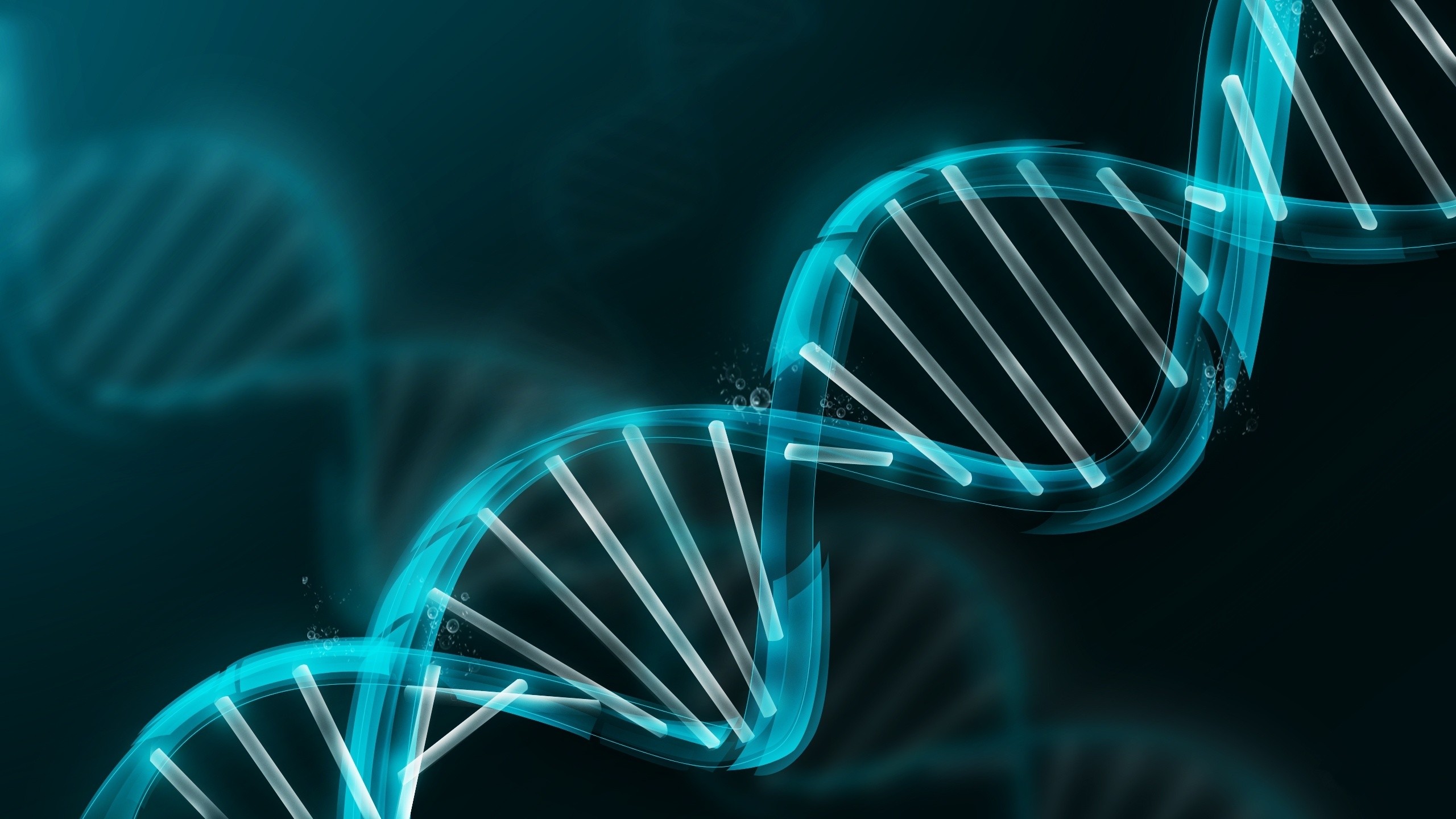
Until the 1950s, there was no clear understanding of how genes were written into the structure of nucleic acids. The double helix model of DNA was described only in 1953 by biologists F. Crick and D. Watson. In a short time, this was followed by discoveries that made it possible to decipher the genetic code. It turned out that all the hereditary information contained in DNA is written as a sequence of four nucleotides — adenine (A), guanine (G), cytosine (C), thymine (T) or uracil (Y) in the case of RNA.

Source: www.vecteezy.com
Understanding the basic principles of the structure of nucleic acids and the encoding of genetic information has given science a powerful impetus to find effective ways to determine the sequence of structural units of DNA and RNA, nucleotides. It is customary to combine all these methods with a common term — sequencing. The emerging sequencing methods opened the way to the “genomic era.”
Don’t miss the most important science and health updates!
Subscribe to our newsletter and get the most important news straight to your inbox
New features
In the mid-90s, an incredible scientific project, The Human Genome, was launched in the USA. His goal was to decipher the genetic code in the DNA contained in human chromosomes. The project lasted 13 years. The results have opened up unprecedented prospects for scientists and doctors and allowed them to solve a number of applied and fundamental problems, such as the creation of new drugs, vaccines and other products. Finally, it has become possible to search for genes associated with certain diseases and congenital malformations, although this is not always an easy task, for example, in relation to Alzheimer’s disease. However, there are already some breakthroughs: Protective genes have been found that slow down cognitive decline and prevent the occurrence of disorders in brain tissue associated with improper protein folding. This method also helps in research in the field of oncology. For example, the authors of one of the papers published in the journal Nature learned how to predict the severity of breast cancer by analyzing mutations in tumor cells using this method.
These technologies provide an opportunity to penetrate into the evolutionary history of humans, animals and plants, as well as to understand the causes of mass extinctions that occurred on Earth. By sequencing the genomes of the remains, it is possible to learn about the origin of the species, the age of the organism, and the environmental conditions in the habitat. It was through the study of DNA fragments that a new species of ancient people, the Denisovans, was isolated.
Initially, sequencing was very expensive and only very rich people and organizations could afford it. Today, almost every scientific or medical laboratory is capable of ordering or performing this procedure on its own. There are many companies offering to make a genetic test and, based on it, offer individual recommendations that will help improve health and prolong life. Knowing that one of the genes is defective, it is possible to mitigate the harm from its manifestation in various ways — from a suitable lifestyle to gene therapy. Such a personalized approach is considered to be more advanced than the current level of medical development and undoubtedly useful for the field of anti-aging research.
Sequencing methods
There are several approaches for sequencing nucleic acids. The very first of them was proposed by the English biochemist Frederick Sanger, the only scientist in the world to receive two Nobel Prizes in chemistry. The developed method is suitable for reading with high accuracy small sections of DNA, up to 1000 pairs of nucleotide bases.
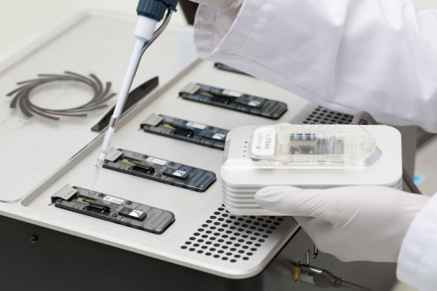
Another more modern method, new generation sequencing (NGS), is used for multiple reading of small sections of the genome (from 25 to 500 base pairs), which are then used to assemble large fragments of the genome using complex bioinformatic tools. This is a group of the earliest nucleic acid sequencing methods (the very first one was developed in 1977); this is exactly the approach used in the Human Genome project.
Source: www.dia-m.ru
The highest accuracy of NGS sequencing is achieved by repeatedly reading each of the studied fragments. Each sequence of a DNA section is obtained by comparing all overlapping sections.
Recently, nanopore sequencing has been isolated from the NGS group and placed in the next class, third—generation sequencing. Portable devices of this group allow for direct reading of RNA and DNA sequences online, and the fragment length can be any, and the analysis conditions are so simple that it can be done both in your kitchen and in the field.
Methods for recognizing individual nucleic acid molecules in real time, called single-molecule sequencing, are also being developed, but so far they have low accuracy.
Conclusion
For about half a century, scientists have been able to recognize the human structure down to the smallest molecules and decipher information encoded in the genetic code of any living being with high accuracy. With the help of the latest advances in nucleic acid reading technology, next-generation sequencing has made it possible to analyze large sections of DNA or entire genomes. And NGS technologies allow us to perform more complex scientific tasks, such as mapping the complete genomes of various organisms, from bacteria to humans.
New methods are currently being developed to “read” the genome even more accurately and completely, and this procedure is becoming more accessible to everyone. By reading the genome, you can unlock the secrets of longevity encoded in it and change a person’s life for the better by activating the “immortality genes” and protecting them from damage.
Published
July, 2024
Duration of reading
About 3-4 minutes
Category
Genetics
Share

