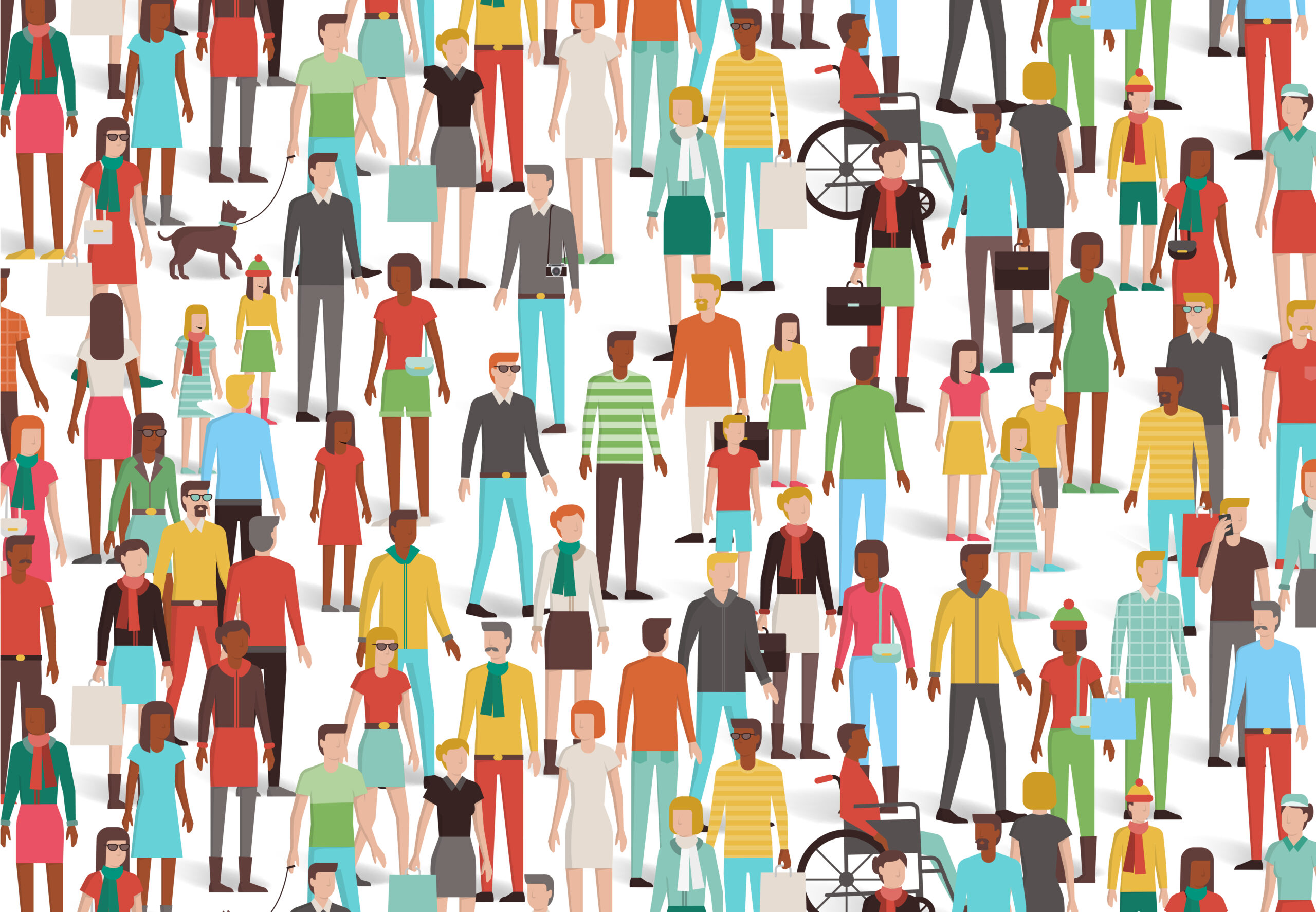
It's better together
Like the need for food, water, and sleep, a person has a need to communicate, be part of a group and society as a whole, and build relationships. The desire to share news, to be in a community, to cheer for your favorite team, to register on social networks — all this affects a person’s thoughts and behavior, as well as the level of his mental and physical health.
Connections with other people are extremely important. Even earlier, scientists noticed that those people who have strong social relationships and spend little time alone and estranged call themselves happy. American psychologist Mihai Csikszentmihalyi, in his book “Flow: the Psychology of optimal Experience,” argues that when a person is alone, it is more difficult for him to maintain order in his mind, because he is a social being, and only in a society of his own kind will he feel normal. In constant work on relationships within the family, circle of friends, community, a person can become himself, the scientist believes.
Surrounded by positive and happy people, you can become happier yourself. Experts from the Universities of California and Harvard have found that a person’s happiness level increases if he not only communicates with happy friends, but also lives close to them — at a distance of about one and a half kilometers. Friends nearby can make a person 25% happier, and with their stronger influence, even 63%. Thus, happiness can be a collective phenomenon, the researchers conclude.
Social interaction helps to achieve the best grades. Experts from the UK and Australia came to this conclusion after analyzing the relationships of 80,000 college students. The results showed that students who formed more relationships in the community and regularly exchanged information through multiple channels demonstrated higher academic performance and course attendance.
Close collaboration between colleagues can lead to high productivity, better quality of work, as well as enhance the abilities of the employees themselves. Scientists from the University of Wisconsin (USA) conducted an observation of medical workers and found that those on the periphery and isolated workers were more likely to demonstrate dissatisfaction with their work. But the employees who had established communication in the team showed a better ability to predict events, coordinate resources to resolve problematic situations, as well as a fast reaction speed.
A wide range of contacts, the strength and reliability of the connections established in it — all this has a positive effect on mental and physical condition. This was proved by scientists from the University of Notre Dame (USA), using statistical models and calculating psychological indicators based on data on demography, activity and communication of participants. The algorithm showed that participants who reported active social interaction had significantly lower stress levels, higher levels of happiness, a positive attitude, and a better subjective assessment of physical health.
Don’t miss the most important science and health updates!
Subscribe to our newsletter and get the most important news straight to your inbox
Deadly loneliness
From time to time, a person wants to be alone, away from the crowd and conversations. But still, being aloof in a group and being alone with yourself are two different things. As proven by many studies, the often experienced feeling of loneliness and prolonged social isolation are harmful to humans.
In particular, scientists from the Universities of Chicago and California have become interested in how these two phenomena acquire somatic symptoms, or in other words, “turn” into a disease. They studied the difference between the gene expression of socially active and single people. The results amazed them: it turned out that people who felt lonely and isolated from society had significantly reduced levels of monocytes (a type of white blood cell) in their blood — such changes suppress the body’s antiviral response. In addition, it was also found that loneliness activates a whole block of CTRA genes, which is involved in the development of the inflammatory process. The authors of the study concluded that loneliness and social isolation suppress the body’s immune system and can contribute to the “flourishing” of a number of dangerous diseases associated with inflammation, such as atherosclerosis, Alzheimer’s disease and cancer. One of the authors of the study, American psychologist John Cacioppo, who is also the author of the book Loneliness: Human Nature and the Need for Social Connections, says that if the death rate from air pollution is 5%, then for loneliness this figure increases to as much as 25%. Meanwhile, according to the American Heart Association, more people die each year from constant feelings of loneliness and social exclusion than from alcohol, smoking or obesity.
Researchers from Brigham Young University (USA) conducted a meta-analysis to assess the impact of social connections on life expectancy and the risk of premature death. They analyzed 148 independent studies involving a total of more than 300,000 patients. The analysis showed that a high level of social connections correlates with a 50% reduction in the risk of early death.
Experts from the Universities of York and Newcastle have found that feelings of loneliness and alienation can increase the risk of developing cardiovascular diseases by a third. A meta-analysis of 23 studies involving data from more than 180,000 patients demonstrated that a low level of social interaction increases the likelihood of coronary heart disease attacks by 29% and stroke by 32%.
People who do not communicate much with friends and relatives, and those who have never been married, are more likely to suffer from dementia in old age, according to scientists from the UK and France, who analyzed 15 studies covering data from more than 812,000 patients. The “inveterate” bachelors had a 42% higher risk of senile dementia after the age of 65 than those who had been married or had a permanent partner for several years.
John Cacioppo, along with his wife Stephanie Cacioppo, a researcher at the University of Chicago, conducted cognitive function tests among elderly people with dementia. The subjects also filled out questionnaires regarding their emotional well-being and social activity. Four years later, the researchers retested: the elderly, who reported social isolation and loneliness, showed the worst results. Taking into account other factors, the experts concluded that these two risk factors had a negative impact on the cognitive abilities of the elderly and contributed to the development of Alzheimer’s disease.
Interestingly, social exclusion affects a person in much the same way as physical pain. Naomi Eisenberger, a psychologist at the University of California and director of the Laboratory of Social and Emotional Neuroscience, conducted an interesting experiment: in a virtual game, a group of participants consisting of one person and two bots tossed a ball to each other. At some point, the Internet bots started playing only with each other, ignoring the third one. At this time, the psychologist and her team observed the brain activity of the subject. Brain scans showed increased activity in two areas associated with experiencing physical pain—the dorsal anterior cingulate cortex and the anterior insular lobe. Scientists have concluded that the brain processes emotional and physical pain in the same way, and even temporary social alienation can bring short-term, but quite strong painful sensations.
The current generation is not called “the loneliest in history” for nothing: a BBC survey showed that about 40% of young people aged 16 to 24 “often or very often” feel lonely. And according to American researchers, about three-quarters of US residents suffer from social isolation. Thus, loneliness is one of the main threats to modern humans, along with smoking, unhealthy diets, or an inactive lifestyle.
How to solve the problem?
One of the ways to combat loneliness has already become the creation of communities in which close social relationships are consciously maintained. There are communities similar to communes in Sweden, Denmark and Norway. There are other ways to reduce the feeling of loneliness. These can be group swimming lessons, singing clubs, needlework courses, joint board games and other activities involving interaction between people.
John Cacioppo and his colleagues at the University of Chicago have developed so—called “social adjustment exercises” and tested them on people with high rates of loneliness – soldiers who returned from the wars in Iraq and Afghanistan. Scientists taught the military to change their closed behavior to a more open and positive one. For example, one soldier who preferred to spend time on his phone was asked to put the gadget aside and chat with others, offering topics and questions for conversation. In the course of the study, experts found that even half a minute of communication with a living person made the soldier more positive and happier. And if it worked for military men suffering from chronic loneliness, then it should definitely work for ordinary people, the authors note.
Stephanie Cacioppo gives universal advice for everyone: “First of all, maintain social connections and don’t try every day to find an opportunity to express the joy of them. Do something useful for others without expecting anything in return. Work in cooperation, offer your voluntary help to those who need it. Find an opportunity to interact with people on different levels and on different occasions, and try to listen to them.”
Photo: www.alliance-scotland.org.uk