Why are we afraid to die?

The main philosophical question is answered by psychologists, biologists and anthropologists.

Adriana Imj, psychotherapist

Why are we afraid to die?

Death in Psychology

The fear of death and extremity is one of the basic foundations of psychotherapy. There are four of them in total — the imperfection of the world, loneliness, the fear of death and the lack of global meaning. This is not the main topic of customer complaints right now, but usually the number of panic attacks and death-related complaints increases after terrorist attacks and high-profile deaths of young celebrities. In psychology, the fear of death is a complex of anxious feelings about one’s own limb or the limb of loved ones, aimed at preservation. People are afraid to die because this fear is necessary for survival. It’s probably impossible to call it “just an instinct,” but in general, most living organisms tend to avoid unpleasant and dangerous influences. This allows them to stay alive longer.

Don’t miss the most important science and health updates!

Subscribe to our newsletter and get the most important news straight to your inbox

How is the fear of death formed?

At first, the child does not know that he is going to die. His basic fear is the fear of separation, of losing a caring adult next to him. When no one approaches a child for a long time, he gets scared and screams, because this is a strong experience. Then the child learns that his parents are older than him, that one day they will die. Culture informs the child about this through fairy tales, where there are stepmothers, murdered fathers or brothers. Then he sees corpses on the streets — dead butterflies, dead mosquitoes. Sometimes children encounter the death of pets, pigeons, or yard kittens. So the child gradually learns that he himself is mortal. This is usually a strong experience that occurs at the age of 4-5 years. Most of the children react negatively to this: they report that they will never die, forbid their parents to die. But they gradually get used to it.

Experiencing loss

Every culture has its own ways of dealing with death, even in Russia, different nationalities and regions have very different attitudes towards it. If we talk about the Russian system, which covers most of the people, then funerals and then commemorations for 9 days, 40 days and a year correspond to the normal stages of grief and the end of mourning. That’s how it should be. Most of the children react negatively: they report that they will never die, forbid their parents to die. But they gradually get used to it. There is a church in the Czech Republic, decorated with coats of arms and chandeliers made from the bones of people who died during the plague. Most likely, this was how people experienced the trauma of losing a large number of loved ones, relatives and neighbors. Of course, this required some special attitude to what was happening, but whether they were more or less afraid of death than we are now is a difficult question. Sometimes, to deal with something, you have to get closer to it. And sometimes moving away is an individual choice.

When fear becomes a pathology

Pathology can be talked about when fear begins to interfere with life and perform everyday actions. If a person is not ill, nothing threatens him, he is young enough and at the same time constantly thinks about death, most likely, some kind of trauma has occurred and he is approaching a phobia. A phobia is characterized by obsessive thoughts or actions that do not bring comfort: for example, if a person has undergone basic examinations, everyone tells him that he is healthy, but he is still afraid of dying from an unknown disease. Or he can’t approach the pedestrian crossing. Or has difficulty sleeping. If there is no direct threat, but there is a strong fear and anxiety, it is necessary to contact a doctor for anti-anxiety medications and a psychologist to provide therapeutic assistance. Fear is countered by rational thinking — anxiety is extinguished only by the work of the frontal lobes, so analyzing injuries reduces anxiety levels. But only on condition that there are no disorders in the brain. Alexander Panchin, Candidate of Biological Sciences, winner of the Enlightener Award

Fear of death as an evolutionary mechanism

From the point of view of evolutionary biology, the mechanisms that protect us from harming ourselves are important for survival and the transmission of genes to descendants. Let’s say there is a widespread fear of heights among people, because if you see a chasm in front of you, you better stop moving towards that chasm. This feature is found even in childhood — it helps people not to fall from a height, survive, reach reproductive age and leave offspring. Different cultures have different attitudes to death, different ideas about what it is. There are people who, well aware that death is the end, claim that they are quite satisfied with the fact that they have lived at all. For example, Richard Dawkins says that he is incredibly happy that he bothered to be born at all, because many potential people did not even manage to do this. Sometimes, to deal with something, you have to get closer to it. And sometimes moving away is an individual choice. The eternal question is what is primary in a person: social or biological. Both are important. Something is inherent in nature, something is formed depending on how a person develops in society. The social is superimposed on the biological, but the basic fears of specific threats that can lead to death are present in us from an early age. This can include real short-term threats in the form of predators, darkness, something hot, sharp, high.

The formation of erroneous fears

Fears that arise in a person not in early childhood, but a little later, become a consequence of the brain’s ability to form associations and build cause-and-effect relationships. Roughly speaking, a person has been subjected to a certain stimulus and as a result has found himself in a state where innate detectors signal to him that he has done wrong. He may be hurt or cold, he may feel fear. When a person finds himself in a state of stress, his brain automatically tries, after analyzing previous experiences, to understand what led to this deplorable situation. In many cases, this is a very important mechanism that helps us learn and identify real and potential threats that were difficult to anticipate a thousand years ago, when our ancestors evolved. But on the other hand, this mechanism can fail. Sometimes people form fears about something that doesn’t actually pose any threat. Fear is formed simply because it so happened: a black cat ran across the road and after that some kind of misfortune happened – a person finds a relationship here and begins to be afraid of black cats running across the road. This is an example of magical thinking — an incorrectly constructed causal relationship. But our brain is evolutionarily capable of building different cause-and—effect relationships, both correct and in some cases incorrect. Therefore, he is able to form adequate connections between a real danger and the possible consequences of this danger, as well as fictional fears — when something is not really dangerous at all. Sergey Mokhov, social anthropologist, editor of the journal “Archeology of Russian Death”, coordinator of the Laboratory for Social Research of Death and Dying (CNSI), expert of the Khamovniki Foundation

Russian and American Death

For the past two centuries, death in Russia and around the world has not been a matter of tradition and religion, but solely of the services and goods offered by funeral agencies. These proposals are based on what regulatory and legal restrictions exist in society and what funeral infrastructure is available to people. For example, in America, there are all opportunities to create a private infrastructure, and therefore funeral homes appear, where there are embalming rooms, farewell rooms, hearses, and even cemeteries and crematoriums within the same funeral cluster. This very quickly leads to the fetishization of the dead body, since funeral directors have full control over it, and with the help of an extensive infrastructure they can offer more and more new services. A distinctive feature of Russia is that it is impossible to create a private infrastructure, there is no regulation. At the same time, the state funeral infrastructure is not working and is not developing, just like other infrastructure: roads, houses, housing and communal services. This is what determines the specifics of the very “Russian death”, which many perceive as a special gloomy aesthetic. Many people see here a kind of eschatology, decadence. In fact, this is an ordinary lack of ownership, which is generally characteristic of third world countries, where there is no perception of infrastructure as the embodiment of the idea of the “common good.” The funeral industry is initially unprofitable, as demand is constant and competition is high. At the same time, profits are blurred between dozens of agents involved in the funeral organization process. The funeral industry can function only if there is a high marginality due to the sale of related products and artificially inflated prices for products. This is how the industry functions everywhere — this is exactly what I write about in my book “The Birth and Death of the funeral Industry.”: From medieval churchyards to digital immortality.” For the last two centuries, death in Russia and around the world has not been a matter of tradition and religion, but solely of the services and goods offered by funeral agencies. Despite how far science and new technologies have progressed, and the enormous possibilities that have opened up in medicine, the vast majority of people in the world believe in an afterlife, the existence of heaven and hell. It would seem that we live in a modern secularized world, but people believe in spiritual things. This is true in both America and Russia. The only difference is that death is a more specific process there. It is impossible to die there without anyone knowing about it and the state was not involved in this process in any way. In Russia, dying and dying are things that the government treats very simply: “Don’t burden us with this social problem — well, that’s good, the main thing to note is that the pension no longer has to be paid.” In my book, I write about all these things like the “positive attitude” towards death, which is a new trend in the funeral industry, that is, the active involvement of customers in the order fulfillment process. These are both eco-funerals and DIY funerals (DIY culture — Do It Yourself or “do It yourself”. — Editor’s note), and the emphasis on memorialization and “designer” funerals, as a kind of wedding organization. Such new practices do not arise from the fact that people suddenly wanted to show their positive attitude towards death in some unique way, but from a rethinking of what a person is, what life is, and what death is, mainly due to a change in attitude towards the body and physicality. This can be seen against the background of serious conflicts, on the one hand, around feminism, sexuality, body-positivity, body-shaping, and, on the other, around the fitness industry, sports, and plastic surgery. This leads to the fact that the habitual integrity of the body and the need to preserve it are not associated with personality. As a result, the traditional burial and all related accessories are abandoned. Therefore, for example, cremation is becoming an absolute trend in the West.
Selective tabooism

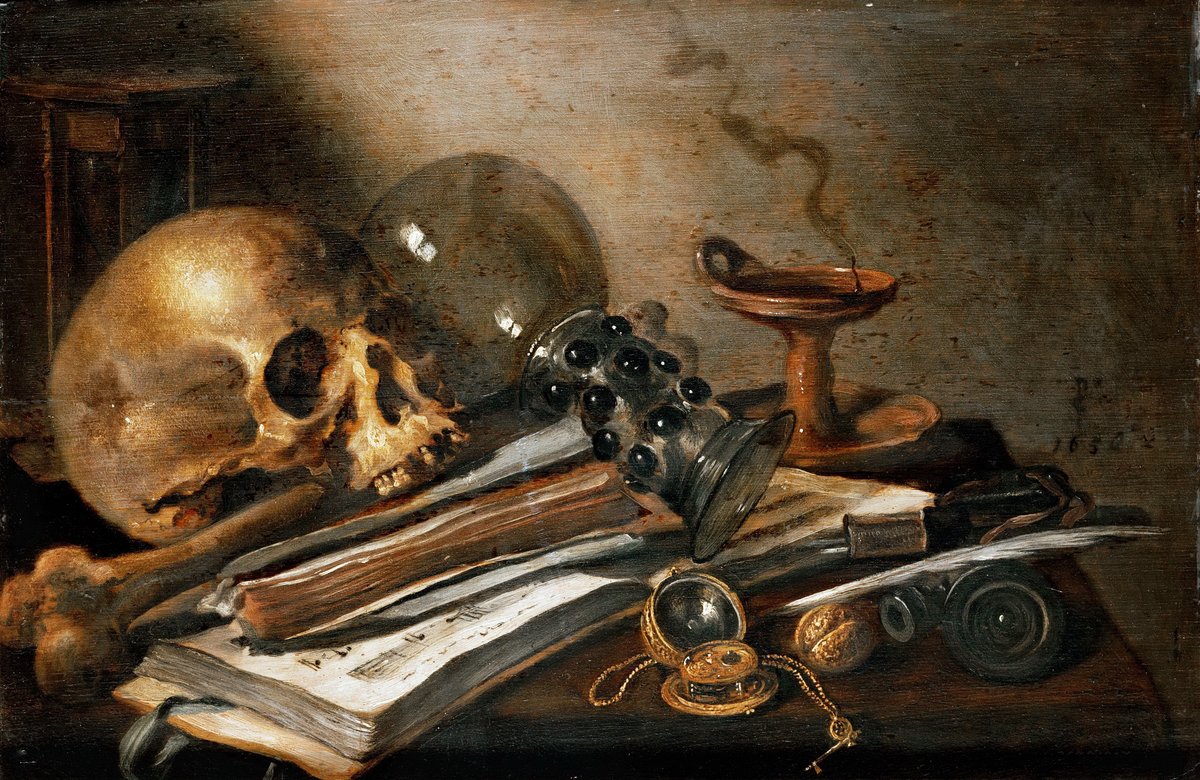
I am against this whole story about the “taboo of death.” From the point of view of a critical approach to knowledge and interpretation, the fact that the topic of death is taboo is an absolutely empty statement that finds no confirmation. It is very convenient, for example, when you are a psychoanalyst, to argue that everything grows out of two things: either from sex or from the fear of death. And it’s very easy to explain everything around you in this way: “Do you have problems at work? It’s a childhood trauma set against a backdrop of sexuality and death.” It turns out to be a comprehensive theory that always gives an answer to everything. I do not dispute that these topics are extremely broad and can be found in almost any field, but the concept of the fear of death as an innate constant greatly limits our knowledge. Talking about taboo is very selective. When someone asks me if the topic of death is taboo in our country, I answer: go to any Orthodox church and you will see a bunch of dead, literally dried bodies (meaning the relics of saints. — Ed.) — is this a taboo of death? Or take the coolest performance of recent years, when the relics of St. Nicholas the Wonderworker were brought and millions of people stood in kilometer-long queues to kiss the dried dead body. Or do we watch a movie and see murders, blood, torn dead bodies — is this the taboo of death? It’s only when we talk about a deceased relative that we have any difficulties. I think it’s just the specifics of the conversation and absolutely not an indicator of taboo. There is no need to confuse the taboo nature of the topic (as a prohibition) and the lack of conversation (language and ability to speak) about personal experience. Here we are like a mute person who may want to speak, but cannot because he is not trained or does not have the opportunity. The very fact that this topic is being raised now indicates that they are ready to discuss it. Another question is that in Soviet and post-Soviet culture there is no language in which to talk about death and dying. It is quite difficult to produce it. The concept of the fear of death as an innate constant severely limits our cognition At the same time, I am sure that most people are now more or less ready to discuss death. Of course, not so directly: “Hey, dude, you’re going to kick back soon, let’s discuss how it’s going to be.” Obviously, this is a bit incorrect, because not everyone likes to talk about it over a cup of coffee. But we know various stories when people are discussing, sitting in the kitchen, who will get the apartment after the death of their grandmother. And for some reason, such a conversation about death is quite popular, it does not cause rejection. And if you just talk about your grandmother’s death, removing the apartment from the conversation, it turns out that you can’t talk about it. There is no escape from death — you need to learn to talk about the most important things. Source Photo: artsandculture.google.com (Peter Klas’s painting “Vanitas”)

Published

July, 2024

Duration of reading

About 3-4 minutes

Category

Social Psychology

Share

Send us a message