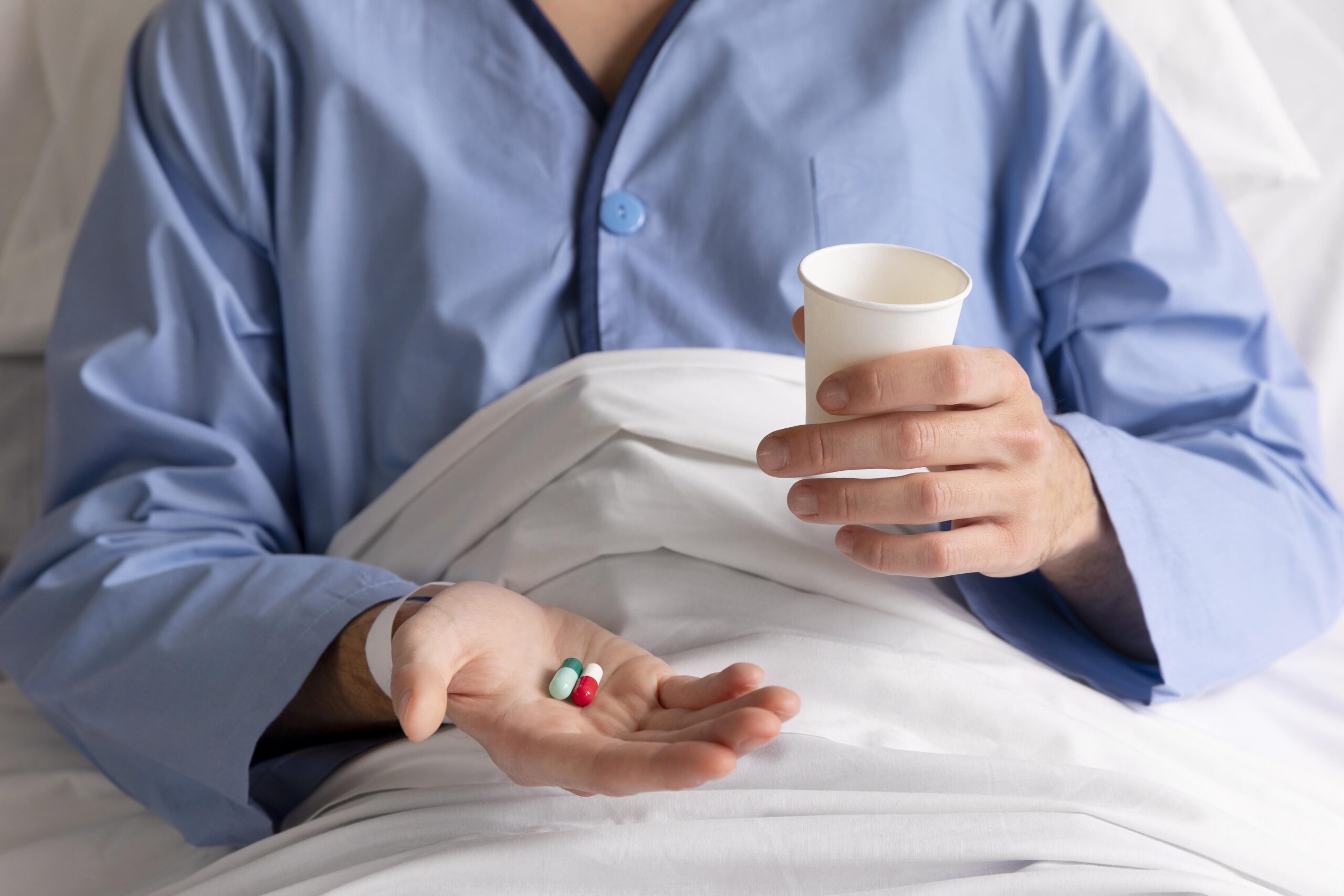
The placebo effect, which was explained by conscious suggestion and the subsequent expectation of the therapeutic effect of the drug, is based on the unconscious work of the brain, neurophysiologists have established. The brain decides how a particular drug will affect us, even before information about this drug is realized by us.
Unconscious mechanisms play a key role in the therapeutic effect of placebo, doctors from the Department of Psychiatry and the Center for Biomedical Research at Massachusetts General Hospital have established, together with specialists from Harvard Medical School working on the PiPS placebo research program, whose article “Unconscious activation of placebo and nocebo pain responses” was published by On Tuesday, Proceedings of the National Academy of Sciences (PNAS).
Placebo (from Latin. placebo – I will be pleased) is a chemically inert substance that does not have therapeutic properties, but nevertheless has a pronounced therapeutic effect on the patient. At the same time, the placebo effect is observed in a much wider range of cases than using the actual “pacifiers”. It has been shown that “real” medicines also owe their therapeutic effect to this effect to varying degrees, although it is quite difficult to identify its real contribution, since patients can be influenced by a variety of factors, including the color and shape of tablets, the price of the drug, its inaccessibility and “prestige”, publications in the media, and the opinions of other patients. and so on .
The psychophysiological mechanism of action of placebo is still unclear. It is believed that it is based on suggestion, that is, the patient’s conscious belief in the therapeutic power of the dummy drug and, again, the conscious expectation that this particular drug will cure them, or, in the case of nocebo (from Latin. nocebo – will cause harm), will worsen their condition.
Meanwhile, there is a lot of evidence in clinical and laboratory practice that the effects of placebo and nocebo can occur without conscious processing of verbal and visual stimuli associated with the medication being taken: in these cases, improvement and deterioration occur in people as if automatically, that is, bypassing the conscious registration of the idea that the drug should have this or that effect on their health.
As MRI scans have shown, visual and verbal stimuli in these cases can be processed by the brain at a lower, pre-conscious level in the striatum, which is an integral part of the evolutionarily more ancient basal nuclei of the hemispheres, as well as in the subcortical amygdala, that is, in the sections of the brain in which signals are formed that have an “unconscious” effect. the effect on human behavior and perception.
The experiments conducted by the authors of the PNAS article confirmed the hypothesis that the brain decides how a particular drug will affect us even before information about this drug is realized by us.
“Using a new experimental technique, we found that the placebo and nocebo effects are based on a mechanism that is unrelated to the mechanism of conscious perception. A therapeutic or negative response occurred even when the subjects did not realize that their condition could improve or worsen,” the authors of the article summarize.
The experiment involved 40 healthy volunteers – 24 women and 16 men, with an average age of 23 years. The experiment took place in two stages.
At the first stage, each subject, to whose arm a heating element was attached, had to assess their pain level on a 100-point scale, while simultaneously viewing photographs of people on the monitor screen, some of whom depicted mild and others severe pain on their faces. The participants in the experiment did not know that the temperature of the heating element remained unchanged throughout the experiments. Despite the fact that the thermal effects on the skin were the same, the level of their pain strongly correlated with the images in the photographs, that is, it depended on the associative suggestion caused by the visual stimulus. On average, the subjects scored them 19 points when they saw a person portraying mild pain on his face (placebo effect), and 53 points when they saw a face heavily distorted by a painful grimace (nocebo effect).
At the second stage of the experiment, participants were again asked to rate their pain level on the same scale, but this time photos of people experiencing pain of varying intensity were shown for 12 ms each, that is, in stroboscopic mode, which did not allow them to recognize and, moreover, analyze facial expressions (in previous experience, this time was 100 ms).
And again, despite the absence of consciously perceived stimuli, the intensity of the pain experiences of the participants in the experiment clearly correlated, although not so strongly, with the grimaces of pain on other people’s faces: participants rated their pain sensations by an average of 25 points when they were shown photos of people depicting mild pain in stroboscopic mode, and by 44 points. – in the moments when they were shown faces distorted by a grimace of intense pain.
“It is an automatic and more fundamental mechanism than persuasion and conscious expectation that regulates our reactions and behavior. It is also important that using this experimental model in combination with functional MRI mapping of the brain, we can study the placebo effect in more detail,” said Jiang Kong, one of the authors of the article.
By understanding the mechanism of this effect, it will be possible to create new-generation drugs whose action will not be based on direct interference with the work of certain body systems, but on launching protective scenarios at a higher level – the brain level. Strictly speaking, doctors have long had such a drug – actually a placebo – but in most cases its effect is unstable and uneven – placebo treats some patients, treats others more weakly, and does not treat others at all.
Don’t miss the most important science and health updates!
Subscribe to our newsletter and get the most important news straight to your inbox