The first thing that matters for long life is size. Most long-livers are larger than their relatives. This helps them slip out from under the pressure of natural selection: an elephant is less threatened by predators than a shrew, which means that long-lived elephants have a good chance of leaving more offspring than their short-lived relatives. In this sense, the elephant, whale and shark are no different from the others, their long life span is just a natural consequence of their impressive size. It is more interesting in this sense to look at those who did not come out neither length nor height, but still managed to outlive others. Among mammals, this includes the notorious naked mole, as well as tree squirrels and
bats. Each of them has found its own way to escape predators: burrow underground, climb a tree, or rise into the air and live in the dark.
The second major benefit that size offers is protection against cancer (not so much the risks from cancer, but reducing the threat from each individual tumor). Imagine you rule a huge state with millions of citizens. If there is an uprising in one of a thousand cities, the life of the country will hardly be affected, unless that city is the capital. But if you are a prince of tiny Liechtenstein and there is a revolution in one of your half a dozen towns, you are in serious trouble. In the animal body, unfortunately, the same simple arithmetic works. If there is a small tumor, say 3 grams, some capybara (55 kg) may not notice it at all, while for a mouse (30 g) – a tenth of the body.
Therefore, the strategies for fighting cancer, as well as predators, in animals
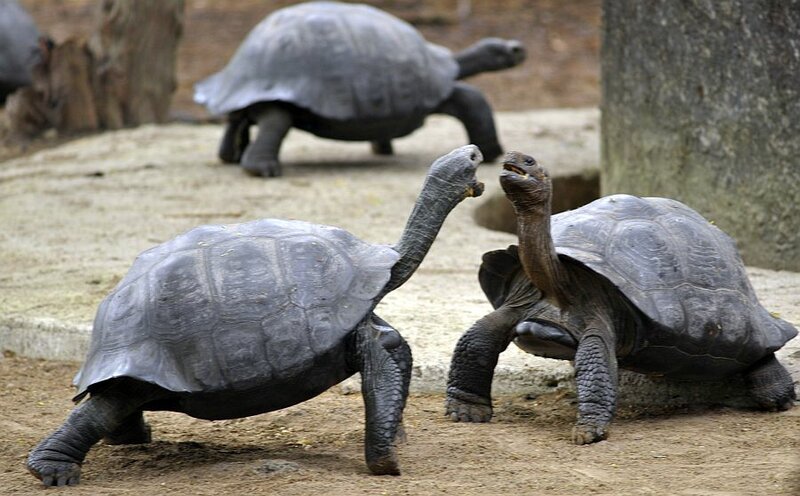
depend on their size. Very small animals like mice, having no way to escape an external enemy, capitulate to an internal one. Small but long-lived animals, like the naked digger, acquire early defense mechanisms. Their cells do not even get a chance to start multiplying if there is no need for it, for example, if they are surrounded by dense connective tissue without damage. Large, long-lived animals like elephants and turtles, on the other hand, rely on late defense against cancer. Their coping mechanisms, such as enhanced triggering of
programmed cell death, are not triggered immediately and are designed to target tumors that did not kill themselves early in their development.
Naked mole (Heterocephalus glaber) Photo: Neil Bromhall / Shutterstock
At the same time, if you forbid your cells from multiplying, how do you deal with the damage in your body? This dilemma probably explains why there are so few vertebrates among the long-lived champions: they have built themselves too many organs that are extremely difficult to repair without giving cells additional powers. Bones are much worse at renewing themselves than skin, muscle regenerates worse than fat, and brain tissue is almost impossible to repair at all. This contradiction is the basis of one of the popular theories of aging – the theory of “disposable soma” (disposable soma), which can be more easily translated as the theory of “body disposal”. From the point of view of reproduction of the organism, only sex cells are important. The rest of the body – soma – is just a superstructure over them. And the more it requires attention, the more energy is spent on its renewal, the less resources go to the sex cells. That is why vertebrate animals with their non-repairable structures live less than invertebrates: their body eventually ceases to have enough energy for repair and it is sent to “throw away”. And advanced abilities to regenerate can boast only a shark and tail amphibians (which includes Proteus).
Finally, looking at the list of long-lived, you can find a climatic pattern: most of them live in the cold. This is true primarily for cold-blooded animals (the mollusk Arctica islandica, the protheus, the Aleutian perch and the Greenland shark), which are unable to regulate their body temperature from within. But even warm-blooded vertebrates, seemingly specially trained to constantly warm themselves, still tend to find a colder place. The bowhead whale is a case in point. Or the same naked shrew, which almost became cold-blooded back by burrowing deep underground. Now its constant body temperature is about 33 degrees, which is much lower than its rodent relatives.
Greenland polar shark, or small-headed polar shark (Somniosus microcephalus) Photo: Dotted Yeti / Shutterstock
The fact is that a warm climate
brings with it many adversities. The higher the temperature, the faster the chemical reactions in the animal’s body, the more
metabolic byproducts are formed and the
faster the body wears out. Therefore, from the point of view of long life, being warm-blooded is not so advantageous. It is interesting that cold-blooded long-livers, who can already warm themselves only in the rays of the sun, also tend to hide away from it. They have another reason to prefer cold to warm, and that is a long childhood.
As we remember, childhood corresponds to a period of negative aging. Therefore, the longer an organism delays entering maturity, the more time passes before its mortality rate begins to rise. Living in cold conditions is a great way to slow development for a cold-blooded animal. Warm-blooded ones can again take advantage of their size: an elephant takes a lot longer to grow up than a rabbit. There is a third way to stretch childhood – slowing down development. Its most radical form is neoteny, reproduction in the larval state. This is what Proteus does, for example, like other tailed amphibians. Apparently, a similar fate befell the naked mole: although it does not spend its life in the form of a larva, but its development is slowed down – throughout its life it resembles the embryo of a mouse or rat and does not grow to the form of a “real adult” rodent. These clever moves allow the animal to get around the “body to discard” dilemma. Sexual cells begin to absorb energy only at puberty, and the “eternal child” can afford to devote all its energy only to maintaining its own health.
***
So, let’s now compose in our minds a typical long-lived animal. It’s either quite large or quite small, but it’s very cunning. It is not interested in predators, rarely gets cancer, and has its own defense mechanisms against it – it hits the enemy from afar or waits for him “in ambush”. It regenerates well and tends to live in the cold, regardless of its basal body temperature. Finally, it prolongs its childhood by remaining a perpetual larva or simply slowing its development, and takes its time to reproduce, conserving resources.
Our collected portrait does not describe any of the actual animals of record. The naked shrew is incapable of regeneration, sharks have no special defense mechanisms against cancer, and bats live with surprisingly high body temperatures. This only shows that in each case long life arose on its own, and there is no general recipe. Each winner went its own way, compensating for innate shortcomings with new acquisitions.
But the image of a long-lived animal fits well with humans. We are rather small compared to champion mammals, rarely suffer from predators, live better in the cold than in the heat, and develop more slowly than our primate ancestors. As for cancer defense and regeneration, we discovered these weaknesses long ago and are working to improve them. And when we do, it remains to be seen who will have to learn longevity from whom.
Source:
Chrdk.
Photo: yandex.ru