The Power of Memories: How the strategy of hindsight is useful
We’ve all heard stories from the older generation about how “it used to be better”: ice cream for 10 kopecks, no cell phones, people being more honest and kind – in general, everything that traditionally annoys young people. On the other hand, the taste of grandma’s cookies and the sound of a song from twenty years ago can evoke special thrills and memories of those “better” times. Why is it sometimes so pleasant to remember youth and can nostalgia bring benefits for psychological health? Let’s talk about everything in order.
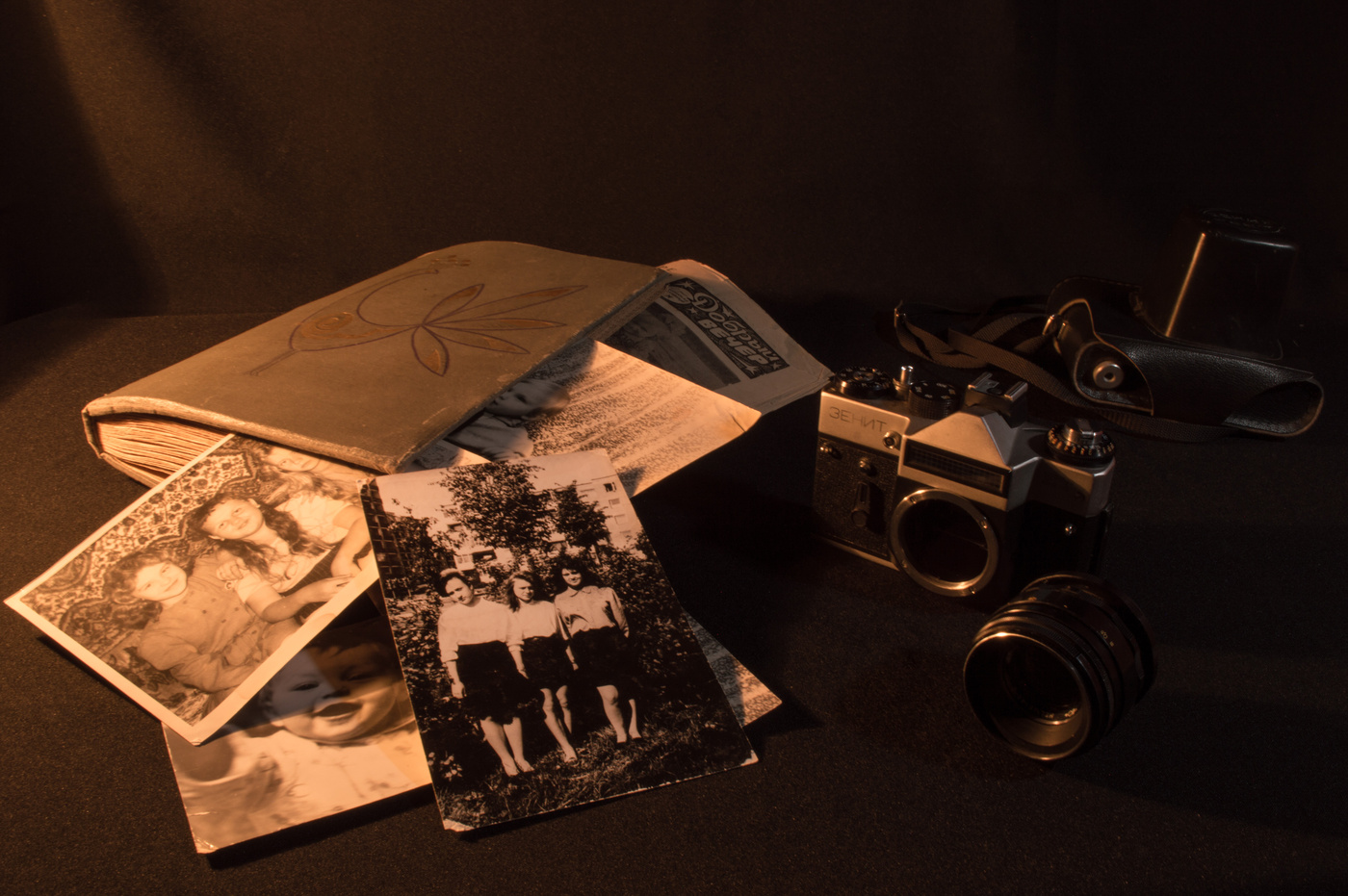
Is nostalgia a brain disease?
Don’t miss the most important science and health updates!
Subscribe to our newsletter and get the most important news straight to your inbox
Where in the brain does nostalgia originate?
Memories help…
 Photo: www.studio7.md
Increase the sense of optimism. In another study by scientists from the mentioned university, it was demonstrated that nostalgic memories can increase a person’s sense of optimism. In the first experiment, the authors asked participants to recall an event that evoked bittersweet emotions and describe it. Another group had to describe an emotionally neutral event. Content analysis of the texts showed that the number of words expressing optimism and positive emotions was higher in the first group than in the second. In another experiment, participants listened to different melodies – nostalgic and neutral. Then they had to evaluate their emotional state. The test results showed that people who listened to music and immersed themselves in memories had a significantly higher level of optimism. The authors of the study also note that nostalgia can “activate” past positive experiences and project them into the future, forming an optimistic mood.
Photo: www.studio7.md
Increase the sense of optimism. In another study by scientists from the mentioned university, it was demonstrated that nostalgic memories can increase a person’s sense of optimism. In the first experiment, the authors asked participants to recall an event that evoked bittersweet emotions and describe it. Another group had to describe an emotionally neutral event. Content analysis of the texts showed that the number of words expressing optimism and positive emotions was higher in the first group than in the second. In another experiment, participants listened to different melodies – nostalgic and neutral. Then they had to evaluate their emotional state. The test results showed that people who listened to music and immersed themselves in memories had a significantly higher level of optimism. The authors of the study also note that nostalgia can “activate” past positive experiences and project them into the future, forming an optimistic mood.
 Photo: all-rf.com
To warm you up in a cold room. Music can bring the past to life just as well as smells. In an article published in the journal Emotion, Dr. Sedikides and his colleagues describe how listening to tracks from the past not only makes you feel warmer in your soul – but throughout your body. One study involved 1,070 volunteers between the ages of 12 and 68. The results of complex statistical analyses showed that music-induced nostalgia helped to raise body temperature and warm up in a cold room.
Take away stress. According to psychologists at Rutgers University, happy memories can reduce stress levels by 85%. The experiment involved 134 volunteers who were divided into two groups. One was asked to immerse their hands in cold water and recall past events that evoke light emotions, while the other was asked to also dip their hands, but think about neutral events. The researchers found that participants in the first group felt calmer compared to the second, and also recorded lower levels of cortisol, a stress hormone. Brain scans showed that those who recalled happy moments from the past had increased activity in neural circuits related to reward and emotion processing.
Beat depression. Scientists from the University of Massachusetts have found that pleasant memories can beat depression. In their study, they gave laboratory mice dates, and memories of the pleasantly spent time were stored in the animals’ brains. The rodents were then subjected to prolonged stress, which eventually led to depression. However, when the cells responsible for positive memories were activated in them, the depression went away for a while and the animals behaved as if nothing bad had happened. Five days later, after regular 15-minute manipulations with the cells, the depression completely disappeared: they formed new neurons in the hippocampus (the area of the brain responsible for storing memories), and also activated the neural chain linking the hippocampus, the amygdala (the center of emotion formation) and the contiguous nucleus (the pleasure center), which together gave an antidepressant effect.
Improve social connections. Bright memories of the past can enhance feelings of social engagement. In an experiment conducted in collaboration with Sun Yat-sen University in Guangzhou, China, Chinese students served as subjects. One group was asked to recall events that evoked a pleasant longing for the past, while the other group was asked to recall insignificant events. The participants then had to rate how much support family members and friends had given them during those times. The results showed that a simple nostalgia session was enough to make people more confident in the support of their loved ones.
Researchers from North Dakota State University confirmed the same with a regression analysis: nostalgia increased the sense of social connectedness in American students. After the subjects reminisced about the past, they completed a questionnaire about their social relationships: answering questions about, for example, whether there was someone to talk to about important decisions, or whether close relationships gave a sense of security, or whether there was a sense of being part of a group). Compared to the control group, participants who recalled the past before the survey showed greater social engagement.
Overcome the fear of death. In addition, memories of the past help to get rid of negative moods in the future, in particular they reduce the fear of death. Researchers from North Dakota State University and Southampton University recruited two groups of volunteers: the first group needed to recall pleasant past events, and the second group needed to recall a neutral event. For the next stage of the test, the participants were shuffled among themselves and given a new task: one group had to answer two questions about death in writing (“What emotions does the thought of your own death evoke?”, “What happens to your body after you die?”), and the second group had to write about how they had once failed an important test. In the third step, all participants had to complete a psychological task that tested their level of preoccupation with the issue of death. The researchers offered them a fragment of the word “coff”, which had to be supplemented with another fragment so that the word with a negative or neutral coloring – “coffin” (coffin) or “coffee” (coffee). It turned out that those subjects who were not nostalgic and thought about death made up the word “coffin” with negative stylistic coloring. People who before the writing task about death recalled pleasant events, composed “coffee” – with neutral coloring. Thus, the authors concluded that nostalgia can protect the mind from heavy thoughts about death and future psychological attacks.
Making life easier in dementia. Researchers from several UK universities conducted a series of experiments involving elderly people with dementia. In the first, the participants were divided into two groups: one was asked to recall an event from the past, which causes them sentimental pleasant longing, the other – to remember an ordinary event that does not cause emotions. The scientists then tested the psychological state of the participants using a special nostalgia scale, which revealed such indicators as self-esteem, level of independence, social connections, the presence of meaning in life, the level of optimism, and emotional health. Statistical analysis of the data showed that volunteers in the “nostalgia group” reported higher levels of psychological well-being. In another experiment, scientists turned on music to people with dementia that evoked feelings of nostalgia. Here too, the results confirmed that memories have a positive effect on patients: they had higher levels of social activity, optimism, autonomy and other indicators of psychological health. Thus, the researchers concluded that nostalgia can help people suffering from senile dementia, as memories can energize patients to cope with the threatening condition.
A meta-analysis of 47 studies performed by researchers from the University of West Anglia in 2018, which included a total of 5,043 participants, summarized most of the available evidence on the impact of nostalgia on quality of life in dementia. Experts confirmed the therapeutic potential of nostalgia: lucid memories of the past can be a good resource for psychological health.
Scientists from Japan conducted a study involving elderly people suffering from moderate to severe dementia. The specialists wanted to check what sounds surrounding them in the present, as well as those that should have been familiar to them in the past, could activate their memory. Participants were given different sounds – such as birds singing, a waterfall, rain, bees buzzing, the sound of kitchen utensils, burning wood, a temple gong, musical instruments and more – and volunteers had to guess what they had just heard and name the association. Some were guessed fairly easily (birds chirping or rain), and some were recognized only by women (the sound of pots). But it turned out that what the elderly recognized best were those sounds that were once very familiar to them. For example, one of the patients, as she herself admitted, was very fond of holiday festivals as a child, and when the sound of a flute was turned on, it reminded her of that, and she began to sing the old song “Village Feast”. The findings can be used to develop specific therapies that could improve memory function in people with dementia.
Literature
Gebauer J., Sedikides C. “Yearning for Yesterday.”
Davis F. “Yearning for yesterday: A sociology of Nostalgia”.
Photo: photocentra.ru
Photo: all-rf.com
To warm you up in a cold room. Music can bring the past to life just as well as smells. In an article published in the journal Emotion, Dr. Sedikides and his colleagues describe how listening to tracks from the past not only makes you feel warmer in your soul – but throughout your body. One study involved 1,070 volunteers between the ages of 12 and 68. The results of complex statistical analyses showed that music-induced nostalgia helped to raise body temperature and warm up in a cold room.
Take away stress. According to psychologists at Rutgers University, happy memories can reduce stress levels by 85%. The experiment involved 134 volunteers who were divided into two groups. One was asked to immerse their hands in cold water and recall past events that evoke light emotions, while the other was asked to also dip their hands, but think about neutral events. The researchers found that participants in the first group felt calmer compared to the second, and also recorded lower levels of cortisol, a stress hormone. Brain scans showed that those who recalled happy moments from the past had increased activity in neural circuits related to reward and emotion processing.
Beat depression. Scientists from the University of Massachusetts have found that pleasant memories can beat depression. In their study, they gave laboratory mice dates, and memories of the pleasantly spent time were stored in the animals’ brains. The rodents were then subjected to prolonged stress, which eventually led to depression. However, when the cells responsible for positive memories were activated in them, the depression went away for a while and the animals behaved as if nothing bad had happened. Five days later, after regular 15-minute manipulations with the cells, the depression completely disappeared: they formed new neurons in the hippocampus (the area of the brain responsible for storing memories), and also activated the neural chain linking the hippocampus, the amygdala (the center of emotion formation) and the contiguous nucleus (the pleasure center), which together gave an antidepressant effect.
Improve social connections. Bright memories of the past can enhance feelings of social engagement. In an experiment conducted in collaboration with Sun Yat-sen University in Guangzhou, China, Chinese students served as subjects. One group was asked to recall events that evoked a pleasant longing for the past, while the other group was asked to recall insignificant events. The participants then had to rate how much support family members and friends had given them during those times. The results showed that a simple nostalgia session was enough to make people more confident in the support of their loved ones.
Researchers from North Dakota State University confirmed the same with a regression analysis: nostalgia increased the sense of social connectedness in American students. After the subjects reminisced about the past, they completed a questionnaire about their social relationships: answering questions about, for example, whether there was someone to talk to about important decisions, or whether close relationships gave a sense of security, or whether there was a sense of being part of a group). Compared to the control group, participants who recalled the past before the survey showed greater social engagement.
Overcome the fear of death. In addition, memories of the past help to get rid of negative moods in the future, in particular they reduce the fear of death. Researchers from North Dakota State University and Southampton University recruited two groups of volunteers: the first group needed to recall pleasant past events, and the second group needed to recall a neutral event. For the next stage of the test, the participants were shuffled among themselves and given a new task: one group had to answer two questions about death in writing (“What emotions does the thought of your own death evoke?”, “What happens to your body after you die?”), and the second group had to write about how they had once failed an important test. In the third step, all participants had to complete a psychological task that tested their level of preoccupation with the issue of death. The researchers offered them a fragment of the word “coff”, which had to be supplemented with another fragment so that the word with a negative or neutral coloring – “coffin” (coffin) or “coffee” (coffee). It turned out that those subjects who were not nostalgic and thought about death made up the word “coffin” with negative stylistic coloring. People who before the writing task about death recalled pleasant events, composed “coffee” – with neutral coloring. Thus, the authors concluded that nostalgia can protect the mind from heavy thoughts about death and future psychological attacks.
Making life easier in dementia. Researchers from several UK universities conducted a series of experiments involving elderly people with dementia. In the first, the participants were divided into two groups: one was asked to recall an event from the past, which causes them sentimental pleasant longing, the other – to remember an ordinary event that does not cause emotions. The scientists then tested the psychological state of the participants using a special nostalgia scale, which revealed such indicators as self-esteem, level of independence, social connections, the presence of meaning in life, the level of optimism, and emotional health. Statistical analysis of the data showed that volunteers in the “nostalgia group” reported higher levels of psychological well-being. In another experiment, scientists turned on music to people with dementia that evoked feelings of nostalgia. Here too, the results confirmed that memories have a positive effect on patients: they had higher levels of social activity, optimism, autonomy and other indicators of psychological health. Thus, the researchers concluded that nostalgia can help people suffering from senile dementia, as memories can energize patients to cope with the threatening condition.
A meta-analysis of 47 studies performed by researchers from the University of West Anglia in 2018, which included a total of 5,043 participants, summarized most of the available evidence on the impact of nostalgia on quality of life in dementia. Experts confirmed the therapeutic potential of nostalgia: lucid memories of the past can be a good resource for psychological health.
Scientists from Japan conducted a study involving elderly people suffering from moderate to severe dementia. The specialists wanted to check what sounds surrounding them in the present, as well as those that should have been familiar to them in the past, could activate their memory. Participants were given different sounds – such as birds singing, a waterfall, rain, bees buzzing, the sound of kitchen utensils, burning wood, a temple gong, musical instruments and more – and volunteers had to guess what they had just heard and name the association. Some were guessed fairly easily (birds chirping or rain), and some were recognized only by women (the sound of pots). But it turned out that what the elderly recognized best were those sounds that were once very familiar to them. For example, one of the patients, as she herself admitted, was very fond of holiday festivals as a child, and when the sound of a flute was turned on, it reminded her of that, and she began to sing the old song “Village Feast”. The findings can be used to develop specific therapies that could improve memory function in people with dementia.
Literature
Gebauer J., Sedikides C. “Yearning for Yesterday.”
Davis F. “Yearning for yesterday: A sociology of Nostalgia”.
Photo: photocentra.ru Published
June, 2024
Duration of reading
About 4-5 minutes
Category
Aging and youth
Share

