The secret to their immortality

The immortality of embryonic stem cells is due to enhanced proteostasis, a process that regulates the quality of the proteins produced. This is the result of a study by a team of researchers from the University of Cologne.
The secret to their immortality
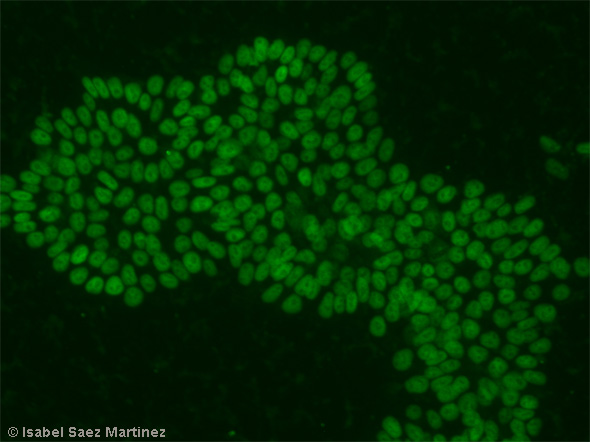
A colony of human embryonic stem cells stained using antibodies to OCT4 protein. Embryonic stem cells do not age and can divide indefinitely. As the study shows, their viability is linked to the lack of accumulation of damaged proteins, such as those that cause Alzheimer’s or Huntington’s diseases. The cell’s disposal of protein ‘debris’ as part of proteostasis is carried out by proteasomes – intracellular multicomponent enzymes from the group of proteases. Proteasomes are responsible for such characteristics of embryonic stem cells as self-renewal, pluripotency and differentiation. E3 ubiquitinligase plays an important role in the proteasome complex. This enzyme finds and tags damaged and misassembled proteins that need to be cleaved. The researchers removed the gene responsible for E3 ubiquitinligase synthesis from the stem cells’ DNA using CRISPR and informative RNAi techniques. Surprisingly, there was no outward change – the cells continued to function as normal. This could be due to the interchangeability of proteins of the proteostasis system. Nevertheless, global proteasome inhibition disrupts a variety of processes that determine embryonic stem cell functions, including protein synthesis, ribosomal RNA maturation, telomere length maintenance, and carbohydrate metabolism stability. Thus, these studies show that high activity of proteasomes in combination with other biological processes form immortality of embryonic stem cells. Accumulation of pathological and damaged proteins leads to the development of neurodegenerative diseases. In-depth study of the processes occurring in stem cells, including proteostasis, will help not only to understand the mechanisms of aging, but also to develop methods of prevention of currently incurable neurodegenerative disorders. Article I. Saez et al. Insights into the ubiquitin-proteasome system of human embryonic stem cells is published in Nature Scientific Reports. Aminat Adzhieva, portal ‘Eternal Youth’ http://vechnayamolodost.ru based on the materials of the University of Cologne: On the immortality of stem cells.

Don’t miss the most important science and health updates!

Subscribe to our newsletter and get the most important news straight to your inbox

Published

June, 2024

Duration of reading

About 1-2 minutes

Category

Epigenetics

Share

Send us a message