The autonomic nervous system: stress and rest

Most people are exposed to stressful factors every day. An almost instantaneous sequence of physiological reactions helps the body to react quickly to life-threatening situations. However, the body can overreact to those everyday stressors that are not life-threatening. Understanding how the body deals with stress can help relieve stress quickly and effectively. Recovery and rest allow the body to work efficiently and in a balanced manner, which is an integral part of healthy longevity. 
The autonomic nervous system: stress and rest

Peripheral nervous system

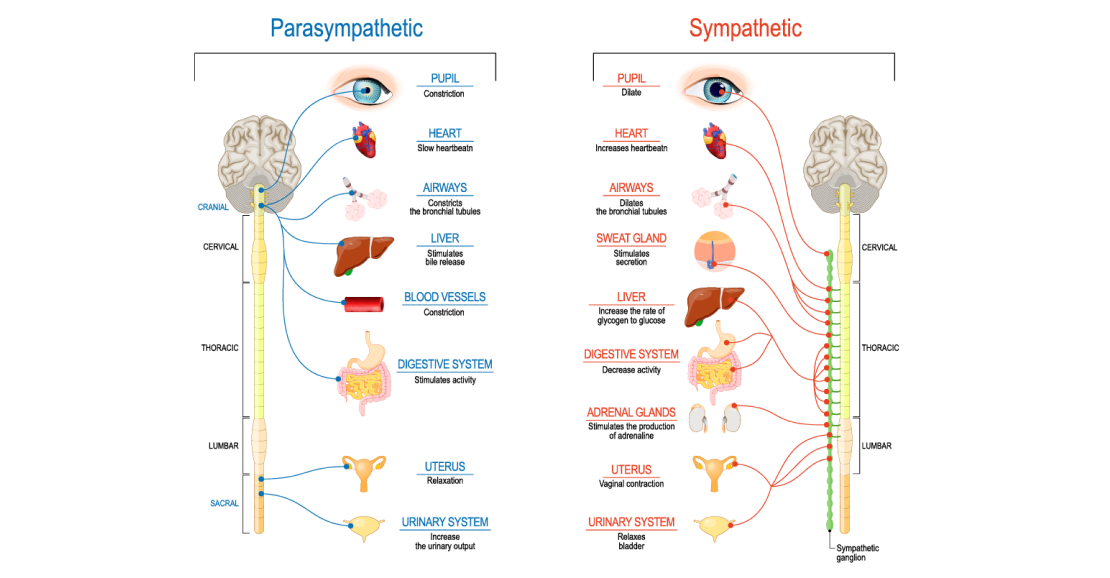
The nervous system is a complex collection of nerves and specialized cells known as neurons that transmit signals between different parts of the body. In fact, this is the electrical wiring of the body. Structurally, the nervous system has two components: the central nervous system (brain and spinal cord) and the peripheral nervous system (nerves). With the help of peripheral nerves, you can perform voluntary and involuntary actions. If you lift a mug, clap your hands, or lift weights in the gym, you are performing conscious actions. Your brain receives nerve impulses and analyzes them before deciding which operations to perform next. On the contrary, your heart is beating and your intestines are digesting without conscious control. Such involuntary actions are regulated by the autonomic nervous system. This part of the peripheral nervous system ensures the smooth functioning of all internal organs and glands. The autonomic nervous system consists of two components: sympathetic and parasympathetic. Both control the same organs, but cause opposite effects by activating different chemicals (neurotransmitters). In our body, the sympathetic nervous system is a “gas” that accelerates bodily functions, while the parasympathetic nervous system acts as a “brake” that slows us down. For example, the sympathetic division increases blood pressure, while the parasympathetic division decreases it. In general, the two parts work together to ensure that the body responds appropriately to different situations.

Don’t miss the most important science and health updates!

Subscribe to our newsletter and get the most important news straight to your inbox

Published

June, 2024

Duration of reading

About 5-6 minutes

Category

Brain and nervous system

Share

Sympathetic nervous system and stress

When the body is stressed, signals are sent to a special area of the brain — the amygdala, which is responsible for emotions, and after processing, a danger signal is sent to the hypothalamus. This area of the brain functions as a command center, communicating with the rest of the body through the autonomic nervous system, which controls involuntary bodily functions such as breathing, blood pressure, heartbeat, and the expansion or contraction of key blood vessels and small airways in the lungs — the bronchioles.  The sympathetic nervous system triggers a “fight or flight” response, giving the body a boost of energy so it can respond to life-threatening situations. After the amygdala sends a distress signal, the hypothalamus activates the sympathetic nervous system, sending signals through the autonomic nerves to the adrenal glands. These glands respond by releasing the hormone adrenaline into the bloodstream. The heart starts beating faster than usual, delivering blood to the muscles and vital organs. Pulse rate and blood pressure increase. A person undergoing these changes also begins to breathe faster. Extra oxygen is sent to the brain, increasing alertness. Vision, hearing, and other senses become sharper. At the same time, adrenaline activates the release of glucose and fats from temporary storage sites in the body. These nutrients enter the bloodstream, providing energy to all parts of the body. All these changes happen so quickly that a person does not notice them. In fact, the autonomic nervous system is so efficient that the amygdala and hypothalamus trigger this cascade even before the visual centers of the brain can fully process what is happening. That’s why a person is able to jump out of the path of an oncoming car even before he comprehends what is happening. When the initial surge of adrenaline subsides, the hypothalamus activates the second component of the stress response system, known as the hypothalamic-pituitary axis. It consists of the hypothalamus, pituitary gland, and adrenal glands. If the danger persists, the hypothalamus sends a new signal, causing the adrenal glands to release cortisol. Thus, the body remains in a state of high alert.

Parasympathetic nervous system and rest

When the threat passes, cortisol levels drop, and the parasympathetic nervous system triggers a “rest and digest” reaction that calms the body. This means that the pupils constrict, the body temperature decreases, the heart rate and respiration slow down, the blood vessels dilate and the blood pressure returns to normal levels. In addition, digestion, salivation, peristalsis in the stomach and intestines, and bladder contraction are stimulated. The parasympathetic nervous system helps the body function properly, rest, and restore its resources.

Chronic stress

The “fight or flight” stress response worked great as a means of survival to avoid sudden threats to life and health, such as predators. However, in the modern world, the stress response can be triggered several times during the day due to a wide range of factors: constant movement, overwork, short sleep, problems at work, family difficulties. All this activates the sympathetic nervous system, the heart rate increases, the constant release of adrenaline can damage blood vessels and arteries, increase blood pressure and the risk of heart attacks or strokes. Elevated cortisol levels contribute to the accumulation of adipose tissue and weight gain. At the same time, the regular activation of the stress response leads to disruptions in the work of the parasympathetic system, and because of this, it also cannot do its job correctly. Digestion and sleep are disrupted, fatigue and irritability appear during the day. Thus, a person experiences chronic stress, which overloads the nervous system and potentially damages their health. Research has shown that experiencing prolonged stress affects a person’s psychological and physical health. Acquiring a chronic form, stress contributes to an increase in blood pressure, the formation of deposits that clog arteries, and causes changes in the brain that can contribute to depression, addiction, and cognitive decline. In addition, chronic stress is associated with a lower life expectancy and contributes to the development of a number of diseases.

Methods to counteract chronic stress

There are many ways that can be used to activate the parasympathetic nervous system, relax the body, and reduce stress in the body. The most important of them is regular, high—quality sleep. The importance of good sleep should not be underestimated — there is no substitute for this process in the body. A healthy diet is almost as necessary. Without enough food, the body cannot recover. Poor quality or insufficient nutrition is a common cause of chronic stress and fatigue. Good physical fitness also supports the healthy functioning of the parasympathetic nervous system. Exercise strengthens the heart and blood vessels, and a brisk walk not only deepens breathing, but also helps to relieve muscle tension. In addition, simple breathing exercises can help. Rapid, shallow, uneven breathing is a common stress response. Slow, deep, regular breathing is a sign of relaxation. A person can learn to control their breathing in order to achieve a calm state. For example, you can use this exercise to relieve stress as it occurs: take a slow and deep breath, hold your breath for a short time and exhale slowly. Repeat the entire sequence five to 10 times, concentrating on breathing. Relaxing meditations can also help reduce the physiological effects of stress. Scientific studies show that this practice reduces blood pressure, reduces anxiety, improves sleep, and helps with stress and depression.

Conclusion

The stress response is usually limited. When the threat to life has disappeared, hormone levels return to normal, heart rate and blood pressure return to baseline levels, and other body systems resume their normal activities. In primitive times, the “fight or flight” mechanism was beneficial, helped to adapt and survive. But in the modern world, people no longer need to live in survival mode, but they are still surrounded by stressful factors that trigger the activity of the sympathetic nervous system. This means that the body remains in a state of constant physiological stress and chronic stress. Since the sympathetic nervous system continues to cause physical reactions for a long time, this leads to exhaustion of the body, which can cause or worsen many serious health problems. Chronic stress can not only seriously undermine the quality of life, but also shorten it. That’s why it’s so important to learn how to relax and give your body the opportunity to restore its resources.
Send us a message