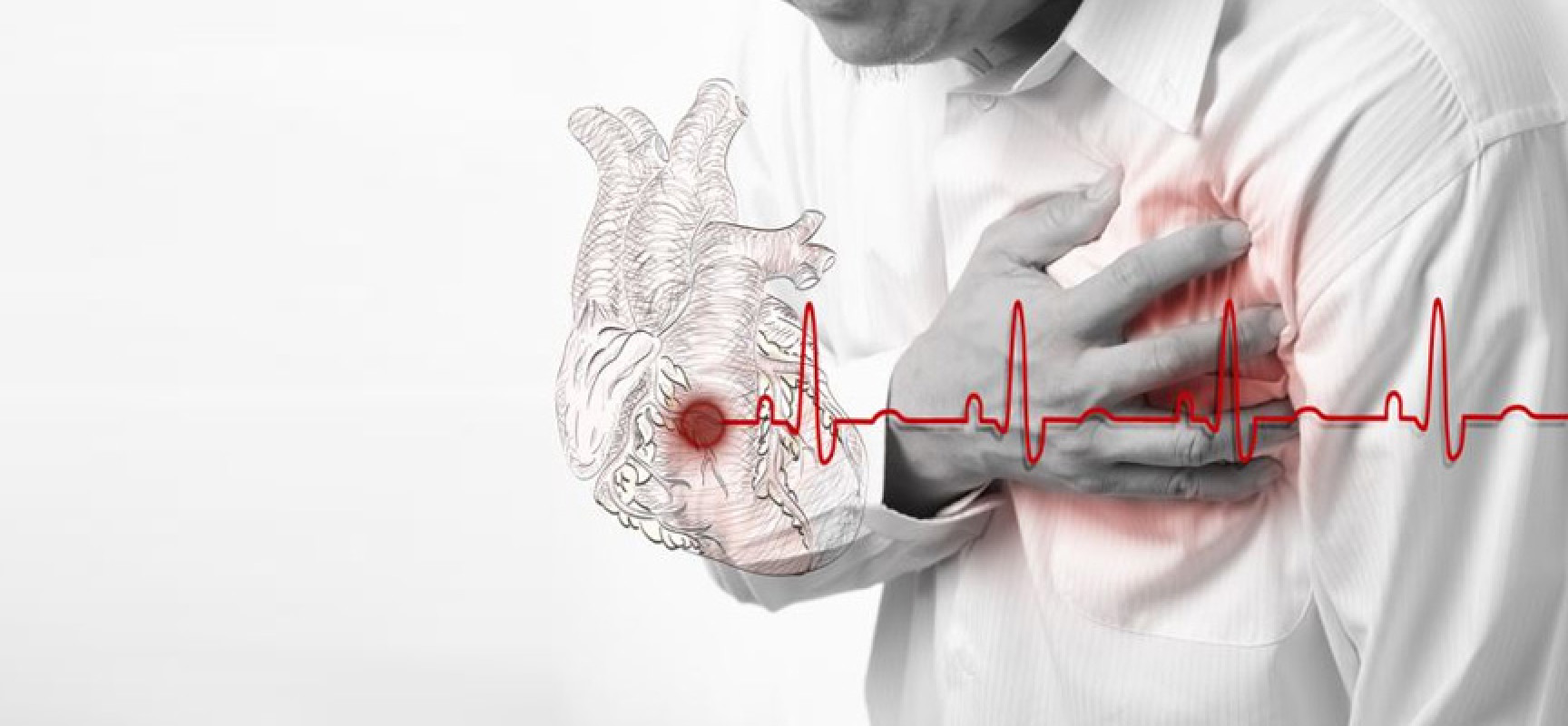
The myocardium
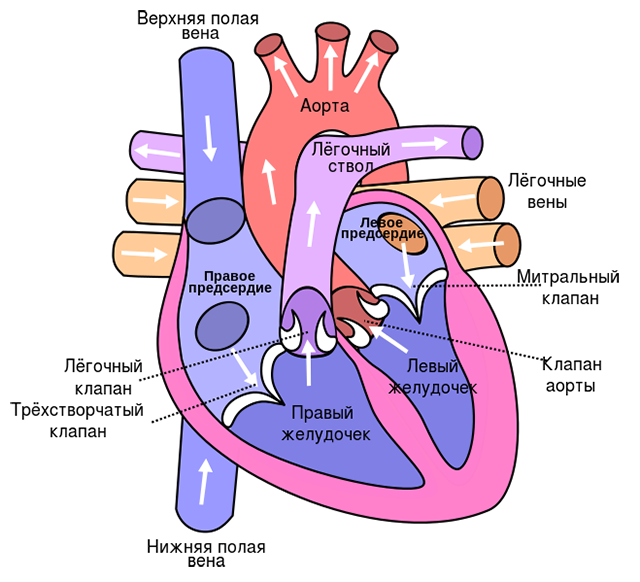
The heart is a muscular organ that consists of four chambers (two atria and two ventricles). From the outside, it is covered by the pericardium, which is a dense connective tissue bag containing the thickest layer of the heart, the myocardium. Inside, the ventricles of the heart are lined with an endocardium. So, the myocardium is the thickest layer, the entire thickness of the heart muscle, and most blood vessels fit it.
The heart is very demanding of blood supply. Its resources and energy reserves are minimal, so it constantly needs an influx of large amounts of blood. If, for example, you can squeeze your arm with a tourniquet for an hour and then release the tourniquet, nothing catastrophic will happen, and it is technically extremely dangerous for the heart to be without blood flow for several minutes. That is, the time during which the vessels to the heart can be blocked, after which recovery can occur, is only 30 minutes. After these 30 minutes, after the blood flow to the heart has stopped (usually closed by a blood clot), the progressive death of heart cells begins. In the pool, which is supplied with blood by a blocked artery, two hours after the blockage, only half of the cells remain alive. And after six hours, about 10% of them remain.
Don’t miss the most important science and health updates!
Subscribe to our newsletter and get the most important news straight to your inbox
Causes of heart attack
The main reason is still smoking, even very rare, because, firstly, it leads to long—term damage to the healthy inner lining of blood vessels, which cease to “repel” cholesterol, and secondly, it increases the risk of rupture of the artery membrane when the plaque has already grown. In second place is high blood pressure. In third place are poor heredity, age, high cholesterol, and heart attacks and strokes over the past five years. There is a powerful link between the level of “bad” cholesterol (low-density lipoproteins, LDL) and the risk of heart attack.
Other factors include excess weight, diabetes, poor nutrition, low physical activity, depression, stress, and general condition, including various inflammations. With systemic inflammation (that is, with inflammation inside the body, and not associated, for example, with damage to the skin), C-reactive protein is formed, which increases the risk of a heart attack.
What happens during a heart attack
The entire ensemble of events develops on the fibrous cap, which separates the atherosclerotic plaque from the bloodstream. It is not entirely clear why plaques have become so fond of heart vessels, but they settle there and gradually grow. And if the plaque is large (more than 70% of the diameter of the vessel), it interferes with the passage of blood. A person begins to “feel” it if, for example, he runs. The heart begins to “feel” this plaque, it really makes it difficult for blood to flow through the vessel. If the plaque is very large, clogging more than 90% of the vessel, then pain can occur even at rest — this is angina pectoris (otherwise, chest toad). But small plaques with a thin fibrous coating, which “do not hurt” even with high physical exertion, can also pose a very great danger.
In the event of a plaque rupture, its contents rush into the bloodstream, and the blood clotting system is triggered. First, platelets begin to adhere to the rupture. Then a white blood clot forms, and then a so—called red blood clot with the inclusion of fibrin strands, a protein formed by the action of the enzyme thrombin. In parallel with the process of thrombosis, a system is activated that resists thrombosis and performs so-called thrombolysis. This is our internal system, which is designed to resist the occurrence of blood clots. Its capacity is usually significantly less than that of the thrombosis system, so in the vast majority of cases, a blood clot forms. That is, the blood clotting system, which saves lives during bleeding, is activated at full capacity here, which sometimes leads to death.
It is important to understand that the larger the vessel that becomes clogged, and the closer a blood clot forms to the vessel’s mouth, the more severe the infarction. Nevertheless, sometimes there is a happy scenario: if a small atherosclerotic plaque ruptures, the system that resists thrombosis can dissolve this blood clot, then there will be no heart attack.
Symptoms of a heart attack
A person with a heart attack suddenly begins to feel severe pain in the chest or in some cases in the abdomen — if the back wall is affected. In patients with diabetes mellitus, heart attacks can be accompanied by mild pain, so they need to be especially careful. If within six hours the obstacles to blood flow are eliminated with the help of thrombolytics, then, most likely, the consequences of a heart attack will not be very terrible. Otherwise, there is a risk that most of the heart cells will die and its pumping function will greatly decrease, leading to heart failure.
Types of heart attack
We divide myocardial infarction into different categories, primarily according to the manifestations on the cardiogram — this is very convenient from a clinical point of view. I must say that there are three key signs in the diagnosis of myocardial infarction: the first is severe chest pain; the second is a change in the cardiogram characteristic of a myocardial infarction; and the third is the ingestion of heart proteins called troponins into the blood. The heart muscle dies, and troponin is released. To make a diagnosis, it is necessary that these three signs come together. At the earliest stages of a heart attack, the concentration of troponin in the blood does not have time to increase. Then the diagnosis is established clinically — there is enough pain and a number of other signs to start acting.
The heart attack is very clearly visible on the cardiogram. One type of heart attack occurs with so—called ST segment depression, and the other with ST segment elevation. Depression suggests that, most likely, a small artery that supplies the inner layer of the heart muscle is blocked. And elevation, that is, an increase in the ST segment, indicates a blockage of a large artery. In the case of depression, as a rule, a scar does not form that penetrates the entire thickness of the heart muscle. And if there is an elevation of the ST segment on the cardiogram, indicating a lesion of a large vessel, it means that the entire thickness of the heart wall is affected. Previously, it was called a transmural myocardial infarction, but now we refer to it as a Q-forming myocardial infarction. If there are deep Q-waves on the cardiogram, it means that there is a large and deep scar on the heart, in which there are no living muscle cells, but only connective tissue.
We have right and left coronary arteries. The right coronary artery runs along the posterior wall, the left one divides into the circumflex artery, which supplies blood to the lateral wall, and the anterior interventricular artery, which supplies the anterior wall. Most often, the “most important”, the anterior interventricular branch, is affected. We distinguish types of heart attack according to the degree of damage to the thickness of the myocardium, as well as by localization: myocardial infarction in the anterior wall, posterior wall, envelope — in general, depending on the affected artery.
As noted earlier, not only large but also small plaques with a thin fibrous coating can pose a significant danger. These are common in men, especially young men, whose plaque has just begun to grow. Accordingly, these are different clinical scenarios: rupture of a small plaque and rupture of a large plaque. They are diverse, but both lead to a heart attack.
A heart attack should be distinguished from other forms of blood supply disruptions to the heart. For example, from ischemia — oxygen starvation. It can last long enough and not lead to the development of a heart attack. The vessel may be half closed, the plaque has grown, and at rest the heart may not even feel that the plaque is there, because the blood that passes through the half-closed vessel is sufficient to meet the oxygen demand. If a person, for example, runs, then the blood that comes through a half-clogged vessel becomes insufficient, and the heart begins to ache.
Treatment
Observation of patients with a heart attack in a clinical setting came into practice in the 60s of the XX century. In particular, one of the adherents of the treatment of patients in intensive care was the living Russian cardiologist Abram Lvovich Syrkin, head of the Department of Cardiology at MGMU. The history of the fight against myocardial infarction is quite recent, because people who have developed approaches to the treatment of this disease are still alive.
As for drugs, first of all, there are those that lower the heart rate. If you lower your heart rate, your heart’s oxygen demand decreases, and your heart muscle has a higher chance of survival. In addition, drugs have appeared that dissolve blood clots in blood vessels. Interestingly, these drugs were obtained from bacterial waste products, and they activate our internal blood clotting system.
One of the most common medications is thrombolytics, drugs that thin the blood. But, firstly, they are not very effective, because not all blood clots dissolve. Secondly, they can be dangerous because they activate the anticoagulant system in all organs and tissues, which can lead to severe bleeding. Therefore, a more correct approach is to use a catheter to approach the affected heart vessel, pull out a small conductor from it and pass through the blood clot. You can run a balloon along this conductor, like a monorail, inflate the balloon, and at this moment the blood clot in the heart vessel is pressed into the vessel walls, as if you were stepping on wet sand. After that, the balloon is deflated, and blood flow is restored. This is the most advanced technique. It’s called angioplasty.
In the maximum version, it is extremely important to supplement the balloon inflating by installing a kind of corset — stent inside the vessel. The stent will squeeze the remnants of this atherosclerotic plaque from the inside and prevent a new blood clot from forming. Because, as you understand, if the vessel is damaged in some place, then platelets will continue to stick to the same place, so simple angioplasty without stenting is not very effective.
Prevention
After the discovery of the action of aspirin, the era of prevention began to rise, aimed at preventing atherosclerotic plaque from bursting. The key drugs here are statins. When doctors don’t have enough time to explain, they say they “lower cholesterol.” As a modern cardiologist, it seems to me that lowering cholesterol in the blood as such is more likely a side effect rather than the main effect, because the main point of application of this drug is the fibrous coating of atherosclerotic plaque.
against the background of a decrease in cholesterol levels, the system is activated, which begins to remove cholesterol from various parts of blood vessels, including plaques. Cholesterol is removed from the bile. The plaque becomes denser, the tire becomes denser, and the risk of rupture decreases, even if a person continues to smoke and lead an unhealthy lifestyle. The main thing in preventing a heart attack is to make the tire less prone to rupture. The second most important aspect is the control of blood pressure, because it is a provoking factor of plaque rupture. Therefore, almost all drugs that lower blood pressure prevent myocardial infarction.
Calculating the risk of a heart attack is quite a complicated thing. If the risk is low, then you can do without drugs altogether. If the risk is average, then maybe just a statin is enough. If the risk is high, for example, if a person has already had a heart attack or has chest pain associated with plaque, then it is extremely important to use both a statin, a blood pressure-lowering drug, and a pulse-reducing drug (to reduce the load on the myocardium). It is a very common misconception that in order to take a statin, you need to know what your cholesterol is. It doesn’t matter what kind of cholesterol a person has. If he already has heart pain or had a heart attack, he definitely needs to take a statin.
Modern research
The holy grail today is to discover reliable, non-invasive ways to assess the stability of the fibrous cap of atherosclerotic plaque. Then it will be possible to find people who need exceptionally massive heart attack prevention. In addition, ways are being sought to simplify the treatment of a heart attack. Devices have already been created that allow for very rapid revascularization, that is, to restore blood flow in clogged vessels, but a very important problem here is how to prevent a repeat heart attack in the same or nearby damaged area of the vessel feeding the heart. The atherosclerotic plaque is so aggressive that it grows through the mesh of the stent, even if the most powerful drugs that kill living cells have been applied to it. It is important to learn how to stop plaque growth after a myocardial infarction.
One more question: how to make sure that after a myocardial infarction, the blood is fluid enough to avoid a repeat heart attack and reduce the risk of bleeding? There are blood-thinning drugs, as well as those that affect platelet formation-promoting activity. After a heart attack has occurred, the pumping function of the heart decreases, and the heart cannot meet the body’s oxygen demand — this is called heart failure. Therefore, a lot of efforts are being made to treat her specifically. For this purpose, stem cells are used, which are injected so that they settle inside the scar tissue, and various drugs that improve the functioning of the surviving heart cells, and these are devices for maintaining blood circulation — an artificial heart or some more miniature devices.
Preventive cardiology also plays an important role: myocardial infarction is easier to prevent than to treat. I must say that for ordinary people, first of all in Russia, it is necessary to organize a normal patient transportation system so that the ambulance brings people on time, within the first six hours after the appearance of chest pain, when angioplasty can still be performed. Then the function of the heart will be restored, and the myocardial infarction will not have serious consequences. Regarding what can be done after a myocardial infarction, it is necessary to organize a normal system of treatment and the use of drugs that have proven themselves well.
Worldwide, the frequency of deaths from myocardial infarction is decreasing, but statistics in this case are very tricky. Myocardial infarction, resulting heart failure, and stroke are among the leading causes of death in the developed world.
Source: Postnauka.