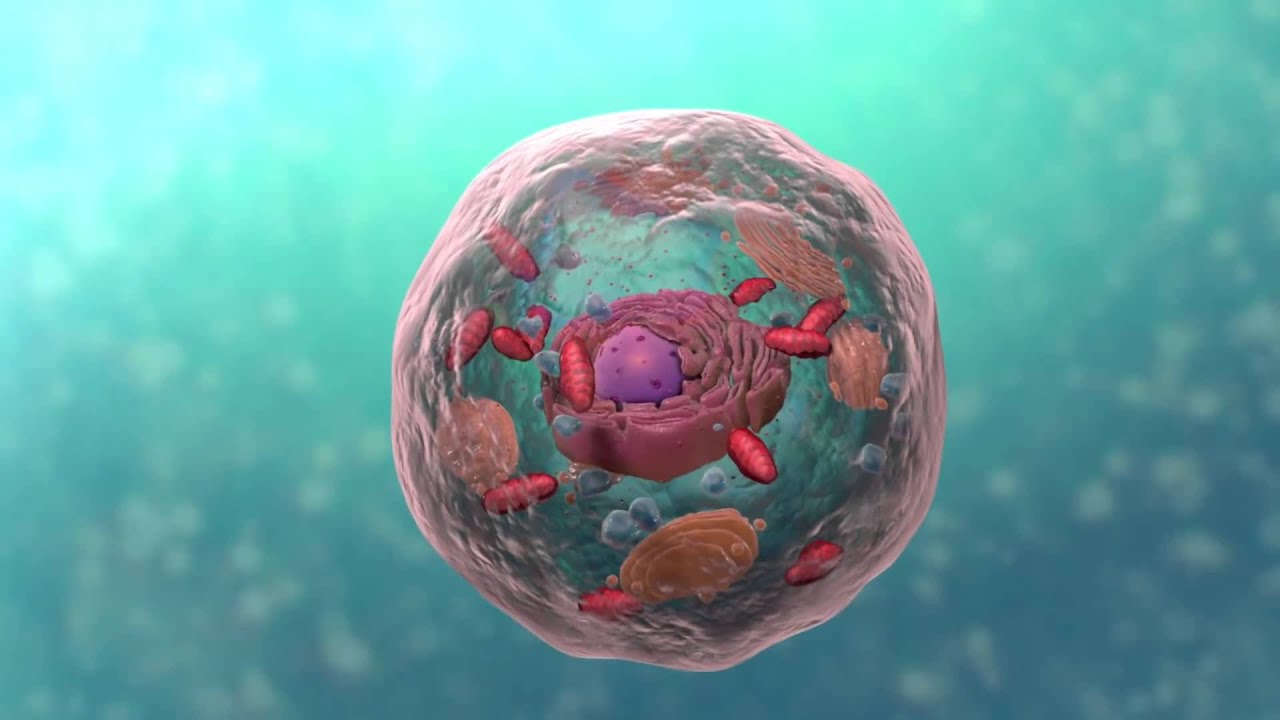
A cell is an elementary unit of all living things, so it has the properties of living organisms: highly ordered structure, metabolism, irritability, growth, development, reproduction, regeneration, and other properties.
The outside of the cell is covered with a cell membrane that separates the cell from the outside environment. It performs the following functions: protective, differentiating, receptor (perception of environmental signals), transport.
The cytoplasm forms a number of specific structures. These are intercellular junctions, microvilli, cilia, and cellular processes. Intercellular connections (contacts) They are divided into simple and complex ones. With a simple connection, the cytoplasm of neighboring cells forms outgrowths that connect the cells. There is always an intercellular gap between the cytoplasmas. With complex connections, cells are connected using fibers, and there is almost no distance between the cells. Microvilli are finger–shaped outgrowths of a cell devoid of organoids. The cilia and flagella perform the function of movement.
Mitochondria contain substances rich in energy, are involved in the processes of cellular respiration and the conversion of energy into a form available for use by the cell. The number, size, and location of mitochondria depends on the cell’s function and energy requirements. Mitochondria contain their own DNA. About 2% of a cell’s DNA is contained in mitochondria. Cellular proteins are formed in ribosomes. Ribosomes are involved in protein synthesis and are present in all human cells, with the exception of mature red blood cells. Ribosomes can be freely located in the cytoplasm. They synthesize a protein necessary for the vital activity of the cell itself. Protein synthesis is associated with the process of transcription, which is the rewriting of information stored in DNA.
The nucleus is the most important organoid of a cell: it contains a special substance, chromatin, from which filamentous chromosomes are formed before cell division – carriers of human hereditary traits and properties. Chromatin consists of DNA and a small amount of RNA. In the dividing nucleus, chromatin spiralizes, resulting in visible chromosomes. The nucleolus (one or more) is a dense rounded body, the larger the size, the more intense the protein synthesis proceeds. Ribosomes are formed in the nucleolus.
The cell of any organism is an integral living system. It consists of three inextricably linked parts: the shell, cytoplasm and nucleus. The cell shell directly interacts with the external environment and interacts with neighboring cells (in multicellular organisms).
Biophysical processes in cells ensure the implementation of the mechanisms of nervous regulation, the regulation of the physico-chemical parameters of the internal environment (osmotic pressure, pH), the creation of electrical charges of cells, the occurrence and spread of excitation, the release of secretions (hormones, enzymes and other biologically active substances), the realization of the action of pharmacological drugs. These processes are possible due to the functioning of the transport system. The processes of cell metabolism, including bioenergetic and many others, are also associated with the transfer of substances through membranes. The pharmacological effect of almost any drug is also due to its penetration through cell membranes, and its effectiveness largely depends on its permeability.
Source