Restoring the thymus can slow down aging and prolong life

The older a person gets, the higher their risk of dying from cancer or even the common cold. One of the reasons for this situation is the age-related changes in the thymus (thymus gland). This immune organ plays a crucial role in preserving life by blocking the development of dangerous mutations and participating in the destruction of dangerous microbes. However, with age, the glandular cells of the thymus are replaced by adipose tissue, and the organ’s function fades. Therefore, one of the most important tasks of modern medicine is to find measures to rejuvenate the thymus gland and restore its protective functions. 
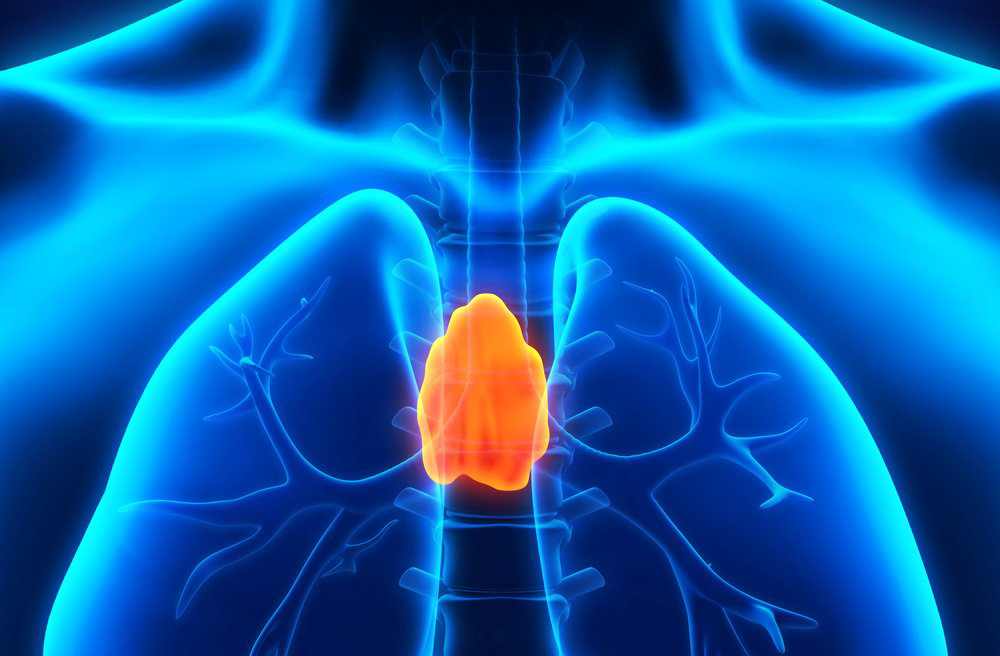
Restoring the thymus can slow down aging and prolong life

Why aging of the thymus leads to diseases and death

The thymus is the only place in the body where T–lymphocytes are produced, which are the main agents of adaptive (acquired) immunity. They are able to recognize and destroy mutated cells, preventing the development of cancerous tumors, identify and remember pathogens, and stimulate the work of other parts of the immune system. As the function of the thymus fades, the number of T-lymphocytes decreases. In January 2020, scientists from the University of Copenhagen (Denmark) The results of a large-scale study have been published, during which they traced the relationship between a decrease in the level of lymphocytes in the blood (lymphopenia) and the risk of death from various causes. The study involved over 108 thousand people aged 20 to 100 years (average age – 68 years), who were followed for 12 years (2003-2015). During this period, 10 372 people died. It turned out that people with lymphopenia had a 1.6-fold increased risk of dying from various causes, and mortality from heart disease, cancer, and respiratory infections was 2.8 times higher than in participants with normal lymphocyte levels. Experts explain this by the fact that a decrease in the number of lymphocytes indicates a decreased readiness of the immune system to respond to the invasion of factors leading to disease and death. Tellingly, lymphopenia develops with age in most people, which indicates its association with the decline of thymus function. Restoring the potential of the thymus gland will help to cope with many age-related problems, prevent the development of cancer and the likelihood of death from infections.

Don’t miss the most important science and health updates!

Subscribe to our newsletter and get the most important news straight to your inbox

Is it possible to transplant the thymus gland?

Transplantation of the thymus gland or its fragments to an adult could solve the problem of age-related decline in thymus function. This is possible, but to date, thymus transplant operations have been performed only in infants. In 2017, scientists from the Institute of Child Health (London, UK) published an article on the results of thymus transplantation in children with Di George syndrome, a genetic disease in which the thymus gland does not develop and there is a pronounced deficiency of T–lymphocytes. From 2009 to 2014, 12 children were transplanted, with an average age of 10 months. To suppress the rejection reaction, immunosuppressive (suppressing immunity) therapy was performed therapy. One patient had a rejection of a donor organ, and a second thymus transplant was performed. Three patients died (two weeks, eight months, and two years after transplantation) from infectious complications caused by immunodeficiency. Nine of the 12 operated on were alive at the time of publication of the article, and the follow-up period ranged from 22 to 80 months. Five to six months after the transplant, the recipients began to show their own T-lymphocytes, which indicated the adequate functioning of the transplanted organ. As a result, eight patients were “removed” from permanent antibiotic treatment, and five no longer needed the replacement administration of immunosuppressive drugs. Based on the results of the work, the doctors concluded that thymus transplantation is a method that allows them to produce their own T-lymphocytes, but the likelihood of developing autoimmune reactions is still quite high. Perhaps, as this practice improves, it will be possible to raise the issue of thymus transplantation not only for newborn children, but also for the elderly with age-related loss of thymus function.

The problem can be solved by transplanting the thymus skeleton

It is not necessary to transplant the entire thymus, you can limit yourself to transplantation of the skeleton of a donor gland – this has been proven by scientists from the Institute of Cell Therapy of Pittsburgh (USA). In 2019, they published the results of a study on bioengineered methods for restoring thymus function. It was found that one of the causes of age-related thymus gland involution is a change in the microenvironment. As a result, the progenitor stem cells stop transforming into mature T-lymphocytes. The method proposed by the scientists is to create a new organ framework with a microenvironment suitable for the proliferation of lymphocytes. The experiment was conducted on mice: the thymus was removed from donor animals and its decellularization was performed – the removal of cells through cycles of freezing and thawing followed by washing. As a result, a connective tissue skeleton remained, which was transplanted into recipient mice with the removed thymus. The creation of an extracellular 3D matrix helped create the conditions for the transformation of progenitor stem cells into full-fledged T lymphocytes. The study showed that the use of bioengineering technologies that help restore the correct microenvironment of cells contributes to the restoration of thymus function and can be used to rejuvenate the gland. Perhaps, after completing the preclinical stage of tests conducted on laboratory animals, scientists will be able to perform operations to transplant the thymus skeleton in humans.

Rejuvenation of the thymus with the help of growth hormone and thymus gland protein

Scientists from the biotech company Intervene and Stanford University have found that it is possible to achieve the reinvolution (rejuvenation) of the thymus in humans with the help of growth hormone – the results of the study were published in September 2019. This is the first study of the technique conducted on humans, so the number of participants was small – 10 people (men aged 51 to 65 years). At the same time as recombinant (artificially synthesized) growth hormone rhGH, participants received antidiabetic drugs DHEA and metformin, since excess growth hormone in the body can lead to diabetes. It turned out that after 12 months of taking rhGH, eight out of ten participants had a significant part of the fat in the thymus replaced by functional cells. The two volunteers with the less pronounced effect initially had lower levels of fatty tissue in the thymus gland than the other participants. In addition, it was found that during the year of treatment, rejuvenation processes started in the volunteers: the reversal of epigenetic aging processes was recorded by analyzing methyl tags on the DNA of the participants’ blood cells. During this time, all 10 volunteers became younger by an average of 2.5 years. Earlier, in 2014, scientists from the University of Edinburgh rejuvenated the thymus of very old mice using the FOXN1 protein, a substance produced by thymus cells. Thanks to it, it is possible to control the “activation” of important genes that control the function of the organ. By increasing the content of the FOXN1 protein, scientists have managed to reconfigure the cells of the thymus gland. The specialists managed to start the regeneration processes in the organ: the thymus of elderly mice acquired a structure similar to the thymus gland of young animals. After the course of treatment, not only the appearance of the thymus was restored, but also its functions. In particular, the scientists noticed that the rodents’ bodies began to produce more T-leukocytes.

The function of the thymus is restored after castration

Among the methods of restoring thymus activity in animal trials, castration – removal of the sex glands – has proven itself well. The effectiveness of this technique has not been tested in humans due to ethical considerations. The results of an experiment conducted by Australian scientists from Monash University (Melbourne) were published back in 2005. The study involved two groups of mice. The animals in the first group were over nine months old, and they had age–related thymus involution. After the castration procedure, removal of the testes, the level of immune cells produced in the thymus increased in rodents for 10 days, and the fat cells were replaced by functional ones. The second group included young mice at the age of eight weeks. The animals were injected with a drug (cycloblastine) that suppresses the activity of thymus gland cells. Next, the mice were divided into two subgroups – the main group, whose participants underwent castration surgery, and the control group, which did not undergo surgery. It turned out that after removal of the testes, the animals had a rapid restoration of thymus function, while in the control group, the production of immune cells remained suppressed.

Physical education and dietary supplements will help improve the functioning of the thymus

To rejuvenate the thymus, it is not necessary to resort to drastic measures such as castration, surgery or taking hormones, according to scientists from the University of Birmingham (England). They conducted a study, the results of which were published in 2018. 125 amateur cyclists participated in the experiment: 75 people aged 55 to 79 years and 55 people aged 20 to 36 years. The subjects participated in the 100 km race in 6.5 hours for men and 50 km in 5.5 hours for women. They trained regularly in preparation for the competition. The comparison group consisted of people of a similar age who were not involved in sports. Studies have shown that regular exercise helps the thymus of the elderly to remain as active as at a young age: the number of T-lymphocytes in the “young” and “elderly” groups was almost the same. A gentle method of restoring the thymus was also proposed by scientists from the Singapore Immunological Network. Back in 2012, they published the results of a study on the effects of certain lipids on the thymus. Experts have found that the formation of killer T cells in the thymus – the “first line of defense” cells against the invasion of foreign agents – is activated by the action of lipid molecules. These fat molecules are produced by pathogenic bacteria and synthesized in the thymus itself. Scientists have managed to decipher the structure of these signaling substances and artificially synthesize their analogues. It turned out that the introduction of these molecules into the body leads to increased formation of T-killers, which can be used in the fight against infectious diseases, especially in people with age-impaired thymus gland function.

Conclusion

Today, science is only taking the first steps towards restoring thymus function. Perhaps very soon methods will be proposed to reverse the processes of age-related degradation of the thymus gland and provide everyone with strong immunity. But now we can take measures to maintain the maximum functionality of our thymus. At least such methods as physical activity and healthy eating are available to everyone. Photo: galaksyenergy.ru

Published

July, 2024

Duration of reading

About 3-4 minutes

Category

The immune system

Share

Send us a message