What is DNA

All cells on Earth store their hereditary information in the form of double—stranded, or double—stranded, DNA macromolecules, deoxyribonucleic acid, long unbranched paired polymer chains, always formed from the same four monomers – nucleotides.
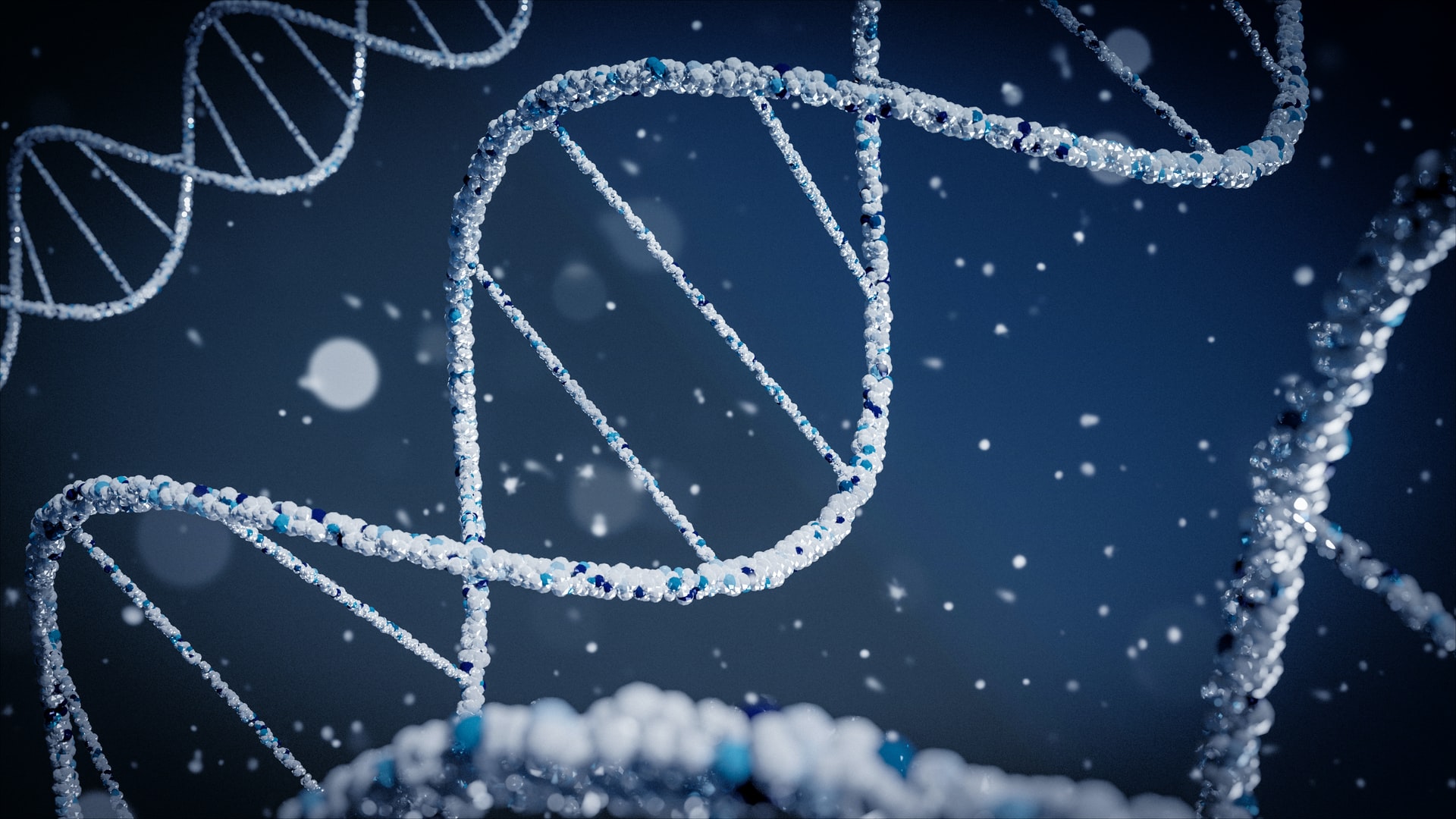
What is DNA
Each monomer in a single DNA chain consists of two parts: sugar — deoxyribose — with a phosphate group attached to it and a nitrogenous base — adenine (A), guanine (G), cytosine (C) or thymine (T). These monomers are linked in a long linear sequence that encodes genetic information in the same way that a sequence of ones and zeros encodes information in a computer file. Each sugar unit is connected to the next through a phosphate group, which forms a polymer chain consisting of a chain of repeating sugar-phosphate units with bases protruding from it. The DNA polymer is expanded by attaching monomers to one of the ends. The following restriction applies in a living cell: DNA is synthesized not as a free, isolated chain, but on a matrix that serves as an existing DNA strand. The bases located on the existing filament bind to the bases of the synthesized filament according to a strict rule determined by the complementary, i.e. complementary, structure of the bases: A binds to T, and C binds to G. This base pairing holds the new monomer in the appropriate place and ensures the correct choice of the next one, one of the four, monomers to be added to the growing chain. This creates a double-stranded structure consisting of two precisely complementary sequences of nucleotides: A, C, T, and G. Both strands twist around each other and form the well-known double helix. If you stretch the entire DNA containing the genes, it will be two meters long, but it is packed so tightly that it fits in the nucleus of a single cell. Compared to the bonds in sugar-phosphate bridges, the bonds between base pairs are weak, and this allows the two strands of DNA to diverge without breaking their main chains. After that, each strand can serve as a matrix for the synthesis of a new DNA strand complementary to its matrix, that is, a new copy of the hereditary information. In different types of cells, this process — DNA replication — occurs at different speeds, using different controls necessary to start and stop it. But the fundamentals of the process are universal: DNA is a repository of information, and matrix polymerization is the way in which this information is copied throughout the living world. DNA replication is a key event during cell division. We can take a piece of DNA from a human cell and insert it into a bacterium, or, conversely, take a piece of bacterial DNA and insert it into a human cell, and in both cases the information will be successfully read, interpreted and copied. Using chemical methods, scientists can read the complete sequence of monomers in any DNA molecule — up to millions of nucleotides — and thus decode the hereditary information that any organism contains.

Don’t miss the most important science and health updates!

Subscribe to our newsletter and get the most important news straight to your inbox

Published

July, 2024

Duration of reading

About 1-2 minutes

Category

Genetics

Share

Send us a message