The brain and nervous system

The brain occupies a central place in the nervous system, which includes the spinal cord and a network of nerves that run through every part of our body. He gives commands to all organs and systems and even to every cell of the body about how they need to function, controls everything: thinking, feelings, actions and perception of the surrounding world. Our health also depends on the guiding role of the brain.

The brain and nervous system
Decades ago, it was believed that 90% of all diseases occur as a result of malfunctions of the nervous system, when a person cannot protect himself from the effects of harmful factors. Today, many scientists support this idea, and some even raise the figure to 98%. But the good news is that thanks to numerous studies, it is known that the human brain has the ability to change and recover regardless of age, it can both provoke diseases and prevent them. When we understand how the nervous system controls the body and triggers self-renewal processes, we can use them to influence the body’s functioning.

Don’t miss the most important science and health updates!

Subscribe to our newsletter and get the most important news straight to your inbox

How does the brain work?

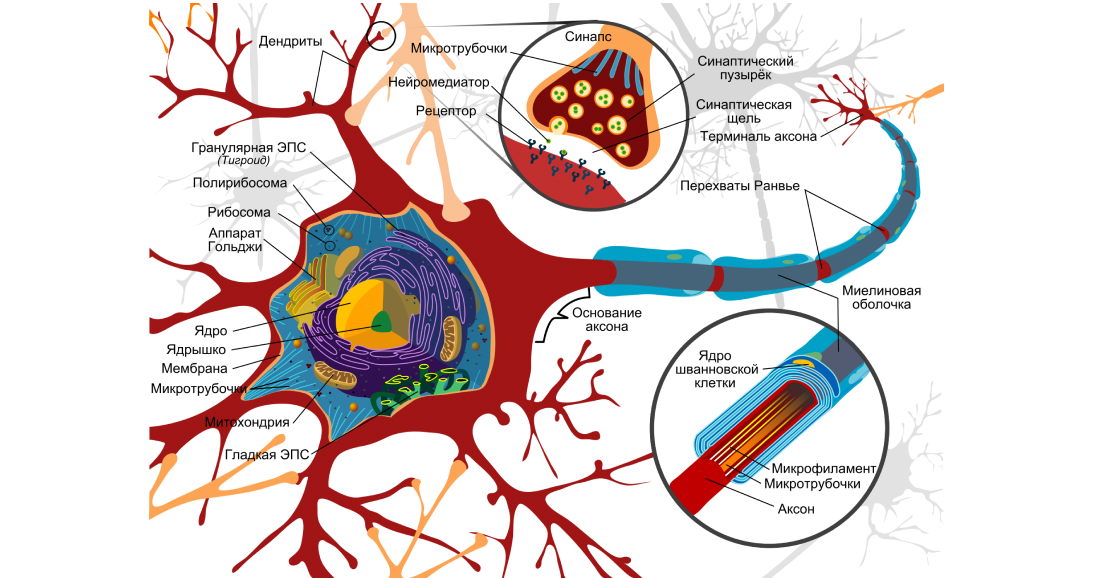
The brain is a complex complex of nerve cells (neurons) and other structures that help us think, react to the environment, make decisions, and execute them. Some parts of it are responsible for vital body functions such as breathing and heartbeat. Its other departments control learning and memory, senses (sight, smell, hearing, taste and touch), and emotions. For proper functioning, billions of nerve cells must interact with each other and work together. A neuron consists of three parts: a cellular body, numerous branching processes (dendrites) and one long process (axon). Nerve cells communicate with each other, receiving information through dendrites and transmitting it through axons. There is a small gap in the area of neuron contact called a synapse. Here, electrical signals cannot directly cross space, so they are briefly converted into chemical signals through the release of special substances – neurotransmitters (or neurotransmitters). At any given moment, millions of these messages are transmitted throughout the brain, allowing it to process information and send instructions to various parts of the body. Neurotransmitters regulate our mood, motivation, sleep, ability to concentrate, learn, remember, and cope with stress. In many ways, they determine how we live and who we are. For example, dopamine causes a feeling of pleasure and satisfaction, serotonin improves mood, gamma-aminobutyric acid calms the nervous system, and norepinephrine increases physical and mental activity. Brain scientists have shown that just thinking about something can cause the brain to release neurotransmitters and cause neurochemical changes in the body. As soon as the mediators cross the synaptic cleft, an electrical signal is generated in the neuron, transmitting information further.

Published

March, 2024

Duration of reading

About 2-3 minutes

Category

The brain and nervous system

Share

Learning and memory

At birth, the nervous system already contains all the neurons you will ever have, but many of them are not connected to each other. The connection between them arises due to the movement of neurotransmitters through synapses. As you grow and learn, messages travel from one neuron to another over and over again, creating pathways in the brain and forming complex three-dimensional networks. That is why mastering the unknown requires a lot of concentration, because it requires creating thousands of synaptic connections. But if we repeatedly repeat what we have learned, the pathways between the neurons strengthen and help us remember the information next time. Otherwise, the connections soon disappear and the memory is erased. Therefore, it is necessary to continuously review new knowledge, habits, beliefs and situations in your mind. In other words, memory is the retention of long–term stable connections between nerve cells. And the formation of these connections and how they change over time rebuilds the physical structure of the brain and affects the physiological functions of the body.

Neuroplasticity

Research shows that as we use our brain, learn, and train our memory, it is able to grow and change due to neuroplasticity. Plasticity or flexibility is the brain’s ability to reorganize its own structure and functions, forming new connections between neurons and reducing old ones after changes in the body or in the external environment throughout life. This means that when we learn and experience something new, we literally change our brain, reprogram it. Neuroplasticity is most pronounced in the first few years of life, as neurons grow very quickly, eventually forming too many connections. In fact, at birth, each nerve cell in the cerebral cortex has about 2,500 synapses. By the time a child turns two or three years old, their number is approximately 15,000 per neuron — twice as many as in an adult brain. This explains children’s ability to learn quickly. But as soon as the childhood period ends, there is a sharp drop in the number of supported relationships. This process is called synaptic pruning and usually occurs during adolescence. As we adapt to new conditions, our brain gets rid of unused or unnecessary neural connections, while at the same time strengthening and preserving those that are often used. Therefore, for example, by stimulating areas of the brain responsible for positive emotions, it is possible to strengthen the pathways between nerve cells. This effect can be compared to muscle training in the gym. On the other hand, if a person often thinks about negative things, then there is a backlash. In addition, constant stress contributes to premature aging of the brain. All this directly affects the condition of our body. That is why it is so important not only to maintain the flexibility of the brain, but also to control incoming disturbing thoughts and negative emotions.

Neurogenesis

For several generations, science has believed that the brain practically does not change from birth — new breakthrough research has proved the opposite. Thanks to a process that scientists have called “neurogenesis,” the brain can regenerate neurons throughout life and integrate them into existing neural circuits, which means it is constantly capable of self–repair. Injuries can be cured, memory and intelligence are not inherently predetermined. Ideally, brain cells should be in constant balance.: replenish at the same rate they die. However, neuron regeneration depends on many factors: age, stress, nutrition, motor and mental activity, and the presence of neurotoxins. Research has shown that physical and cognitive exercise can trigger the growth of new brain cells, while stress, depression, and decreased sensory perception have the opposite effect.

Do thoughts affect the body?

According to neuroscientists, the human brain cannot distinguish physical sensations from perceived thoughts and emotions. This means that negative mental states such as anxiety, negativity, and self-loathing cause the same chemical reactions in the body as real illnesses and injuries. Research shows that when we intentionally translate thoughts into positive emotions, we can positively influence the state of the body. Electrochemical interactions occurring in the frontal lobe of the brain trigger the release of neuropeptides, special chemical compounds that carry messages to the body’s cells. These messengers send signals throughout the body, which, in turn, “turn on” and “turn off” certain genes, which leads to changes in protein synthesis, structure and functions of all body systems. We literally become what we think and do.

Conclusion

The brain is the most mysterious and complex organ that humans possess. It is dynamic and adapts to the demands placed on it. Having a powerful potential, a person, as a rule, spends very few resources on training mental skills, is easily influenced by negative emotions and stress, which affects the physical condition of the whole organism, provokes numerous diseases and promotes aging. The structure of the brain changes over the course of life. It’s inevitable. With every thought, neurotransmitters are released that are responsible for the functioning of the nervous system, which regulates vital processes in the body, leading to structural and functional changes in the body. And whether these changes will be good or bad depends on the person. So, what can you do to change your brain and optimize its performance? The answer is simple: to keep him in good shape all the time, to develop cognitive skills. Training should include both logical tasks and tasks that provoke an emotional reaction. The range of exercises is very wide: from board games, chess, puzzles to learning to play a musical instrument, composing poetry, and language courses. In addition, scientists advise traveling more, talking to smart people, building interpersonal relationships and social connections.
Send us a message