The future is near: how digital biomarkers are revolutionising medicine
The proliferation of digital technologies that collect large databases has led to the emergence of new sources of medical information that help professionals better assess and monitor patients’ health. The ability to obtain such information using mobile devices has contributed significantly to the development of so-called digital biomarkers. Scientists believe that they can be used not only to build a complete biological picture of a person, but also to conduct better research to better understand healthy and diseased conditions.
Hand in hand: medicine and digital technology
Digital biomarkers are consumer-generated physiological and behavioural indicators that are collected using various types of digital devices. The data obtained are interpreted by special programmes, artificial intelligence, which assess the patient’s condition and predict possible risks of disease development. Biomarkers collected in this way, both from individuals and population groups, provide clinically relevant information that allows specialists to further use it for research and translate it into ready-to-use theory.
Don’t miss the most important science and health updates!
Subscribe to our newsletter and get the most important news straight to your inbox
Application of digital biomarkers
Staff at the Rock Health Foundation, which supports digital health startups, believe that digital biomarkers are already creating the future of medicine. The smartphone today is the access point from doctor/researcher to patient. In the US alone, about 30% of smartphone owners use at least one medical app. And this already, according to scientists, can become a good database. For example, more than 100,000 people have already decided to provide their metrics to Apple’s ResearchKit and CareKit platform to advance research to better understand diseases.
In February 2018, Evidation Health announced the launch of a large-scale study on the prevalence and intensity of chronic pain in a sample of 10,161 participants. Researchers intend to collect different types of data, including measurements from a variety of mobile devices.
An international team of scientists from the Netherlands, Brazil, the US and other countries conducted a study of Parkinson’s disease using wearable sensors to provide a more complete picture of the disease. All 954 patients were given a Pebble smart watch that interacts with a smartphone and tracks physical activity, sleep, medication intake, and symptoms of the disease such as tremors. Most importantly, the study proved that the devices, worn daily for 15-16 hours a day, can be used by Parkinson’s patients without effort on their part.
In turn, scientists from Switzerland assure that with the help of special sensors it is possible to continuously monitor the condition of patients with dementia in a natural environment. In the homes of the elderly they have placed sensor devices that detect temperature, light, humidity, movement and walking speed, as well as recognising the patients’ activities: sleeping, grooming, eating and others. The activity map of patients thus compiled showed disorganised behaviour and erratic daily activities. This gave a more complete understanding of the disease in each individual case, which is much more valuable than the information that patients themselves give when filling out questionnaires in hospitals or talking about themselves during a visit to the doctor.
Full replacement for medical devices
There are now a myriad of mobile health apps and devices on the market that can measure blood pressure, pulse and respiration rates, temperature, blood glucose, cholesterol, sleep cycles, hydration, brain activity, and much more to track health outside of the clinic. Whereas, for example, blood pressure measurements with a traditional device can only be taken occasionally, wearable handheld devices can continuously record a person’s vital signs, information that can be critical for specialists to take a history and make a diagnosis.
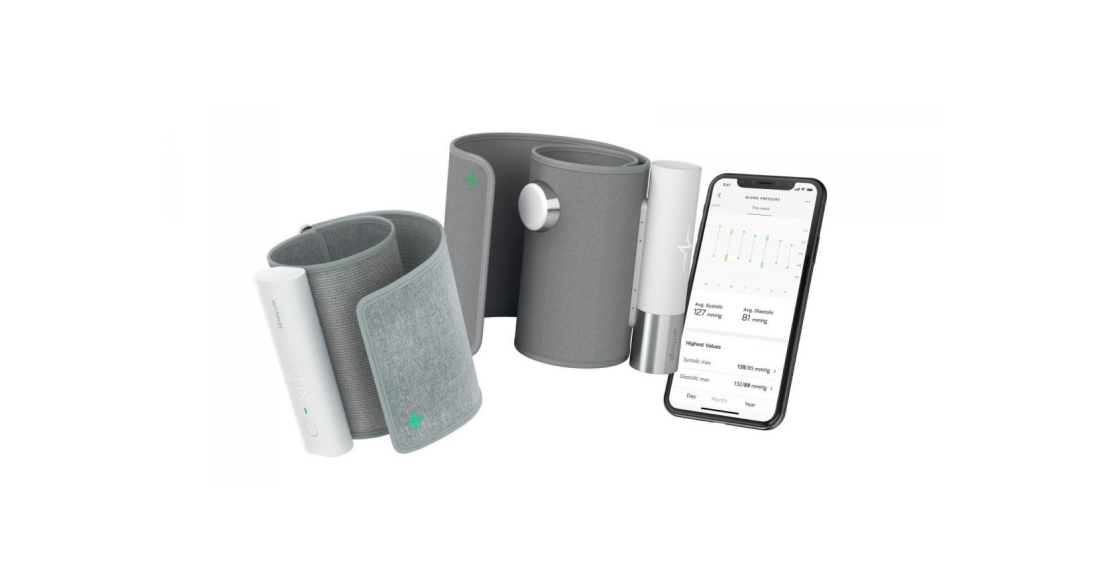
The range of digital devices is diverse, from chips implanted under the skin to smart watches, stickers, headbands and T-shirts. The Dexcom G6 system, for example, is a small device that the user sticks on their stomach like a band-aid. It contains sensors that measure blood sugar levels and transmit that data every five minutes to a smartphone app. The system sends the consumer an alert when sugar levels get too high or low, and can also issue a command to administer medication. Such a device, the manufacturers promise, will be very useful for people suffering from diabetes. Another example: Withings has developed the BPM Core cuff tonometer, which can measure heart rhythm, blood pressure, as well as record abnormal heart activity. The data obtained is displayed in the app and can be transmitted directly to the attending physician.
Published
June, 2024
Duration of reading
About 3-4 minutes
Category
Aging and youth
Share


Various measurements are possible thanks to the sensors built into the device, which integrate GPS, altimeters, microphones, accelerometers and more to monitor health indicators. Sensors can pick up on existing disorders, and devices and apps can make recommendations to improve the condition and track the effectiveness of suggested treatments.
Problems to be solved
However, the mass use of smart watches, fitness trackers and medical apps has a number of disadvantages. The point is that in clinics, measurements are still taken by specialists who can guarantee their accuracy. Wearable devices do not promise this and can only give approximate values. Due to inaccurate measurements, the quality of the medical examination may suffer.
Another issue is the reliability of the wearable device or app: some may not be approved by FDA or CE regulatory agencies. There is also the possibility that information could be leaked and digital biomarkers could fall into the wrong hands. In the future, experts intend to solve such problems.
Markets and Markets predicts that by 2022, the market for medical wearable devices will reach $14.41 billion. According to a report by Rock Health, its turnover may increase from $10 billion to $31 billion in the United States alone.
The exponential growth in the number of devices is naturally linked to the increasing accumulation of medical data. Stanford University scientists estimate that in 2013, 153 exabytes of information were collected (one exabyte is a billion gigabytes). By 2020, 2,314 exabytes will have already been accumulated, an increase of at least 48 per cent per year.
Although digital biomarkers are only in their infancy, at this time they are already making a significant contribution to the entire healthcare system. Access to each patient via smartphone provides specialists with the ability to take action more quickly when the first symptoms appear. In addition, replacing existing technology to monitor patient health can result in less equipment for healthcare professionals, lower costs, improved safety and increased satisfaction among patients. Data from mobile devices and other remote control technologies will help in developing innovative treatments for patients and in creating a scientific basis for explaining many diseases.
Photo: eohealth.ru