The holographic principle of the brain according to Karl Pribram
A special place among neuropsychological concepts is occupied by Karl Pribram’s holographic theory, according to which all information (like an optical hologram) is distributed more or less evenly across the cerebral cortex, and information about different events is presented in each area. But at the same time, the Device mainly connects information storage and memory with the hippocampal region, and the processes of memory (and, consequently, awareness), naturally, with the hippocampal theta rhythm.
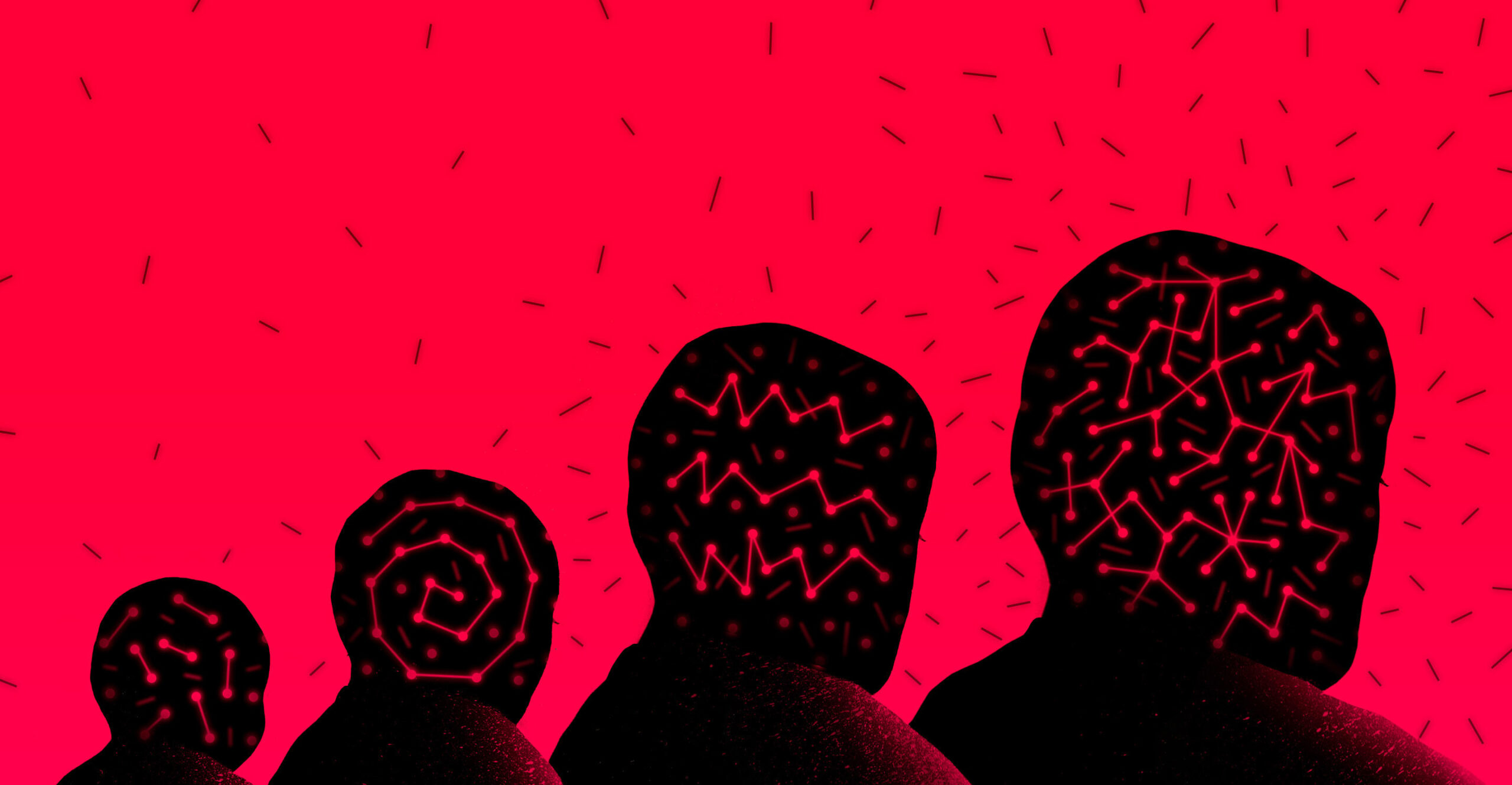
In general, the Karl Pribram model assumes two main processes: spatially organized states and operations performed against the background of these states using impulse transmission between neurons. The basic properties of neural groups can be combined into logical operations that enhance the analytical and control functions of the nervous system. Given their importance, Pribram emphasizes that the construction of topological, i.e. spatial, representations in the nervous system with a certain structure is one of the forms that brain states can take. He suggested that the interaction of dynamic excitation structures incident on receptor surfaces, after their transmission along parallel paths, is encoded by horizontal connections into the activity of slow potentials of groups of neurons and forms temporary microstructures, the patterns of which depend more on the functional organization of neural connections than on neurons as such.
The neural mapping of input effects is not photographic and is created not only through an existing filter system that highlights features, but also through a special class of transformations that have significant formal similarities to the process of reflecting an optical image discovered by mathematicians and engineers. This optical process, called holography, is based on the phenomenon of interference of structures. It has many amazing properties, of which its ability to distribute and store a large amount of information is of paramount importance. It is these properties that make it possible to resolve the contradiction between the need for functional lability, the rapid pace of change and the anatomical features already considered in the organization of nervous information systems.
Receptor phenomena serve as miniature models of the “neural holographic” process. For example, the excitation of one unit of the optic nerve affects the frequency of discharges of neighboring units. It is also noted that the receptive field of a separate unit is formed as a result of such spatial interaction between neighboring elements. In the optic nerve, these receptive fields usually consist of a more or less rounded central spot, which reacts either by increasing or decreasing the frequency of its spontaneous discharges, and from the surrounding area, which is characterized by activity opposite in sign to that of the center.
The essence of the holographic concept is that images are restored when their representations in the form of distributed information systems are appropriately activated. These representations act as filters or screens. In fact, the idea of a holographic process arises even when considering optical filters. In this regard, holography is understood as an instantaneous analog cross-correlation carried out as a result of filter matching. Correlation in the brain can take place at different levels. At the peripheral levels, a correlation arises between successive configurations generated by receptor excitation: residual phenomena preserved after adaptation acting through the attenuation mechanism create a buffer memory register, which is updated by current input influences. At centrally located stations, correlation entails a more complex interaction: at any given time, the input effect correlates not only with the excitation configuration existing at any point, but also with the excitation structures arriving from other levels of the system. An example of this type of complexity is shown in experiments where the configuration of potential changes in the visual cortex was determined not only by the visual stimuli observed by the monkey, but also by the conditions of reinforcement and the “intention” to carry out a particular type of response.
According to the holographic hypothesis, the mechanism of these correlations is not the result of any disconnected “dynamic field”, or even isolated, split wave structures. In information theory, recognition, or reporting the quantitative degree of similarity of two things, is described by a correlation function of two temporal functions, or two images. The complex calculation of the correlation function can be described mathematically as a filtering operation, but first, of course, the filter that is required to perform this filtering operation and with which the signals will be compared must be calculated. The fact that a hologram, like a neural network with the simple properties we postulated, performs its filter function with 50% efficiency is due to the fact that the propagating wave field automatically performs this laborious calculation, meeting the requirements of theory.
The existence of a neural holographic or similar process does not mean, of course, that the input information is willy-nilly distributed throughout the depth and surface of the brain. Information is distributed only in those limited areas where the input effects actually cause stable patterns of synoptic microstructures. Moreover, more localized memory mechanisms should be used to explain any effect that develops after a specific input. However, information can sometimes be injected into areas that are distributed across the neural space, and then it becomes scattered. The restoration of what is stored in memory for a longer time depends mainly on the repetition of the given structure, which initially caused this process of preservation, or its essential parts. This ability to “address” information directly to the content, regardless of its localization, which is so easily achieved in the holographic process, eliminates the need to have special paths or points in the brain for storing information.
Karl Pribram writes that there are extensive components of the system that create a long-term ordering of the molecular structure, which are oriented at different angles to each other. However, the ordering will correspond only to the statistically dominant structure of activity or to the simplest principle of sequential change in the dynamic structures of typical activity. Moreover, this tendency to choose a dominant structure will be reinforced by the fact that the simplest, most general dynamic structures will be the most stable, as their parts will mutually support each other. Randomly organized protein structures can therefore act as a structural filter, obtaining a stable impression at first only from the simplest, most unified and statistically dominant component in all dynamic structures of a given general form. Then the structure modification process evolves from a highly simplified to a less simplified and more accurate record. This process of hierarchically organized modification development corresponds to the “progressive individualization” of behavioral forms during ontogenesis and may serve as a key to understanding the self-coordinating ability of the cortical process.
This does not mean that all brain functions are reduced to a holographic process or that holographic analysis solves all problems of perception. A neural hologram usually explains the psychological function of image formation and the mechanism of memory distribution in the brain. This does not mean that memory is randomly distributed throughout the brain. A neural hologram explains the facts that arise when input systems are destroyed. Its extension by extrapolation to other systems does not mean that the systems become indistinguishable from each other. Even in the process of image formation and, of course, other memory mechanisms besides those corresponding to the holographic analogy should play a role in recognition.
It is especially important that the holographic hypothesis does not refute classical neurophysiological concepts; it enriches them by emphasizing not the nerve impulses of the axon, but the microstructure of slow potentials that develops in postsynaptic and dendritic networks. At the same time, the holographic hypothesis enriches psychology by providing it with a plausible mechanism for understanding psychological phenomena of perception. This makes it possible to consider individual components of psychological functions that are mixed together within the narrow framework of a number of psychological approaches.
Don’t miss the most important science and health updates!
Subscribe to our newsletter and get the most important news straight to your inbox
Published
June, 2024
Duration of reading
About 3-4 minutes
Category
The brain and nervous system
Share

