Implicit learning
Psychologist Ivan Ivanchey told PostNauka about the mechanisms of unconscious memory, the experiments of Arthur Reber and the role of grammar in the processes of memorization.
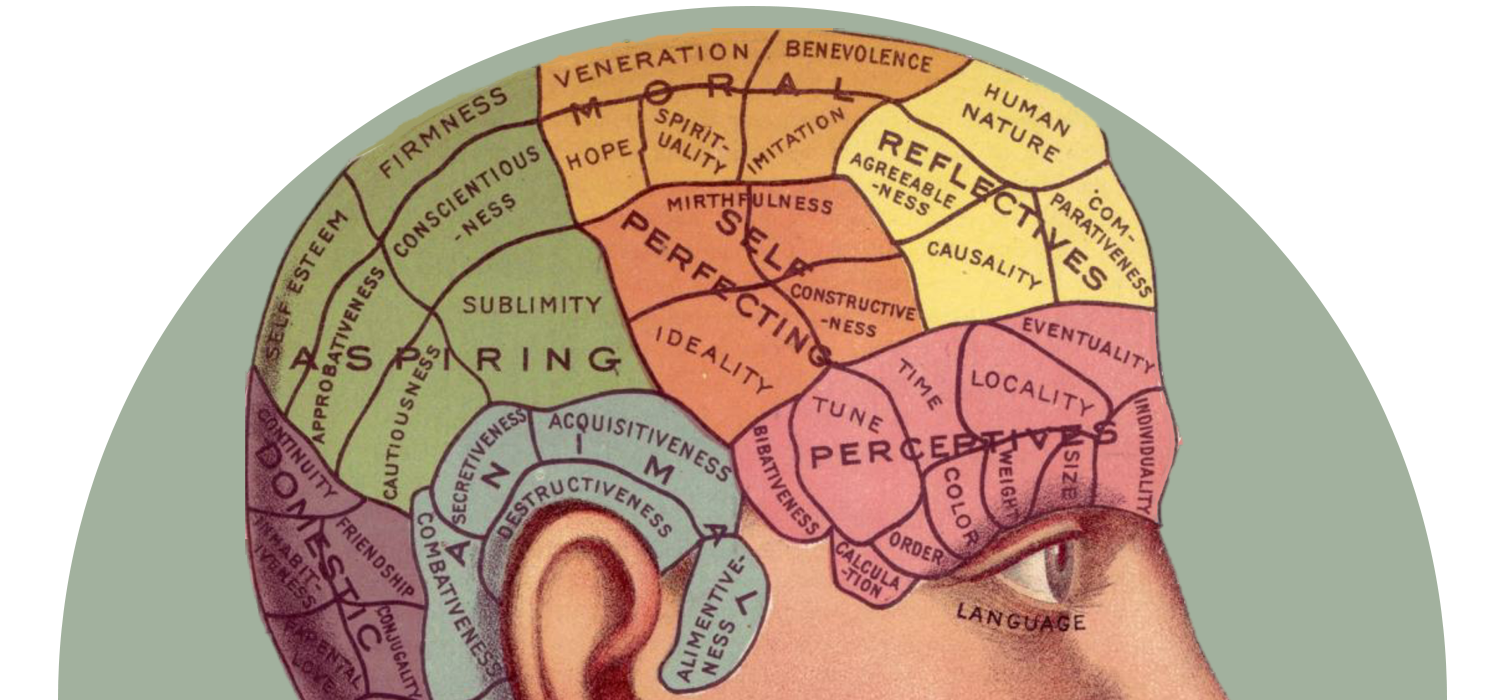
Imagine that you need to tell another person how you ride a bike. Or remember yourself as a child. By the age of three, we have already learned how to speak, formulate our thoughts, and ask our parents for everything we need, but when we get to elementary school and the teacher asks us to declone some nouns and conjugate verbs, it is very difficult for us to do this. We have been suffering for all 11 years of our school. What unites these two examples? In both examples, we have clearly internalized some kind of relationship either in the physical world, as in the case of a bicycle, or in the cultural world, as in the case of language, but we cannot verbalize, explicate, or talk about it. This process is called implicit learning in psychology. Implicit learning is the assimilation of some complex relationships in the world around us without the participation of consciousness and also without the intention to learn something.
It all started with a scientific debate between Noam Chomsky, a cognitive linguist, and psychologists. It was the 1960s, and Chomsky had just defeated behavioral psychologists who tried to explain language acquisition through trial and error. Chomsky fundamentally disagreed with this. He calculated that it would take us hundreds of years to learn a language in this way. Chomsky assumed that we have some kind of innate structures that allow us to learn language. Arthur Reber, a cognitive psychologist, disagreed. He assumed that during our lifetime we can assimilate quite complex, voluminous structures without the participation of consciousness and without the intention to learn something. He conducted a series of experiments in which he tried to prove this point of view.
He formulated a small scheme, which he called artificial grammar. This scheme made it possible to assemble sequences from several symbols, for example, seven elements, which he called grammatical sequences — a kind of artificial language. He invited the subjects to his laboratory and told them that they would now participate in experiments aimed at studying memory. I told them that they would now be presented with meaningless sequences of characters that they would need to memorize. The subjects went to the laboratory, and they were shown all these sequences on the cards. After they were shown 40-50 of these sequences, which they observed on cards and wrote down, all the entries were deleted, and Reber informed the subjects that in fact the sequences they memorized were not random sets of letters, but were composed according to certain rules — the rules of artificial grammar.
And at the second stage of the experiment, the subjects will be presented with new sequences, some of which comply with these rules, and the other part does not. And the subjects will have to tell which sequences correspond to this pattern, grammar, and which ones do not. Of course, the subjects most often protest in these experiments, saying that they did not memorize anything, they just had an experiment for memory and they did not isolate any patterns. Reber calmed the subjects and told them, “Okay, okay, calm down, just try to answer at random, as you think.” During the experiment, the discouraged subjects classified the lines into grammatical and ungrammatical, it seemed to them subjectively that they were answering absolutely at random, but as it turned out at the end of the experiment, most of the lines of these sequences were correctly classified by the subjects. But the most interesting thing about this experiment is that after the experiment, the subjects could say almost nothing about how they did it, what rules they relied on when they classified the lines.
Reber concludes that this experiment demonstrates a person’s ability to learn complex structures in a very short time without feedback and without intending to learn anything. After a while, similar results were obtained in other areas of human activity, for example, in the field of motor reactions. Imagine a simple sensorimotor task. There are four light bulbs and four keys in front of the person. One light bulb lights up, and the person needs to press the appropriate key. For example, if the second one on the left lights up, you need to press the second key on the left. If a certain pattern is introduced into the sequence of presenting the light bulbs, the subjects begin to press the buttons faster and faster, as if anticipating where the next signal will appear. Again, in this situation, if the sequence is long enough, the person does not understand at all that some kind of pattern has been introduced into the task. If a person is informed at the end that this has been done, as a rule, the subjects are very surprised.
An interesting point is that if this pattern is violated at some point, then a person demonstrates a sharp slowdown in reaction time. That is, it looks as if he lost his way, although in fact he himself did not realize that he was memorizing something. Another example of a laboratory technique that allows the study of implicit learning is the formation of implicit categories. The process of categorization is a mental process that allows us to classify objects into different classes. In the laboratory, this is studied by forming artificial categories. An example is an experiment in which subjects are taught to distinguish between alien beetles. There are bugs that differ in characteristics (for example, the length of the body, the number of legs, the length of the antennae, and so on). That is, there are many characteristics. And certain combinations of these characteristics distinguish beetles of one species from beetles of another species. And the subjects need to try to guess which species the beetles belong to.
After each sample, the subjects are given feedback, whether they answered correctly or not. What happens in such an experiment? After some time, the subjects begin to correctly identify which beetles belong to which class. But for a long time, a person cannot verbally formulate the rules that determine belonging to a class. This is also an example of implicit learning. There are quite a few examples in life when we encounter such a situation. For example, when we are trying to figure out whether we can trust a person in some dubious transaction or not. When we choose a route in order to get to a place faster. When we choose products, which are of high quality and which are of low quality. Sometimes we can tell what criteria we rely on, but very often we trust, as we call it in everyday life, intuition. Implicit learning is the mental process that underlies intuition. Artur Reber has been researching some subtle points related to the assimilation of artificial grammar for quite a long time.
And after thirty years of his research, in 1993, he published a paper in which he presented a large theory that would describe how implicit learning occurs. He assumed that there are two independent systems in the human psyche that independently assimilate information. This is an evolutionarily older, very powerful and complex implicit system. And a rather late in the evolution of the explicit system superstructure, which allows us to formulate patterns verbally and transmit them to other members of the community. Such a two-system theory, on the one hand, describes experimental results well, on the other hand, it is well suited to describe many clinical cases. For example, with memory impairments due to traumatic brain injuries or some age-related diseases, people often have an impaired ability to explicit memory. Explicit memory refers to the ability to purposefully memorize some objects and reproduce them.
For example, if you present a person with amnesia with certain types of amnesia with a sequence of 20 or 10 words, then after five minutes the person will not be able to reproduce them. Sometimes he may not even remember that there was such a task. At the same time, the ability to learn implicitly does not change in such patients. It practically remains at the same level as in healthy subjects. Reber himself asked individual groups of subjects from the very beginning of the experiment, at the stage when they were just memorizing stimuli, to look for patterns, to look for artificial grammar, that is, he informed them that if they found certain patterns that determine the sequence of elements in the lines, it would be easier for them to remember. And the subjects purposefully tried to find out what patterns determine the sequence of symbols. And it turned out that as a result, the subjects in such groups are worse at classifying lines into grammatical and ungrammatical. That is, the interference of consciousness in this process worsens implicit learning.
An example is a tightrope walker who cannot think about his steps on the rope, otherwise he will fall. The interference of consciousness in well-automated skills always leads to a deterioration of this skill. It’s like a centipede that thinks about how it walks. This is a metaphor for implicit learning and conscious intervention. Of course, not all researchers agreed with this two-system theory of the Edge. And there are still authors who write that, in fact, all human information processing takes place more or less consciously. For example, David Schenck is still the main opponent of the Reber theory. He suggests that there really is no implicit learning, it’s just that experiments are not conducted accurately enough. It must be said that at the moment the theories of two systems dominate science. However, the disputes between two-systemers and one—systemers in the 1990s and early 2000s led to a significant increase in our knowledge of implicit learning.
For example, it became clear that human consciousness is not completely empty during implicit learning. First, the subjects feel that they know something. We get the feeling, as we can show in experiments, that we have learned something, but we cannot talk about it. Secondly, consciousness is always active. And even when we have some patterns in our task that we absolutely cannot verbalize, a person always tries to come up with an explanation for their cognitive processes and their behavior. And if you try to conduct an experiment with learning artificial grammar, then your subjects can actually tell you quite a lot after the experiment. However, eighty percent of this will have nothing to do with the patterns that you put into the artificial grammar. Thus, today, most researchers in cognitive psychology agree that implicit learning does exist and it plays a fairly significant role in our behavior.
In almost all areas where we learn something, there are some stages of skill formation that are implicit. But what issues are currently relevant in this area? First, it is a matter of controlling implicit learning. Can we control the use of certain skills that we are not aware of? In 2001, Belgian researcher Axel Kliermans and his colleague conducted an experiment with the formation of a sensorimotor reaction. They presented the subjects with four light bulbs and four keys. Learning was demonstrated, as in the example I gave earlier. But after the experiment, they asked the subjects to type the key sequence that was in the experiment. And all the subjects coped with this task perfectly. All the subjects could do it well. But when the authors of this article asked the subjects to enter a sequence that did not match the one in the experiment, which was not in the experiment, the subjects could not do this. That is, implicit learning breaks through in behavior, even when we don’t want it to.
That is, the control was weakened. After that, there were attempts to reproduce this work. Some of them were successful, some were unsuccessful. And now scientists are still discussing this point, how much control we have over the use of implicit knowledge. The researchers are conducting some pretty ingenious experiments. For example, subjects learn several grammars and must apply either one or the other in different situations, thus studying whether we can involuntarily apply our unconscious knowledge. There is no definitive answer yet.
The second point that is currently being actively studied is whether we can use implicit learning in applied tasks, for example, in education. At the moment, not much research has been done. For example, they tried to teach organic chemistry to schoolchildren by applying the knowledge we gained from experiments on implicit learning. So far, this has not been much more successful than the usual, standard, explicit way of learning. That is, the framework within which our fundamental knowledge can be applied in practice is still being groped.
The third point that is now being actively explored is the emergence of an intuitive feeling that we know something. How does information about processes that we are not aware of get into consciousness? How are they reflected there and what is the dynamics of this phenomenon? This is being actively studied now.
To summarize, implicit learning is found everywhere in our lives. The most important thing we need to learn is to understand where we really have relevant implicit knowledge and where we can trust intuition and where we can’t. A situation where we believe that we have implicit knowledge, but in fact we don’t, leads to cognitive errors. That’s what Daniel Kahneman was doing. That is, different fields of cognitive psychology, the study of implicit learning and cognitive errors collide in this place. Cognitive errors are the negative side of implicit learning. But the actual research of implicit learning, which I have just told you about, is a positive and productive side. And the main wisdom that we must formulate in the course of our lives is to determine in which situation implicit learning will work and in which it will not.
Don’t miss the most important science and health updates!
Subscribe to our newsletter and get the most important news straight to your inbox
Published
July, 2024
Duration of reading
About 3-4 minutes
Category
The subconscious mind
Share

