How does human consciousness work?
Man has no wings, no fast legs, no terrible teeth and claws. The main thing that we have inherited from nature for survival is a unique psychic phenomenon — consciousness. It allows a person to feel like a separate person. It seems that it has always been with us.… But how does consciousness work? How do its main mechanisms work?
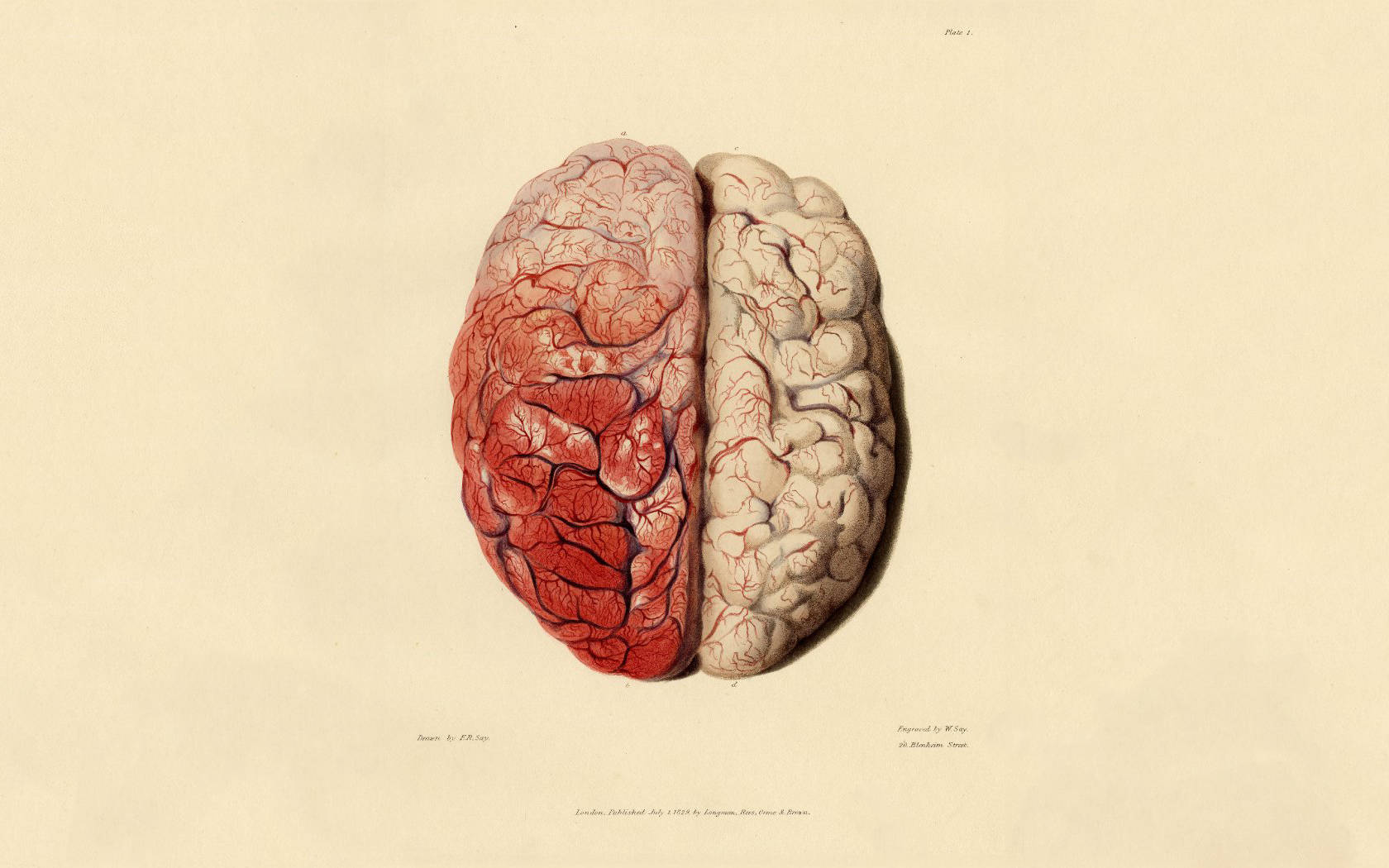
If we humans have a developed psyche, consciousness, and intelligence, then all this must have some kind of evolutionary significance. Otherwise, natural selection simply would not have allowed all these phenomena to develop. Homo sapiens has a brain that weighs about 2% of the total body weight, but it is an incredibly energy-intensive organ that consumes about a quarter of the total energy consumed by the body. Why do we need such a complex and voracious device? After all, it is obvious that there are many creatures in the animal world that do not have a developed psyche, but at the same time they are perfectly adapted and have already survived more than one geological epoch. Take echinoderms, for example. A starfish can be cut in half, and two starfish will grow out of the pieces. We could only dream of such a thing — it’s almost immortality. But insects solve the problem of adaptation in a different way: they change generations very quickly, effectively manipulating their genome. An individual can live for only a few hours, but more and more new organisms allow the population as a whole to adapt perfectly to the changed conditions.
The greatest car in the world
Such a thing is impossible for a human. Our body is much more complex than the body of a fly or a moth, it grows and develops for many years, and it is too valuable a resource to “waste” it the way insects do. Of course, generational change also plays a certain evolutionary role in human life — there is a mechanism of aging for this, but our strength as a population lies elsewhere. The advantage that our long-growing and long—living body needs is the ability to adapt very quickly. A person can instantly assess a changed situation and figure out how to adapt to it while remaining alive and well. It is thanks to consciousness that we succeed in all this. According to the famous Russian neurophysiologist, academician Natalia Bekhtereva, “the brain is the greatest machine that can process the real into the ideal.” This means that the most important property of human consciousness is the ability to create and store a picture of the world around us. The benefits of this skill are enormous. When we encounter a phenomenon or problem, we don’t have to solve or comprehend them from scratch — we just need to compare new information with the idea of the world that we already have.
The history of human development from an almost zero psyche in infancy to the diverse experience of a mature personality is a constant accumulation of adaptive information, the addition and correction of an individual picture of the world. And the activity of human consciousness is nothing more than the incessant filtering of new information through acquired experience. I must say that the Russian word “consciousness” very well reflects the essence of the phenomenon: consciousness is a life “with knowledge.” To do this, evolution has endowed humans with a unique computing resource — the brain, which allows them to continuously compare new reality with previously gained experience.
Does our consciousness have flaws? Of course, the main one is the incompleteness and inaccuracy of any personal picture of the world. If, for example, a man meets a blonde, then, based on personal experience, he may decide that blondes are too frivolous or mercantile, and abandon a serious relationship. But maybe it’s just that he personally was once unlucky with a particular blonde, and therefore his experience is atypical. This happens all the time, and sometimes the accumulation of facts that contradict an individual’s worldview can lead to what psychologists call cognitive dissonance. At the moment of dissonance, the old picture of the world collapses, and a new one appears in its place, which is also part of our adaptive mechanism.
The Abysses of the unconscious
Another disadvantage of consciousness is that it is not omnipotent, although it creates an illusion for us (but this is only an illusion!), as if it passes through itself 100% of all new information. However, he does not have such a physical opportunity. Consciousness is an evolutionarily very new tool, which at some point was built over the unconscious part of the psyche. Which creatures have consciousness for the first time, and whether certain animals have consciousness is a separate, very interesting and far from understandable question. Unfortunately, there is still no scientific tool for communicating with animals, whether they are cats, dogs or dolphins, and therefore we cannot find out to what extent they have consciousness.
At the same time, the unconscious, that is, the resources of the psyche that are beyond consciousness, have been fully preserved in humans. It is impossible to estimate the size of the unconscious or control its contents — consciousness does not give us access to it. It is generally believed that the unconscious is limitless, and this mental resource comes to the rescue in situations where the resources of consciousness are not enough. Help is given to us in the form of processes, the results of which we notice, but the processes themselves do not. A textbook example is the periodic table of elements, which Dmitry Mendeleev, after much painful reflection, allegedly saw in a dream.
Even if we assume that this is just a beautiful legend, it illustrates well what each of us knows from personal experience. A solution that has not been given for a long time sometimes suddenly comes out of nowhere. Sometimes — from the realm of sleep. However, not only can we not see the work of the unconscious, but we cannot even guarantee its connection. As already mentioned, this archaic instrument does not obey the efforts of our will.
Where do socks belong?
On the other hand, human consciousness also has a different backup mechanism, which is not as dark and inaccessible as the unconscious. This mechanism in psychology is sometimes associated with the concept of “character”, but it works like this. When a subject compares incoming information with his worldview, the first thing he wants to do is get an answer to the question: “What should I do in the current situation?” And if consciousness lacks a specific experience, the search for an answer to the question begins: “What do people do in such situations?” This question is actually addressed to childhood, to parenting. Mom and dad give children a set of behavioral patterns on the topic of “what is good and what is bad,” but everyone’s upbringing is different, and patterns for the same case may differ significantly from one person to another. For example, the husband’s pattern says that socks can be thrown in the middle of the room, and the wife’s pattern says that dirty laundry should be taken to the washing machine immediately. There are two possible outcomes to this conflict.
In one case, the wife will ask her husband not to throw socks around, and he may agree with his wife. At the same time, the consciousness of two people will assess the situation “here and now”, and a compromise will be the result of rapid adaptation. In another case, if the husband “balks”, the wife will most likely angrily reproach him with words like: “This is piggishness! No one does that!” “No one is doing it” or “everyone is doing it” — this is the “reserve airfield” of consciousness, its backup system. Such a system plays an important adaptive role — it allows you not to transfer the task to the unconscious (there will be no control over it at all), but to leave it in consciousness. Unfortunately, at this point, the most beneficial adaptation mode, the analysis of immediate reality, is turned off to some extent.
A mirror for the hero
So, the most important evolutionary advantage of man is the ability to constantly bring his inner picture of the world in line with reality and thus predict future events and adapt to them. But how to assess the correctness of the adaptation? To do this, we have a feedback device — an emotional response system that makes something pleasant and something unpleasant for us. If we feel good, then we don’t need to change anything. If we feel bad, we worry, which means there is an incentive to change the adaptive model. People with impaired feedback are schizoids who have a lot of thoughts, but they are more than strange.
These people don’t care at all how to apply their own diverse thoughts to reality, they are not very interested in it, since there is no positive feedback. There are, on the contrary, hysterical people who have powerful feedback. They are constantly under the influence of emotions, but they do not change the adaptive model for a long time. They go to university and don’t study. They start a business and ruin it by their inaction. Hysteroids can be compared to a broken clock that only shows the exact time twice a day. Well, schizoids are watches whose hands randomly rotate in different directions.
There’s a personality in each port.
Two systems — the adaptation system and the system of self-analysis of adaptive actions — collectively form a human personality. A highly developed personality can be considered a person in whom both systems work in the greatest harmony. He quickly grasps the essence of phenomena, is clearly aware of them, thinks vividly, feels comprehensively. People often talk about the perception of such people.: “Wow, how accurately he said it! I couldn’t do that!” The personality is like an ideal gastronomic product, in which there is just as much as it needs, and the unconscious, and adaptability, and introspection. Does such an integration require an excessive amount of information? Not at all. For a high rate of adaptation, key information is needed that allows you to draw the right conclusion and do the right thing.
At the same time, the personality must correspond exactly to the place and time. Many outstanding personalities probably would not have gained such a reputation if they had found themselves in a different socio-cultural environment. Moreover, even in one person, under certain conditions, several personalities coexist. This may be due, for example, to so-called altered states of consciousness.
A state is considered normative and biologically significant for a person when all the resources of the psyche are turned into the external environment. We must always be on our guard, constantly analyzing incoming information. But when the focus of attention partially or completely switches to internal states, this is called the altered state. In this case, the personality may also change. Everyone knows that a drunk person is capable of doing things that he would not even think about in a normal (sober) state. And everyone knows firsthand about the stupid behavior of lovers.
American psychologist Robert Fisher proposed the concept of “ports,” according to which our consciousness is like a long-distance captain who travels the world, and in every port he has a woman. But none of them knows anything about the others. So is our consciousness. In different states, it is able to produce different personality traits, but these personalities are often completely unfamiliar with each other.
Don’t miss the most important science and health updates!
Subscribe to our newsletter and get the most important news straight to your inbox
Published
July, 2024
Duration of reading
About 3-4 minutes
Category
Conscience
Share

