Brain works in several frequencies at the same time
Scientists from the University of Atlantic Florida and the Netherlands conducted an unusual study that reveals how individual neurons in the hippocampus can simultaneously respond to several different rhythms of brain activity. We are talking about slow “theta” waves and fast “gamma” waves, which help to organize the work of the brain. Individual brain cells can simultaneously tune into different rhythms — slow and fast — and switch between types of electrical impulses. This helps to better understand how we navigate in space and remember, as well as how disorders in brain diseases can work.
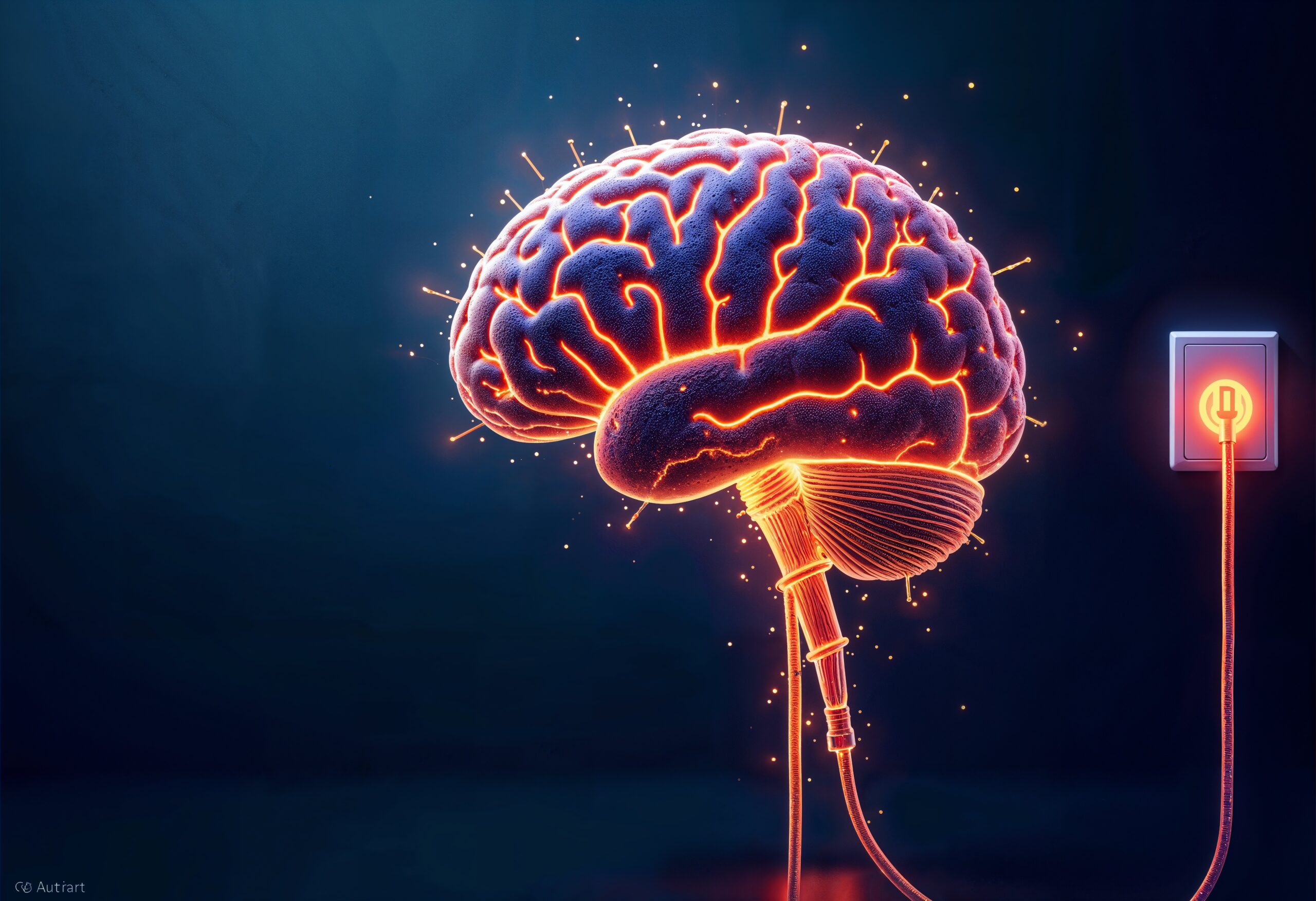
Surprisingly, one cell is able to switch between single electrical bursts and rapid series of pulses, depending on its internal state and external signals. Scientists have called this phenomenon “switchable resonance.”
The hippocampus, where these neurons live, is responsible for memory and navigation — how we understand where we are and how to get to the right place. Now it has become clear that neurons do not just send one type of signal, but carry different information in a “double code”, adapting to different brain rhythms.
“Our models show that the neuron works like a radio with several frequencies, switching between them depending on the situation,” says the study’s lead author Rodrigo Pena. This flexibility allows the brain to process information more efficiently.
The key role is played by three ion currents inside the neuron, which regulate its response to signals. By changing the internal settings, the cell can choose whether to respond to slow theta waves or fast gamma waves, as well as which type of impulses to communicate with — singly or in groups.
In addition, scientists have noticed that neurons are more likely to send a series of pulses after pauses of silence, which adds another layer of complexity to how information is encoded over time.
This discovery not only clarifies how our brains process space and memory, but may also help us understand diseases where brain rhythms are disrupted, such as epilepsy, Alzheimer’s, or schizophrenia.
Pena notes: “If neurons lose the ability to switch between modes, it can interfere with the formation of memories or concentration of attention. By understanding these mechanisms, we will move closer to ways to treat such disorders.”
Thus, the brain turned out to be much more dynamic and complex than we thought. One cell can simultaneously listen to several rhythms and adapt to the needs of the moment. The discovery makes a big step towards understanding exactly how our mind works and how to restore it to health when something goes wrong.
Published
June, 2025
Duration of reading
2-3 minutes
Category
Science
Share


Don’t miss the most important science and health updates!
Subscribe to our newsletter and get the most important news straight to your inbox