Cerebellum helps the brain stay in shape longer
The cerebellum (“little brain” in Latin) occupies a relatively small part of the brain’s volume, but it contains a large proportion of all its neurons. Traditionally, it has been associated with motor coordination, posture maintenance, and fine motor skills such as writing or typing. However, scientists have discovered a new aspect of the cerebellum’s role in brain function. Different regions of the cerebellum age at different rates, and this may have implications for how well individuals retain their memory and cognitive abilities in old age. The findings were published in the journal Nature Neuroscience.
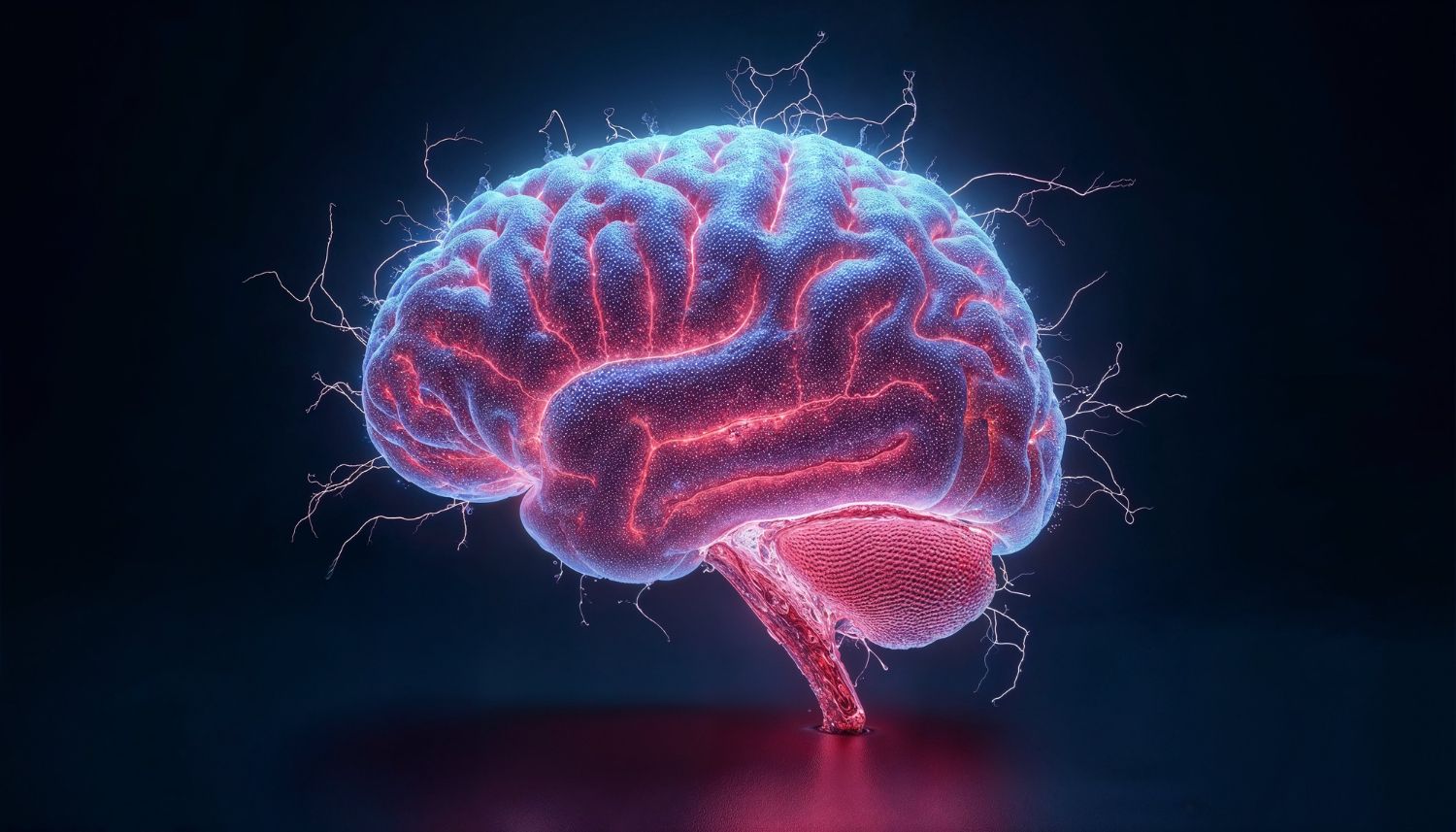
A team of neuroscientists from Princeton University focused specifically on the cerebellum, unlike most similar studies that focus on the cerebral cortex and hippocampus. The researchers hypothesized that the dense neural network of the cerebellum could support thinking and memory as individuals age.
The study relied on data from more than 700 healthy individuals in the United States, collected as part of the Human Connectome Project, which included brain scans and cognitive test results. On the digital scans, the researchers identified 11 separate areas of the cerebellum and calculated how the volume of each area changed with age.
The aging of the cerebellum was uneven. The posterior regions, which are more closely associated with the networks responsible for higher cognitive functions, decreased more rapidly than the anterior regions, which are involved in basic motor processes. The authors describe this as a “spatially heterogeneous pattern of aging.” The individual association and motor areas showed a stronger dependence on age than the other lobes.
It was also found that people with larger cerebellums had better performance on memory and thinking tests in old age than those with smaller cerebellums.
This trend was confirmed in a larger sample of approximately 47,000 adults from the UK Biobank and Alzheimer’s Disease Neuroimaging Initiative databases. However, in patients with Alzheimer’s disease, the support provided by the cerebellum appears to have its limits. It is able to compensate for impairments up to a certain threshold, until the pathology becomes widespread. This is consistent with the “threshold reserve” model, where the cerebellum helps maintain cognitive function until the disease progresses too far.
It is important to note that the study only found a correlation, not a direct causal relationship. It cannot be said that a larger cerebellum directly leads to better cognitive function in old age. Additionally, the sample size is not entirely representative of the global population.
Thus, the work expands our understanding of the role of the cerebellum. It may serve as a cognitive reserve that helps to maintain mental activity for a longer period. However, there are still important questions about whether this reserve can be influenced and how its characteristics relate to different neurodegenerative processes.
Published
June, 2026
Updated
Category
Science
Duration of reading
2-3 min
Share


Source
Scientific journal Nature Neuroscience. Article: Cerebellar aging is spatially heterogeneous and supports cognitive resilience in later life
Global health science — in clear language
We select and translate the best international publications. Read 3 key materials about longevity every week!