Learning process forces brain cells to work together
A study by the University of Rochester refutes the old idea that the brain learns by eliminating unnecessary signals. Instead, learning enhances the coordination of neurons, causing them to actively share information. For a long time, the prevailing hypothesis in neuroscience was that learning improves brain efficiency by allowing neurons to operate more independently. The belief was that the brain minimizes repetition (redundancy) in signals to read information as cleanly as possible. A new study published in the journal Science shows the opposite: as a skill is mastered, sensory neurons become more coordinated and increase the amount of shared data.
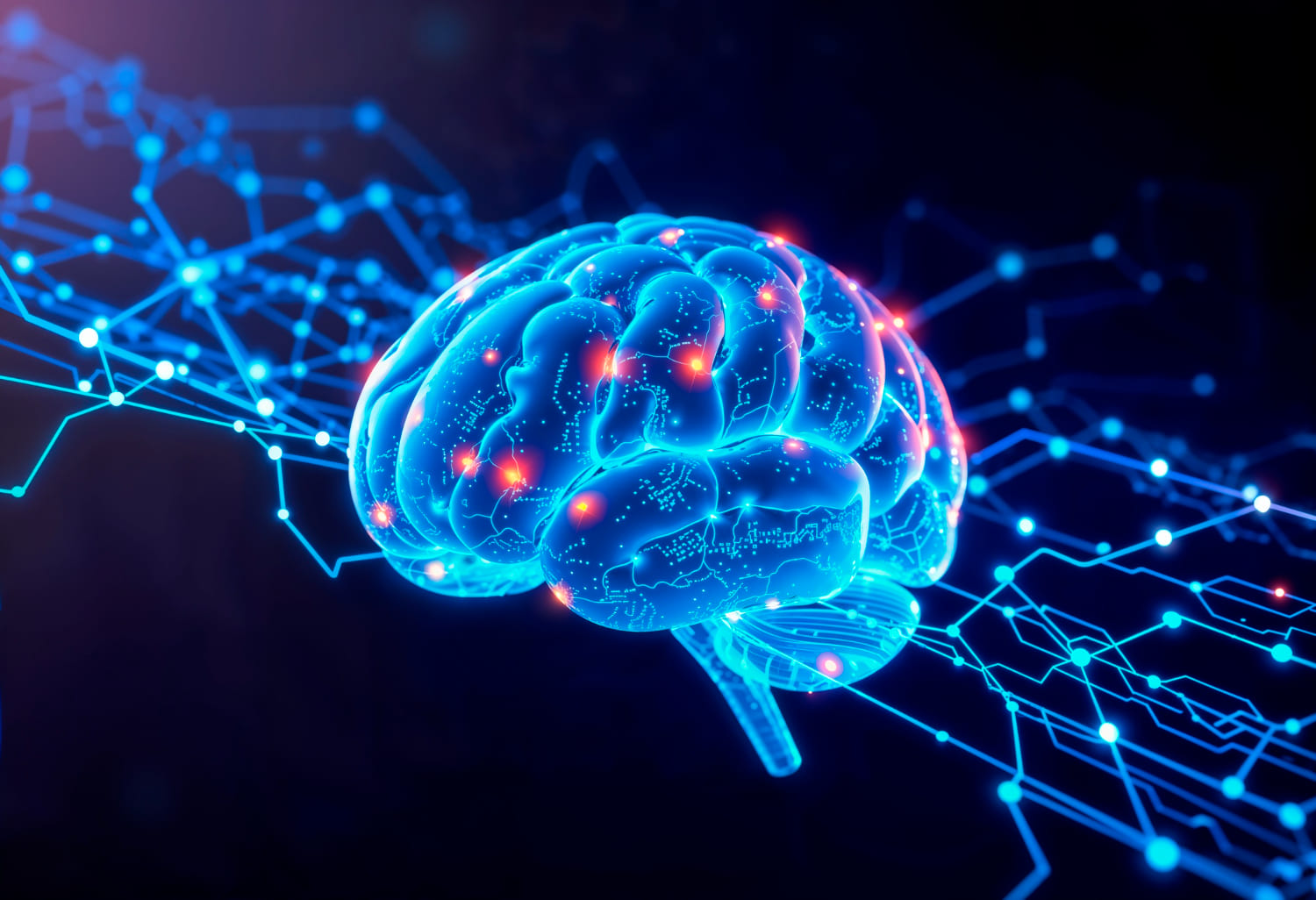
During the experiment, the scientists observed the activity of neural networks in the visual cortex for several weeks. It turned out that before the start of training, the cells worked mostly separately. But as the subjects’ skills improved, the neurons began to behave like a well-trained sports team, where the signals become interconnected and consistent. This coordination allows the brain not only to passively record what is happening, but to actively compare what it sees with what it expects to encounter based on past experience.
An important feature of the discovered mechanism is its flexibility. The teamwork of neurons is enhanced only when the brain is actively engaged in solving problems and making decisions. If a person is simply passively observing images, the synchronization effect disappears. This indicates that the higher regions of the brain constantly send feedback signals that adjust the functioning of the sensory areas based on the current goal, making perception more accurate and informed.
This discovery holds significant implications not only for medicine but also for the field of artificial intelligence. Understanding how the brain coordinates groups of cells could provide a key to treating learning disorders and perceptual impairments. In the field of AI, moving from simple direct-drive systems to feedback loop models will enable machines to learn faster from limited data and adapt better to changing conditions, much like the human mind.
Published
March, 2026
Category
Science
Duration of reading
1-2 minutes
Share


Source
Scientific Journal Science. Article: Task learning increases information redundancy of neural responses in macaque visual cortex
Don’t miss the most important science and health updates!
Subscribe to our newsletter and get the most important news straight to your inbox