A map of the brain’s neural networks has been compiled
For the first time, researchers have traced in detail how the neural connections of the brain change throughout life — from infancy to the age of 90. Using one of the largest sets of MRI data, they identified four key moments when the brain especially dramatically rebuilds its connections. These turning points divide a person’s life into five distinct stages of brain development and aging.
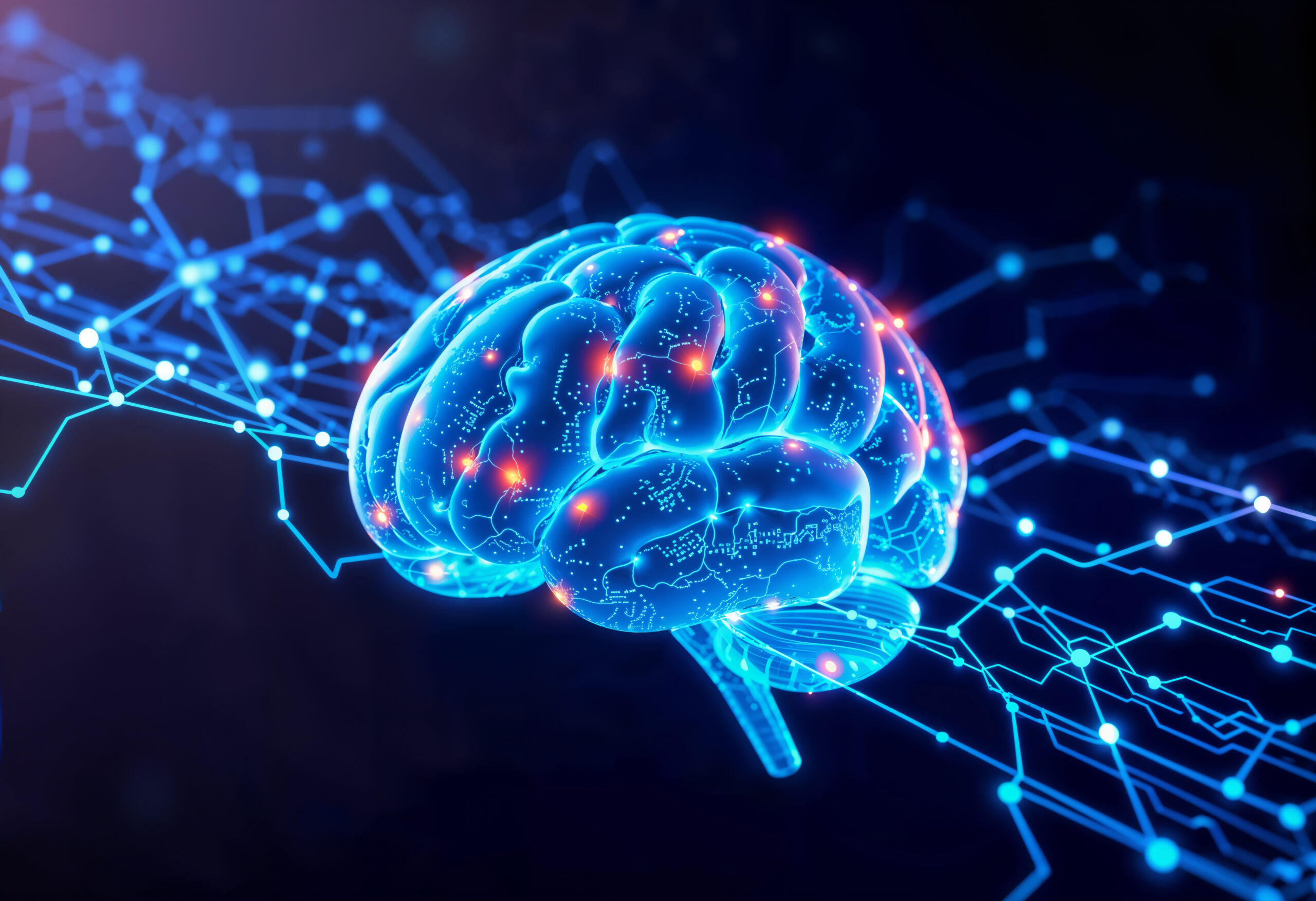
Scientists have studied how different areas of the brain are interconnected and how this pattern changes with age. Such structures are called topology, which is essentially a map of the roads along which the brain transmits information. It determines how effectively mental processes, memory, emotions, and attention work.
The analysis showed that the brain develops differently at different stages of life. From birth to about nine years of age, the brain grows very fast, and its connections become more complex. Then, between the ages of 9 and 32, the brain actively strengthens local clusters of connections and improves communication — this is a time of learning, skill formation and maximum flexibility.
After the age of 32, a gradual decrease in integration begins — it becomes a little more difficult for the brain to transmit information over long distances between regions, and local connections, on the contrary, strengthen. This period lasts up to about 66 years. After 66, early aging begins: individual brain centers become more important, but the overall coherence of the network decreases. Closer to the age of 80, the connection between the brain areas weakens even more, and after the age of 83, the changes become especially pronounced.
Four key turning points were identified — 9, 32, 66 and 83 years old. At these moments, the general nature of how the brain network is organized changes. This suggests that brain development is not a smooth process, but a series of stages, each of which involves different mechanisms.
The findings may help to better understand age-related changes in memory, attention, and emotional regulation. They are also important for research on psychiatric disorders, which are often associated with impaired interaction between brain regions.
The results of the work were consistently repeated with all verification methods, which makes the conclusions reliable: the brain really changes its structure in leaps and bounds, passing through five major stages during a person’s life.
Published
November, 2025
Category
Science
Duration of reading
2–3 minutes
Share


Source
Scientific Journal Nature Communications. Article: «Topological turning points across the human lifespan»
Don’t miss the most important science and health updates!
Subscribe to our newsletter and get the most important news straight to your inbox