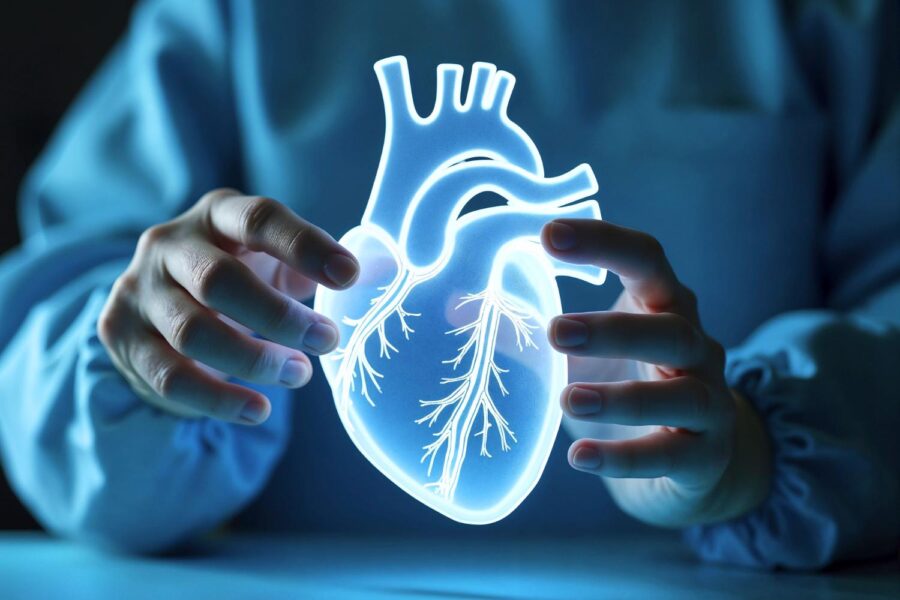
Scientists have found a way to rejuvenate heart
What if the aging of the heart can not only be slowed down, but turned back — without transplantation, pills or genetic interventions? This is exactly the conclusion reached by scientists from the National University of Singapore. Experts have developed a material that can reverse the aging of the heart. It’s all about the right habitat for the cells. The study was published in the journal Nature Materials.

They’ve developed a unique hybrid material called DECIPHER that mimics the youthful environment of heart cells. And here’s the twist — even aged cells started acting young again, simply because they found themselves in the right surroundings.
The team was led by Associate Professor Jennifer Young, a bioengineer and expert in mechanobiology. Instead of focusing on the cells themselves — as most researchers do — she and her colleagues turned their attention to what surrounds them: the extracellular matrix (ECM). Think of it as scaffolding for cells — it supports them, guides them, and tells them how to behave.
As we age, this matrix becomes stiffer and changes in composition. That shift sets off a cascade of effects — from loss of elasticity to tissue scarring. But if you restore the matrix’s “youthful” signals, the cells can essentially “wake up” and start functioning better.
To test this idea, the researchers combined real heart tissue with a soft gel, creating a hybrid material that could be fine-tuned — adjusted for stiffness and chemical makeup. This allowed them, for the first time, to clearly separate what actually drives cell aging: is it the stiffness, or the signaling?
The results surprised even the team. When old cells were placed in a “young” environment, they behaved almost like they did in their prime — even if the tissue around them stayed stiff. Meanwhile, young cells placed in an “aged” setting quickly lost their shape and signs of health.
The takeaway? The environment matters. And that opens up a whole new strategy for combating age-related changes in the heart — not by changing the cells themselves, but by giving them a healthier place to live.
Science isn’t ready to bring this approach into hospitals just yet, but the direction is promising. What’s more, it might work not just for the heart — but for other organs where aging is tied to structural changes in tissue, like the skin, kidneys, or lungs. Even cancer might be influenced by this “background” that shapes cell behavior.
“If we learn to reprogram the matrix,” says Jennifer Young, “we might not just slow down aging — we could actually reverse it.”
At first glance, it may sound like science fiction. But maybe that’s exactly what the future of longevity looks like.
Published
June, 2025
Duration of reading
2-3 minutes
Category
Science
Share


Don’t miss the most important science and health updates!
Subscribe to our newsletter and get the most important news straight to your inbox