Video games can help restore hand mobility after a stroke
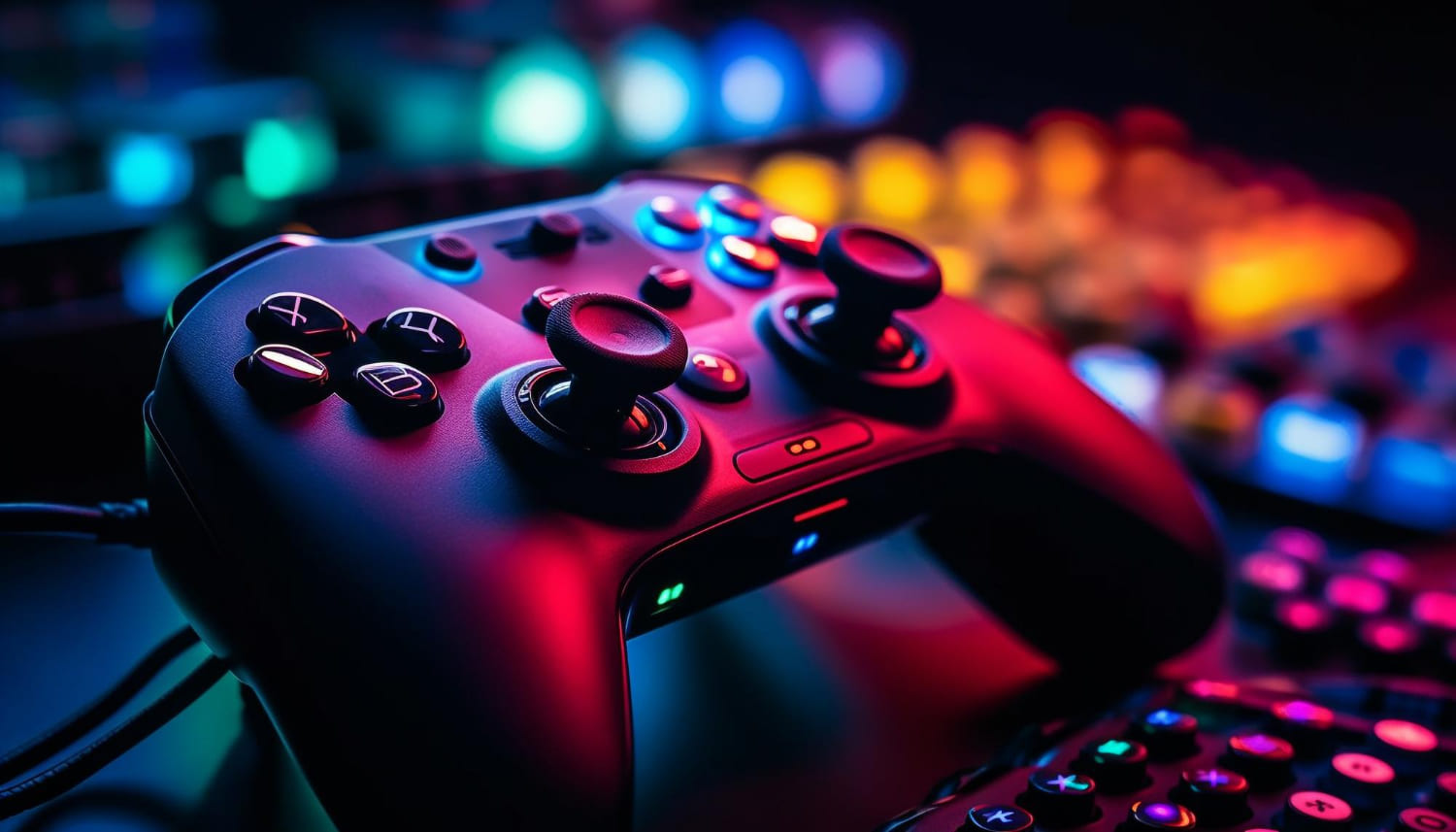
After a stroke, the brain’s signals that control movement can become disrupted, causing the muscles to function in an uncoordinated manner. This phenomenon, known as abnormal coactivation (or “abnormal coupling”), can make it challenging for individuals to extend their arms forward with their elbows straightened. When they attempt to make a straight motion, their elbows tend to bend due to the activation of the biceps muscle at an inappropriate time. They developed a video game in the style of the 90s, which helps chronic patients regain their lost hand function. The results of the study, published in the journal Neurorehabilitation and Neural Repair, showed that after six weeks of this therapy, the participants improved their motor skills by 7.8 times more than those in the control group. The progress continued even after the sessions were completed.
Traditional rehabilitation usually teaches patients to compensate for limitations, such as bending over with their whole body to reach an object. This is useful for everyday life, but it does not eliminate the problem of muscle coordination itself.
The MINT Conditioning system is aimed specifically at eliminating violations. It was developed at the Mark Slutsky Neuroprosthetics Lab. The essence of the method is to retrain the connected muscles so that they can move independently again. On the affected arm, the patient wears a small device that reads the electrical activity of the muscles (electromyogram, EMG). In the video game, this activity controls the cursor: for example, a biceps contraction moves the cursor to the right, while a deltoid contraction moves it up.
If the muscles are still connected, the cursor moves diagonally. The player’s goal is to learn how to separate the muscle activation to hit targets that are further away from this diagonal trajectory. The better the muscles are separated, the higher the score in the game. Among the tasks, for example, is to control a virtual helicopter to hit a moving target.
You can play at home or in the lab, which significantly increases the number of repetitions: participants performed more than 300 repetitions per day, while in a regular clinic with three sessions per week, they would have about 90. Patients noted that the process was perceived as a game rather than a monotonous therapy: “The whole experience was enjoyable and beneficial,” “I definitely benefited both physically and mentally.”
The study was a randomized, placebo-controlled trial. It involved 59 people with moderate to severe arm mobility impairments after a stroke (on average, 6.4 years after the event, and up to 12 years for some participants). All of them could only move their arm slightly and extend their elbow.
The participants were divided into four groups: three experimental groups and one placebo control group. The training lasted six weeks: 90 minutes a day, five days at home and one day in the lab.
- The first group trained two muscles at a time, changing them every two weeks.
- The second group also worked with two muscles every two weeks, but in addition tried to move the arm as far as possible in the right direction.
- The third group first trained two muscles, and when they achieved their “separation”, added a third (with a 3D display on the screen). The set of muscles changed every three weeks.
The control (placebo) group followed the same schedule, but played a simplified version involving only one muscle and received no instructions on muscle separation. At the same time, the load on the volume of movements was comparable to take into account the motivational effect of the game.
The effectiveness was evaluated using the Wolf Motor Function test. It measures the speed of performing household tasks (raise your arm to table level, straighten it, fold a towel, etc.). Scientists also tracked the range of motion during traction tasks.
All groups improved their performance compared to the baseline, but the experimental groups improved by an average of 4.5 times more than the control group. The third group (with the addition of a third muscle) stood out in particular: their participants improved by 7.8 times more than the placebo group. The researchers attribute this to the fact that these patients received an additional week of training on their most problematic muscles.
The reduction in abnormal coactivation was directly correlated with improved movement. In the experimental groups, the range of hand movements increased during pulling tasks, while this effect was not observed in the control group. The progress was still visible one month after the end of the therapy.
The team, along with bioelectronics pioneer John A. Rogers, is working on making the wearable device completely wireless. They are also improving the games themselves to make them more engaging. Their plans include adapting the approach for the rehabilitation of legs after stroke.
Published
June, 2026
Updated
Category
Medicine
Duration of reading
4-5 min
Share


Source
Scientific journal Neurorehabilitation and Neural Repair. Article: Wearable Myoelectric Interface for Neurorehabilitation (MINT) to Recover Arm Activity After Stroke: A Randomized Controlled Trial
Global health science — in clear language
We select and translate the best international publications. Read 3 key materials about longevity every week!