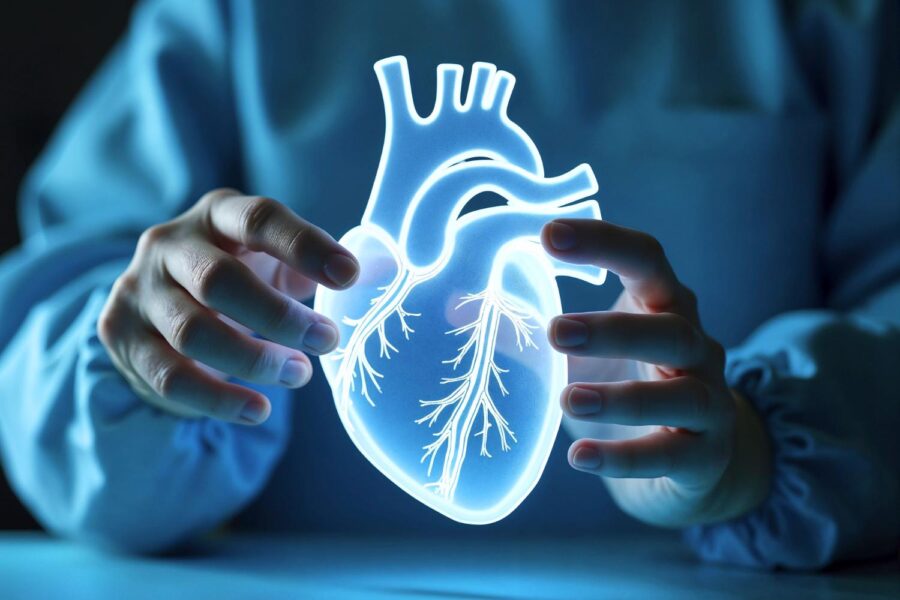
Women’s hearts beat faster than men’s hearts
A new discovery reveals why women’s hearts beat faster while men are more likely to experience malfunctions such as atrial fibrillation. Researchers at Ohio University have discovered that the main “conductor” of heart rhythm – the sinus node – operates under different genetic scenarios in men and women, paving the way for new treatments.
For years, doctors have noticed a curious difference: women’s hearts tend to beat faster, while men are more likely to have rhythm disorders such as atrial fibrillation. The answer to this question was found by experts from the Ohio University Medical Center, who studied how the sinus node works – a tiny but important structure in the heart, which sets the rhythm of each of its beats.
The sinus node, like a natural metronome, triggers every normal heart cycle. However, it is found to follow different genetic instructions in men and women. Women have more active genes that speed up the heart’s rhythm, while men have genes that can disrupt its stability. This discovery was key to understanding the differences in heart function.
Women’s hearts, the assays showed, are more likely to show increased activity of the TBX3 and HCN1 genes. These genes are responsible for faster contractions, which explains women’s tendency to have conditions like sinus tachycardia, where the heart beats too often for no apparent reason. In men, however, genes associated with inflammation and scar tissue formation are more likely to be activated, which can interfere with the normal transmission of electrical signals.
Men’s hearts, because of gene activity, are more vulnerable to problems such as conduction block or atrial fibrillation. These conditions can lead to irregular or dangerously slow heartbeats that require serious treatment. Differences in the genes that control the sinus node help explain why men and women experience different heart problems.
Donor hearts provided by families through Lifeline of Ohio were used for the analysis. Experts examined genes responsible for rhythm, metabolism, inflammation and tissue changes. The differences revealed that women and men have unique patterns of sinus node activity related to their biological sex. This opens up new possibilities for diagnosis and treatment.
Understanding these differences could change the approach to treating cardiac disorders. In the future, doctors will be able to tailor therapies based on a patient’s gender, making treatment more accurate and effective. For example, for women with palpitations, methods that reduce the activity of certain genes could be developed for women, and for men, ways to prevent inflammation and scarring could be developed.
Millions of people worldwide are living with heart failure, according to the American Heart Association, and many of them suffer from rhythm problems that start in the sinus node. These problems may require medication, pacemaker implantation or other interventions.
Scientists hope their findings will not only lead to a better understanding of how the heart works, but also prevent dangerous rhythm disorders, improving the lives of patients around the world.
Published
May, 2025
Duration of reading
3-4 minutes
Category
Medicine
Share


Don’t miss the most important science and health updates!
Subscribe to our newsletter and get the most important news straight to your inbox