Nutrigerontology: nutrition vs. aging
Ageing manifests itself as a gradual deterioration of physiological functions: immune system defences weaken, muscle mass decreases, brain and cardiovascular dysfunction occurs. Until recently, it seemed that the aging process could not be controlled. However, in recent decades, a number of important discoveries have been made in biogerontology, the science of aging. Scientists have long guessed that the visible signs of aging are the consequences of imperceptible changes at the level of cells and molecules, but it has only recently been possible to find out what these molecular changes are [1].
At present, nine cellular and molecular signs of aging common to different organisms have been identified. These features include (Pic. 1):
- increase in genome instability;
- telomere shortening [2], [3], [4];
- epigenetic changes [5];
- changes in intercellular communication;
- disruption of protein homeostasis;
- stem cell depletion;
- cellular aging [6];
- mitochondrial disorders;
- deregulation of cell signalling pathways that sense nutrient levels.
Experiments in biogerontology and analyses of human populations of long-lived individuals have revealed curious correlations between nutritional type and longevity. And now, research is being conducted around the world to find optimal diets that can slow down the aging process and the development of age-related diseases. In this regard, a new branch of science has emerged – nutrigerontology. Let’s dwell more on the molecular mechanisms of aging and consider how food and its bioactive components influence these processes. Well, in a more general way, the issue of linking nutrition to our health and – moreover – to the functioning of genes – is touched upon in the first part of this article: ‘Nutrigenomics: nutrition vs. disease’ [8].
Don’t miss the most important science and health updates!
Subscribe to our newsletter and get the most important news straight to your inbox
Published
June, 2024
Duration of reading
About 5-6 minutes
Category
Epigenetics
Share


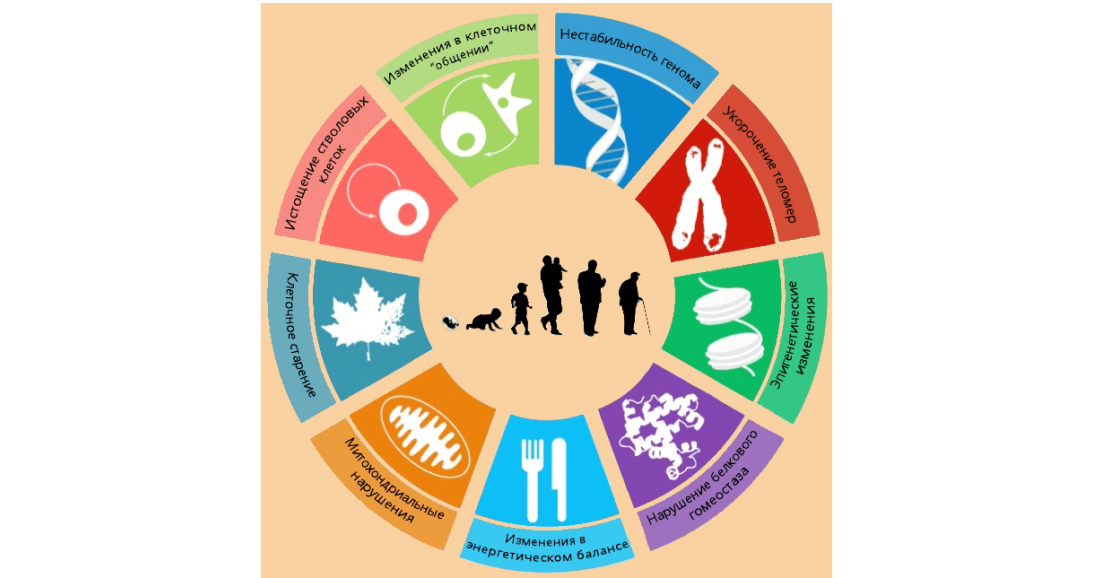
Figure 1: Molecular signatures of aging.
Molecular signatures of aging and food
Energy balance signalling pathways
Two cell signalling pathways are widely known in biogerontology, the weakening of which leads to lengthening of life span in many organisms [9]: the insulin/insulin-like growth factor (IIS) signalling pathway and the mTOR signalling pathway. These signalling pathways are closely intertwined and ‘probe’ the level of nutrients in the cell (Pic. 2). The mTOR and IIS pathways are activated by food components: carbohydrates (activating the IIS pathway to a greater extent) and amino acids (triggering mTOR signalling). Weakening signalling from these pathways at different stages prolongs life in a wide variety of model organisms, and there is now little doubt that regulation of these pathways is the main lever of dietary influence on health and longevity.
The IIS (insulin and IGF-1 signalling) pathway informs the cell of the presence of glucose through blood insulin levels. The IIS pathway originates from the membrane receptor that recognises insulin or insulin-like growth factor (IGF1) and then spreads throughout the cell, stimulating cell growth and division and inactivating FOXO transcription factors (regulating stress response, DNA repair, cell death, autophagy [10], etc.). Carbohydrates in food, depending on their structure, affect blood insulin levels differently. The simpler the structure of a carbohydrate, the faster it is digested and enters the bloodstream, initiating insulin production.
Complex carbohydrates (fibre, starch) are digested gradually, not causing a strong rise in blood sugar levels and sudden insulin release, while simple carbohydrates (sucrose, glucose) lead to a spike in blood sugar in 10-15 minutes after consumption, which provokes insulin production. In order to assess how much blood sugar rises after consumption of a particular product, such parameters as glycaemic index and glycaemic load have been introduced. For example, baked goods and sweets have a high glycaemic index because they contain high amounts of simple sugars. A diet with a high glycemic load stimulates the IIS and mTOR signalling pathways, which has adverse health effects in the long term. According to studies, high glycemic index/load diet increases the risk of age-related diseases such as type II diabetes and heart attacks [12]. While on the contrary, following a low glycemic load diet (such as a vegetable-based diet) is beneficial to health and can even reverse type II diabetes. And calorie restriction over time (while keeping all the substances the body needs at normal levels) significantly slows cardiovascular and skeletal muscle aging in humans [13].
The mTOR protein is a key regulator of cell growth and metabolism. mTOR is located in the cytoplasm, it is activated by amino acids and functions in two different complexes: mTORC1 (mTOR complex 1) and mTORC2 (mTOR complex 2). The mTORC1 complex is well studied, it assembles upon signalling from nutrients and insulin and growth factor receptors. mTORC1 promotes protein synthesis, suppresses autophagy and regulates glucose metabolism (Pic. 3). mTORC2 also assembles when IIS and mTOR are triggered, but results in inhibition of the transcription factor FOXO3. Since mTOR is activated by amino acids, their low dietary content can increase lifespan. For example, mice maintained on a low-protein diet live much longer than mice on a high-protein diet (150 weeks vs. 100 weeks) [12].
Restriction of only essential amino acids also affects longevity. For example, in rats, methionine restriction increases longevity, while a diet high in this amino acid accelerates vascular ageing. So how can this knowledge be applied to humans? In many cultures, red meat is an important source of protein in the diet. Recent studies have shown that there is a correlation between the degree of meat intake and levels of cardiovascular disease, type II diabetes, cancer and all-cause mortality. However, it must be recognised that it is not just the protein component that contributes to the increased mortality rate from meat consumption. The fact is that meat, especially fried or smoked, contains quite a large number of different substances that negatively affect health. But no correlation was found between the consumption of vegetable proteins and mortality rate, which is due to the amino acid composition of vegetable proteins, which contain less methionine and cysteine [12]. Studies have also found that people who consume little protein (less than 10% of daily calories) have low IGF1 levels and a reduced risk of cancer and all-cause mortality [12]. However, it is recommended that older adults over 65 years of age increase the amount of protein in their diet to prevent weight loss and excessive decline in IGF1 levels and other important factors [14].
How does activation of the IIS and mTOR pathways contribute to the aging phenotype? Continuous stimulation of IIS and mTOR leads to shortened life span and high risk of age-related diseases through decreased autophagy, impaired mitochondrial function, increased protein aggregation (as TOR leads to protein formation) and inflammation levels (Pic. 4) [12]. Therefore, excess carbohydrates and proteins in the diet contribute to atherosclerosis, osteoporosis, neurodegenerative diseases, cancer, and insulin insensitivity. Such mechanisms fit into the paradigm according to which the aging process is a consequence of overstimulation of cells in the adult organism through constant ‘bombardment’ with nutrients, growth factors, and mitogenic stimuli.
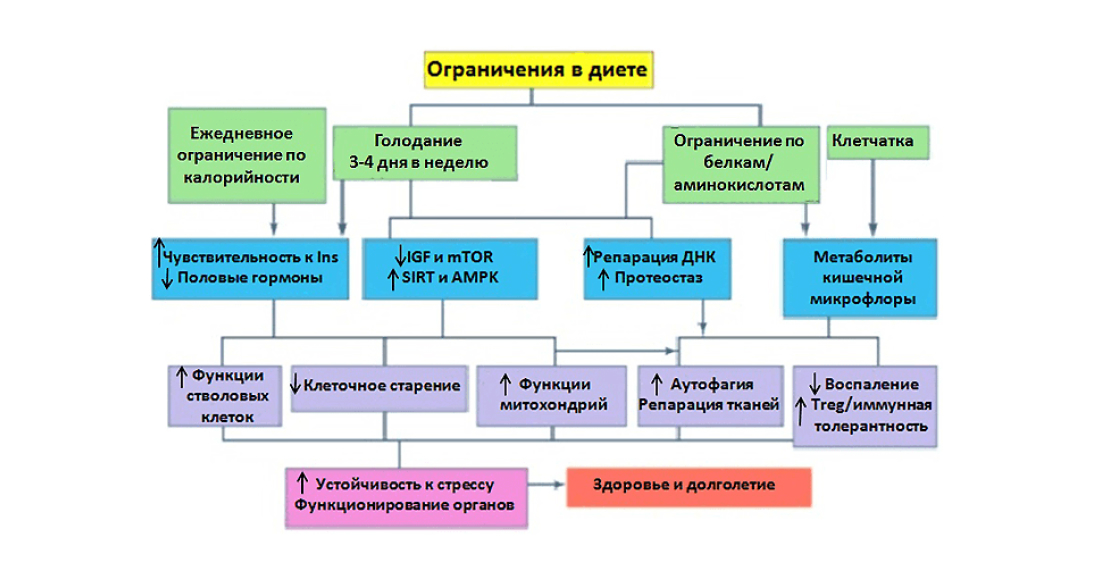
Effects of calorie and protein restriction in the diet on cellular and organismal physiology.
Loss of protein homeostasis
Protein homeostasis in the cell is maintained by two differently directed processes: mechanisms for the correct assembly of proteins (and their subsequent stabilisation) and mechanisms for the degradation of proteins with disturbed structure (proteolysis). If these processes fail, proteins aggregate, which leads to the development of neurodegenerative diseases [15]. Heat shock proteins (HSPs) restore the disturbed structure of proteins, and under stress (thermal or chemical) the level of HSPs in the cell increases (Pic. 5). Stress-induced BTSH synthesis decreases significantly with age [16], and this affects life span. SIRT1 protein in mammalian cells initiates BTSH synthesis [17], and SIRT1 activity is increased by resveratrol found in cranberries and grapes.
The efficiency of the two main proteolytic systems, autophagosomal (or lysosomal) and proteasomal, also decreases with age. Activation of autophagosomes slows cellular senescence and prolongs life in a number of model organisms. Spermidine, found in mushrooms, whole grains and legumes, triggers autophagy processes and its supplementation promotes longevity in worms, flies and mice [18], [19].
Disruption of protein homeostasis and enhancement of pro-inflammatory processes provoke glycation end products (non-enzymatic reaction of carbohydrate attachment to amino acids in protein). High level of advanced glycolation end products (AGEs) in tissues causes oxidative stress and inflammatory processes, as AGEs bind to cell surface receptors, trigger the inflammatory NF-kB-signalling pathway, as well as change the structure and functions of proteins [20], [21]. The findings show that reducing the amount of AGEs in food slows the development of chronic disease and aging in animals and apparently in humans. Vegetables, fruits, cereals, legumes, milk and bread contain low amounts of AGEs, while hard cheeses, beef, pork and poultry contain high amounts of AGEs[21].
Genome stability
Accumulated damage in DNA during life is one of the basic signs of aging. Genome integrity and stability are constantly threatened by both external (chemical and biological agents) and internal factors (DNA doubling errors, reactive oxygen species). Genetic damage can affect and disrupt important biochemical pathways in the cell, which is particularly critical in the case of stem cells. In maintaining genomic stability, diet plays a more significant role than previously thought. B vitamins (B3, B9, B12), zinc and magnesium are essential for normal DNA synthesis, methylation and error correction, so even a slight deficiency of these substances in the organism affects genomic stability and leads to an increase in the level of spontaneous chromosomal damage [22]. However, current norms for vitamins and minerals are set to prevent deficiencies rather than to minimise damage in DNA [22]. The intake of these vitamins is particularly important for defects in their absorption/metabolism, which are commonly seen in old age. Therefore, after the age of fifty, consumption of foods with increased levels of B12 and B9 is recommended [22]. People following a vegan diet also need special vitamin supplements as B12 is only found in animal products.
Telomere length
Telomeres are the end sections of chromosomes whose length shortens with each cell division. Telomeres are bound to a multi-protein complex called shelterin, which prevents them from sticking together. Shelterin prevents the DNA from being accessed by repair systems that would recognise the ends of chromosomes as breaks in the DNA and join them together. Because of the limited repair, the damage that has occurred at telomeres is relatively persistent and can induce cell division arrest and/or cell apoptosis [23], [24]. Vitamins B3 and B9 are required to prevent damage and maintain normal telomere length [25]. The consumption of omega-3-polyunsaturated fatty acids positively correlates with telomere length [25], [26].
Epigenetic changes
During life, epigenetic changes occur in the cells of our organism, which affect DNA methylation, histone modifications and rearrangement of chromatin structure (Pic. 6) [7]. This leads to impaired DNA repair and increased chromosomal instability. However, unlike mutations, epigenetic processes are reversible: the activity of enzymes involved in the creation and maintenance of epigenetic marks can be regulated. With the help of changes in histone modifications, scientists have increased the lifespan of progeroid mice (mice with accelerated aging) [27]and restored cognitive abilities in old mice [28]. Many substances have been found in fruits, vegetables and greens that influence the activity of enzymes involved in epigenetic remodelling [29].
Genistein isolated from soya induces the establishment of certain histone modifications (H3K27 and H3K9 methylation), the level of which decreases with age [29]. And one of the effects of resveratrol contained in cranberries, blueberries, grapes and red wine is an increase in the activity of the SIRT1 protein involved in histone modification. Sirtuin proteins, which belong to the family of NAD-dependent deacetylases (i.e., they remove the acetyl tag from histones), have been widely studied as potential anti-aging factors. Increased expression of SIRT1 in mammals improves health outcomes in senescence (life expectancy is not increased) [32]. In addition, strong evidence for SIRT6 has been obtained for its activity on longevity in mammals [33]. And recent experiments have shown that free fatty acids (oleic, linolenic, and myristic acids) in physiological concentrations increase SIRT6 activity [34].
Mitochondrial disorders
Mitochondria are the main energy stations of the cell; they oxidise incoming nutrients, converting them into energy in the form of ATP [35]. During the oxidation of substances in mitochondria, oxygen radicals (reactive oxygen species – AOS) are inevitably formed, which damage cellular structures [36], [37]. Previously, it was believed that mitochondrial damage contributes to aging precisely because of increased production of AFCs. However, recent data cast doubt on this hypothesis. Disturbances in mitochondria, regardless of the level of AFC, lead to cell apoptosis and increased inflammatory responses [38]. Mitochondrial dysfunction with age occurs for several reasons. Firstly, the formation of new mitochondria (mitochondriogenesis) decreases due to damage in DNA and telomere shortening. In addition, mutations accumulate in mitochondrial DNA due to the AFC-rich environment and limited efficiency of repair systems in mitochondria (compared to the nucleus) [7]. The same SIRT1 protein activates mitochondriogenesis, increases the antioxidant defence of the cell [39] and promotes the removal of damaged mitochondria through the process of autophagy [40]. There is another way to improve mitochondrial function. It is known that mild toxins provoke defence reactions in the cell, making it less susceptible to various unfavourable factors. In response to weak mitochondrial poisons, which include resveratrol [41] (contained in grapes, blueberries, and cranberries), mitochondrial control genes are activated in the cell to ensure mitochondrial integrity and functionality [42].
Cellular aging, changes in intercellular communication and stem cell depletion
Stem cell depletion and changes in intercellular communication are the main ‘culprits’ of the aging phenotype: brittle bones, reduced muscle mass, weakening of the immune system, and so on. One of the reasons for the development of these signs of aging is cellular senescence or division arrest. Cellular senescence is induced by telomere shortening, DNA damage or abnormalities in cell division signals. At the same time, senescent cells secrete specific molecules (pro-inflammatory cytokines and metalloproteinases) that accelerate the aging of surrounding cells as well as initiate inflammatory reactions [43], [44]. Due to stem cell depletion, the level of immune cells falls and defects in their activation are observed [45]. In sum, this leads to weakening of immune defence, enhancement of pro-inflammatory reactions and triggering of NF-kB inflammatory signalling pathway.
But some functions of the immune system can be restored by nutrition. For example, increased doses of vitamin E can enhance T-cell function in the elderly; dietary intake of the amino acid tryptophan and fibre has a beneficial effect on the structure and function of the intestinal microflora and, consequently, on its secretion of factors that regulate multiple inflammatory and metabolic pathways (Pic. 7) [13]. The intestinal microflora produces specific molecules that aid the division and differentiation of regulatory T cells (and regulatory T cells play an important role in controlling inflammation and autoimmune responses) [46], [47]. Population analyses have found strong correlations between diet and microflora composition, and between microflora composition and morbidity as well as inflammation levels in the elderly [48]. Manipulation of the composition of the intestinal microflora appears to be another effective way to increase longevity and improve well-being in old age [48], [49].
Conclusion
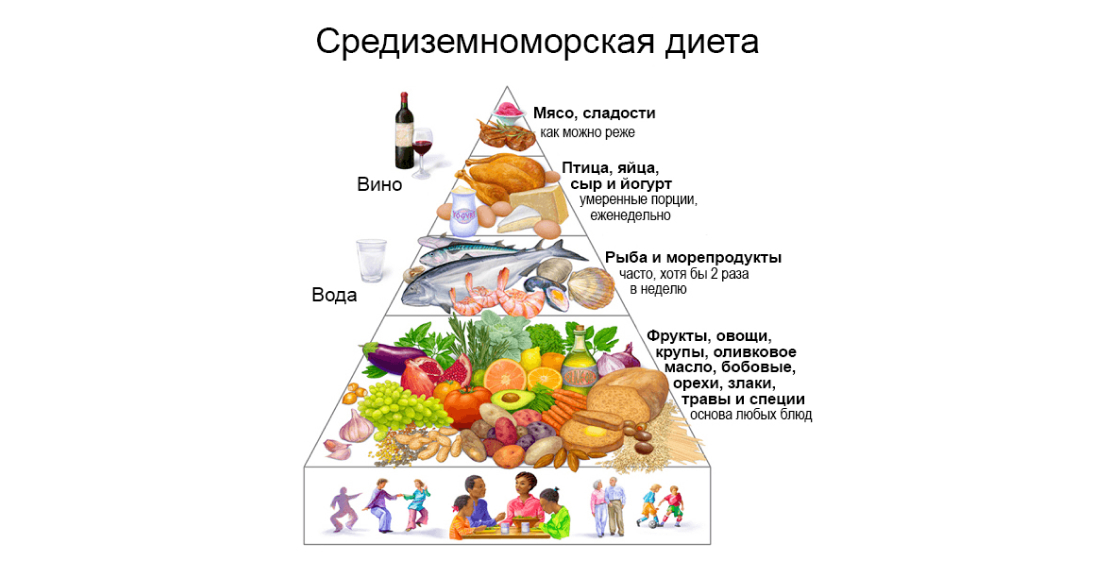
Further research in the field of biogerontology will help in the future to develop a comprehensive system of measures aimed at increasing longevity and prolonging youth. An important point in such a strategy will undoubtedly be the formulation of adequate nutritional recommendations. Perhaps, in the future Methuselah diet, carbohydrates, proteins and fats will be delivered to the body in a form that minimally activates IIS and mTOR pathways, or substances will be found that ‘simulate’ the effect of starvation. But to date, the original causes of aging are still unclear, and the most established types of diets are the Mediterranean and Okinawan diets [26]. The general aspects of these diets are as follows: high consumption of whole grains, legumes, fish and seafood, fruits and vegetables; moderate consumption of dairy products (mainly cheese and yoghurt) and wine; and low consumption of red meat, poultry and sweets (Figure 8). Many studies have confirmed the relationship between adherence to the Mediterranean diet and longevity and reduced risk of pathologies [50], [51], and the inhabitants of Okinawa Island have the highest life expectancy.
Source: Biomolecule