Brain plasticity: how life experience accumulates
No matter who you are, young or old, human or other animal, if you are not made of stone, alarm clocks will always wake you up. But why? Why will an unusually loud sound always bring you back to consciousness?
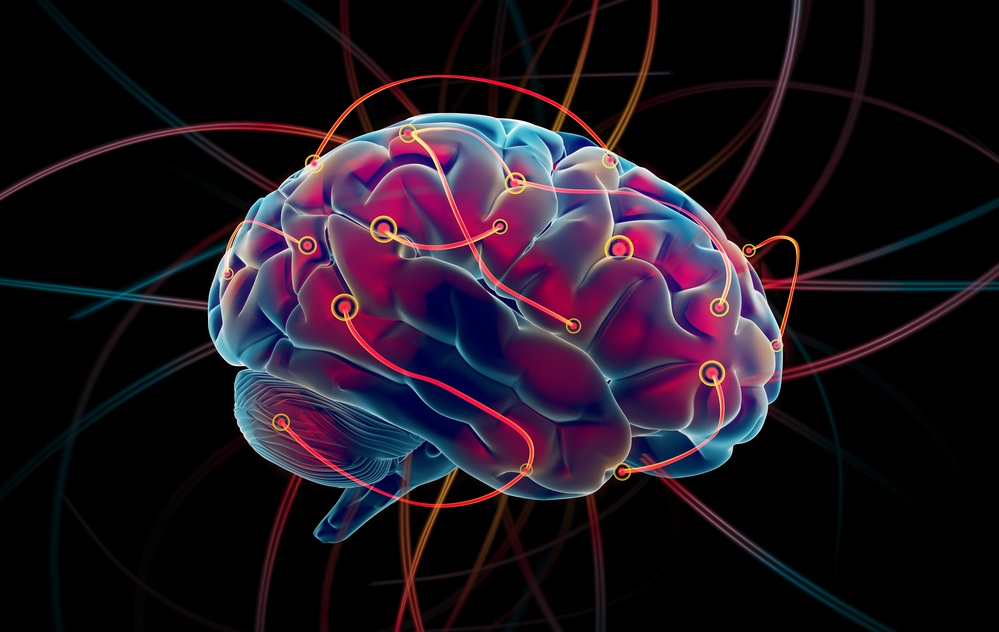
An alarm clock can be taken as the equivalent of throwing a stone. Even a small stone, if thrown with sufficient force, can provoke extensive ripples: the alarm sound will be loud enough (the equivalent of a strong swing when thrown) to activate the auditory center of the brain through sensory pathways (the equivalent of a stone). The sound is so strong that an even wider area will be covered, that is, the ensemble (ripples) will increase in size. Any animal with a functioning auditory system, of any age and mental development, will be pulled out of sleep into some kind of conscious state. The form of consciousness that arises in this case is another problem, but for now we will not touch on it, for now the force of the throw and the size of the stone are important for us as determining factors of the final intensity of the ripples.
While the strength of the throw — the volume of the alarm clock — is determined by external objective factors, the size of the stone will depend on the individual properties of the brain. Within any species (but this is especially noticeable in the most highly organized animals like us), the configuration and nature of the coupling of groups of neurons can be crucial for determining the next important variable factor: the neural equivalent of the size of a stone. As our brain develops, neural connections are formed according to our impressions of the outside world. This phenomenon, through which experience almost literally leaves its mark on the brain, as we learned earlier, is called plasticity.
In all types of brains, we will find neurons that are activated by incoming signals of varying intensity (these are throws of varying strength), but the number of neurons in a group (this is the size of a stone) will be determined according to the specific configuration and the strength of the connection between the neurons. This means that the same sound or visual stimulus of the same intensity will cause different effects in the brains of different animals, as the size of the stone differs. In turn, the configuration and strength of neural connections will depend on an additional but extremely important factor — the previous interaction with the environment. The higher the level of organization of a species, the more pronounced the ability to form experience, which makes the perception of the same stimuli largely individual. So, let’s imagine once again that a stone is thrown into the water, but now we just throw it up, and not swing with all our might — as in the ruthless example with the alarm clock. Extensive ripples can be generated simply because the stone is large. Translated into the language of neuroscience, arousal gradually spreads through stable, strong connections, which in turn are conditioned by individual experience and plasticity mechanisms.
This pattern may also occur, although to a lesser extent, in other animals. Let’s take adult rats. A popular way to study this effect in the laboratory is to create a so-called enriched environment. “Enrichment” for a rat does not mean that it will eat exotic food or live in a golden cage. The term “enrichment” refers to an environment that stimulates the brain as much as possible, so if you want to give maximum stimulation to a rat, then you need to make sure that it has the ability to interact with various new objects and phenomena (see figure).

Typical “enriched” environment for rats (Devonshire, Dommett & Greenfield)
Contrary to the unsightly image that has developed in our culture, rats are actually very curious and intelligent creatures, able to quickly adapt to any environment, wherever they are. Accordingly, the brain will reflect their lifestyle. The first empirical demonstration of such experience-dependent plasticity in an enriched environment was carried out in the 1940s. Donald Hebb, whom we met earlier, took several rats from the laboratory and allowed them to try out a new interactive environment that was very different from ordinary cells. After a few weeks spent in Hebb’s house, these “free” rats showed superior ability to solve various tasks compared to their less fortunate counterparts who remained in ordinary cages.
However, physical changes in neural networks as a result of stimulation were reliably and directly demonstrated only a few decades later. The scientists set out to identify the mechanisms underlying individual differences in behavior and problem solving using the example of several breeds of rats, and soon came to the conclusion that experience had a huge impact.
It is not difficult to guess that the impact of environmental enrichment has become the focus of attention from neuroscientists and psychologists. It has become clear that it affects a wide range of species and individuals of all ages. In recent decades, studies of “enriched” animals have shown clear anatomical changes, and all of them can be attributed to positive ones: both young and elderly individuals show high results in spatial memory tests. Moreover, even a short period of exposure to an enriched environment negates memory deficits in adult genetically modified mice, which serve as a model in the study of Alzheimer’s disease. In addition, such stimulation induces neurogenesis (the formation of new brain cells) and improves memory.
Enriching the environment can also help slow down or mitigate brain damage in general. Huntington’s disease is an inherited disorder characterized by progressive neurodegeneration, and there is currently no effective treatment for this disease. But not so long ago, transgenic mice were studied that exhibit neurodegenerative syndrome, characterized by progressive motor disorders similar to those that occur in people with Huntington’s disease. However, the presence of these mice in an enriched environment from an early age helps minimize the destruction of brain tissue and delays the onset of motor disorders, as well as compensates for brain damage.
The decisive factor here is the duration of the experience. It was investigated how different periods of exposure to an enriched environment affect the behavior of mice, in particular their mobility. The results were compared after one, four and eight weeks of stay. One week did not have any visible effect, but in four weeks behavioral changes appeared that persisted for two months, and after eight weeks of exposure to an enriched environment, the effect persisted for six months.
All these studies illustrate the importance of such a factor as the interaction of an animal, regardless of the type and level of organization, with a certain stimulating environment. The changes provoked by such stimulation have been found in mice, gerbils, squirrels, cats, monkeys, and even birds, fish, fruit flies, and spiders—in short, in every species that scientists have come across. And the most interesting thing to focus on is how a particular brain reacts to such scenarios.
All-encompassing stimulation causes brain cells to work harder, and they grow in a similar way to how muscles grow from exercise. However, brain cells do not respond to exercise in exactly the same way as muscles. When stimulated, neurons form multiple branches known as dendrites. In primates, as in mice, the environment causes intense structural and chemical changes, including increased growth of dendrites. And why is it so interesting and important for us? Because, thanks to the branching of the dendritic tree, the neuron increases the surface area, which means that it will be able to form more connections.
It is quite obvious that such studies are not applicable to our species. You must admit that it is difficult to imagine such a controlled environment for people. However, as evolution improves the brain, making it more sophisticated, the importance of individual experience becomes more important for the formation of neural configurations in the brain, ultimately giving us humans the ability to perceive the world in a unique way. We know that when the human brain grows in the early years of life, this growth is not associated with an increase in the number of neurons, but with their branching.
In the human cerebral cortex, the number of synapses (contacts between neurons) grows rapidly during intrauterine development and continues to grow for a short period after birth. After that, the number of synapses slowly decreases over a very long period of time, starting at about six months and reaching adolescence and reaching a stable level in adulthood. When scanning the brains of people aged four to twenty, it was noticed that the cortex increased in volume to ten to eleven years in boys and eight to nine years in girls, then gradually decreased as a result of synaptic “contraction”. In this regard, the brain then becomes less unconditionally open to new information, but more adapted to meet the actual needs of a person.
There are two main types of human studies that reveal the brain’s amazing plasticity abilities. The first type is the study of “snapshots”, similar to what we saw earlier with the example of London taxi drivers, where professionals and experts who have been engaged in a certain type of activity for a long period show noticeable differences compared to people who do not encounter the chosen type of activity so often. Let’s take mathematicians now: the long time they spend calculating and working with formulas causes an increase in cell density in the area of the cortex (parietal lobe), which is involved in computational operations and visual processing. Similarly, musicians’ brain structures may differ markedly compared to non-musicians. Brain scans of professional keyboard players, amateurs, and non-musicians revealed an increase in gray matter volume in the motor, auditory, and visual centers of the brain. Moreover, there is a pronounced relationship between the development of the corresponding centers and the intensity of practical training, which suggests that these anatomical changes are related to the process of self-study, and not to an innate predisposition to music.
Intensive piano lessons, in particular, have certain effects in certain areas of the brain and affect the development of neural connections (white matter) in people of all ages — children, adolescents and adults. As expected, the child’s brain, which has the greatest potential for development, demonstrates the highest level of plasticity. It is quite obvious that certain time windows (“critical periods”) play a role in the regional plasticity of certain areas of the central nervous system.
Given the wide variety of skills such as taxi driving, playing musical instruments, and mathematical research, it doesn’t seem surprising that other, completely diverse activities can also leave their mark on the brain. Take the game of golf: in one review of brain scans of experienced and less skilled golfers, as well as people who have never played it, significant changes in the structure of gray matter were found only in experienced players. Basketball players also show signs of plasticity correlated with experience, but this time in an area known as the “autopilot” of the brain — the cerebellum, which is responsible for coordinating sensory-motor interactions. And the most noticeable changes were found only in professional basketball players.
And there is another approach to the study of plasticity. Instead of comparing brain scans of experts and ordinary mortals, you can study the same brain over time. Such an experiment is carried out with several repetitions over a long period of time so that the dynamics can be observed. This time, the participants were ordinary people without special skills in the field under consideration, but during the experiment they gained certain knowledge and experience. So, it turned out that learning a language stimulates plasticity, increases the density of gray matter in the brain. The observed changes correspond to the level of language skills. This proves once again that any learning process affects the structure of the brain.
But it’s not just practical training and physical activity that can affect neural connections. One of the most intriguing studies was that over the course of just five days, subjects spent two hours learning simple one-hand piano exercises. However, a brain scan showed that the areas of the cortex responsible for the corresponding muscles of the arms began to develop, and the threshold for their activation decreased. These results are similar to the results of the study mentioned earlier, but they allow us to go even further. The most surprising thing is that such changes in the brain were observed even in “imaginary” practice, when another group of subjects was asked only to imagine that they were playing the piano, without actually doing so. This experiment shows that it makes no sense to contrast the mental with the physical. This classical dichotomy no longer works and will not help us find answers to questions about the mind and consciousness.
Another important finding of this study is that what matters to the brain is what matters for plasticity, not the actual contraction of a muscle, because it is thought that precedes action. The statement that thinking is a movement limited by the brain turns out to be strikingly accurate.
We can learn a lot from all these studies of plasticity, but perhaps the most significant conclusion is that both mental and physical activity leave their mark on the brain and that plasticity is not the exclusive privilege of any one set of neurons, but it seems to be some common property inherent in the brain as a whole. To a greater or lesser extent, any brain, even the brain of a sea slug, is capable of adapting based on experience, but our biological species is superior to any other in this matter. The close interdependence of natural resources and culture leaves a unique imprint on the human brain, leading to a huge potential for the emergence of completely different abilities.
As we develop, our propensity for one or another cognitive experience grows, going beyond the nominal everyday needs. And then we get rid of the “raw” sensory perception in order to develop a more meaningful individual perception of the world.
Greenfield S. “One day in the life of the brain.”

Don’t miss the most important science and health updates!
Subscribe to our newsletter and get the most important news straight to your inbox
Published
June, 2024
Duration of reading
About 5-6 minutes
Category
The brain and nervous system
Share

