The journey of food
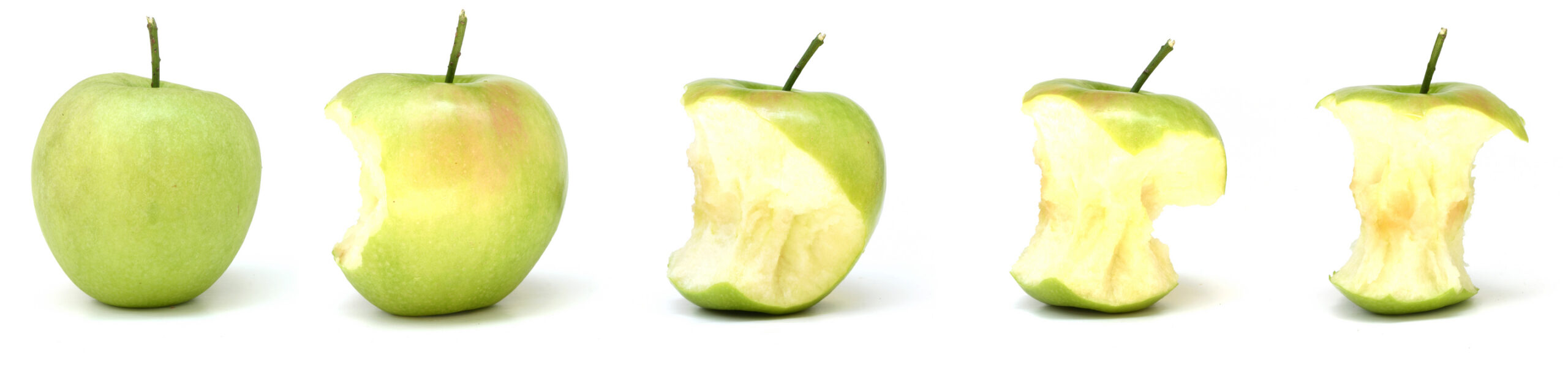
In the age of freedom of speech and freedom from complexes, food is one of the most popular topics for discussion, but only until it gets into our mouths. From that moment on, any food becomes something unpleasant and uncomfortable. Just thinking about what a piece of cheesecake has turned into in your companion’s mouth at a coffee table can cause disgust. The writer Mary Roach starts from this very moment and brings the piece to its logical conclusion. Her book “The Journey of Food” is dedicated to digestion.
12 facts about digestion
1. It’s best to eat the insides.
The lion that kills the antelope first eats its stomach and kidneys. The internal organs are the most nutritious parts of the animal carcass, and the muscle tissue, which we usually call meat, is much inferior to them. Mary Roach believes that the cultural aspect is strong in our preferences, because muscles have been considered an expensive and prestigious delicacy for many centuries, and advises everyone to eat offal, as do the indigenous peoples of the North, lovers of bone marrow, stomachs and blood of deer, as well as maktaka, a special delicacy that is simply the raw skin of a freshly killed narwhal.. The author herself tried it and was delighted.
2. Chewing food thoroughly can help society.
At the beginning of the twentieth century, the so—called Fletcherism was popular in the United States – the teachings of Dr. Horace Fletcher, who called for chewing every piece of food to such an extent that it turns into liquid. Fletcherists’ meals dragged on for long hours, but it was believed that due to better digestibility, they needed much less food to saturate, which had a positive effect on the economy. A side effect is that Fletcher’s followers go to the bathroom once a week, spewing out dense, light and odorless balls. However, further research has proved that there is still no improvement in digestion from such extreme chewing, and all coincidences are accidental.
3. Eating on a string
Actually, the prerequisites for this proof appeared back in the 19th century. An American doctor named Beaumont came across a patient with a non-healing bullet hole in the abdominal cavity. The man just had a small hole in his stomach leading straight into his stomach. For many years, he became the main object of his doctor’s research. Beaumont tied pieces of different food on a string and dropped them into the stomach of the test subject — and then took them out and looked at what had become of them. Most of the time it was the same thing — food, even chewed, was effectively digested. It is said that the doctor even tasted his patient’s gastric juice by examining a hole in his stomach with his own tongue.
4. Rapid response saliva
Saliva in your mouth works as a rescue service for the tissues of the oral cavity and teeth from active substances that may be contained in food. If you bite something sour, your mouth fills with saliva, which is how the body protects tooth enamel from acid damage. The components of saliva that neutralize all kinds of filth in food are the same as in dishwashing detergents. So when you wash dishes, you literally lick them, not with your own saliva, but with artificial saliva.
5. Smart jaws
There are no stronger and more precisely tuned muscles in the human body than those that control your jaws. When you need to crack a nut, your jaws strain so much that they can crush themselves. But this does not happen — so precisely does the brain send a command to relieve tension at the moment when solid food succumbs to effort.
6. Cat Food and Intestinal gas Tasters
Tasters are always involved in the food production cycle. In particular, as Mary notes with particular malice, this also applies to animal feed. Special people try all these canned foods, chew and swallow for a long time, and then use a pre-compiled set of terms to describe the taste. However, this is not the worst possible tasting. In another chapter, the author talks about the study of intestinal gases: donors “supply” them into special pouches, and then sniffer specialists take over, determining the shades of smell, and therefore the composition of gases in different people.
7. The stomach eats itself
Digestion is the breakdown of biomass under the influence of the strongest acids that fill your stomach. They are so strong that no living substance can resist their action for long enough. Roach carefully examines the question of whether the prophet Jonah could really have survived in the belly of a whale, and comes to the conclusion that no, he could not. The stomach is so omnipotent that it devours itself, digesting its own walls. If it weren’t for the mechanism of constant tissue repair, we would have been left without stomachs long ago. After death, this recovery stops — therefore, in the first hours, the stomach of the deceased person is severely damaged by its own juices.
8. Gastrointestinal smuggling
Flight attendants on Colombian Airlines planes have been required for many years to inform customs officers at the airport about people who refused to eat on board. Drug couriers are known to swallow bags of cocaine, and their main task is to resist their natural reflexes by holding the bags inside themselves until their destination. Because of this, they should not eat, as any food seriously complicates this difficult task. If the smuggler has a short journey ahead, a safer container for health can be used — the rectum. This is how mobile phones, tobacco, and more are often brought into prisons. Mary Roach interviewed one of these couriers, who was sentenced to life in prison.
9. Fire-breathing dragons
Flammable gases can form in the digestive tract of living beings. They usually dissipate quickly and their concentration is insufficient to ignite, but there are conditions under which they can ignite. Especially a lot of such gases are formed in the stomachs of snakes. Perhaps we should look for the origins of the legends about fire-breathing dragons here: if you accidentally step on a dead python lying by the fire, gas can escape from its mouth, like from a tube of toothpaste, which will instantly flare up from the fire. Primitive people who had not read modern non-fiction could only find a mythical explanation for this.
10. Rodents eat their own feces
Many animals, including mice and rabbits, are not averse to “eating twice.” The fact is that some of the nutrients they need are synthesized only in their own large intestine, which is much worse at absorbing nutrients than the thin intestine that preceded it. Therefore, their only way out is to expel these substances again through the stomach. By the way, the weak ability to digest the large intestine also lies in the impossibility of proper nutrition through the anus, which once tried to prolong the life of those who could not eat due to diseases or wounds. One of these patients was U.S. President James Garfield, who survived another month after being fatally shot in 1881. And in the 17th century, at one time there were “enemas with meat broth” — this is how resourceful Catholics tried to circumvent the Lenten prohibitions on eating meat.
11. Elvis Presley died of constipation
Mary Roach cites the facts and testimony of Elvis’ personal physician, saying that the cause of death of the king of rock and roll was most likely a pathological expansion of the rectum. With this disease, so much fecal matter accumulates in the intestines that the body is unable to get rid of them, and over time they become more and more solidified, as the intestinal villi constantly extract moisture from them. Overexertion of the body in such a situation can be fatal. It is not accepted to talk about such an unsexy cause of the death of a great musician precisely for the reason that digestion is an even more taboo topic than reproduction.
12. Fecal transplantation
Modern science is paying more and more attention to the intestinal microflora. The composition of bacteria in the intestines can vary greatly from person to person, and this can be the cause of many diseases — the body simply does not have enough helpers to cope with certain substances. Therefore, microflora transplantation is becoming a promising direction — when one person is specially injected with the missing bacteria of another. Everything would be fine, but it happens exactly as it says in the heading of this paragraph. The donor’s bacteria are delivered to the doctor inside his fecal mass, and then — Roach describes this process in detail — this mass is transferred to the patient’s large intestine.
Roach M. “The Journey of food”
Don’t miss the most important science and health updates!
Subscribe to our newsletter and get the most important news straight to your inbox
Published
July, 2024
Duration of reading
About 1-2 minutes
Category
Body
Share

