How many senses does a person have?
Sensory receptors allow us to see, hear, taste, and smell, as well as perceive touch, pain, temperature, and body position. In addition, they allow the body to subconsciously detect changes in blood volume and the concentration of mineral salts, gases, and nutrients in it. We often talk about having five senses. In fact, there may be many more.
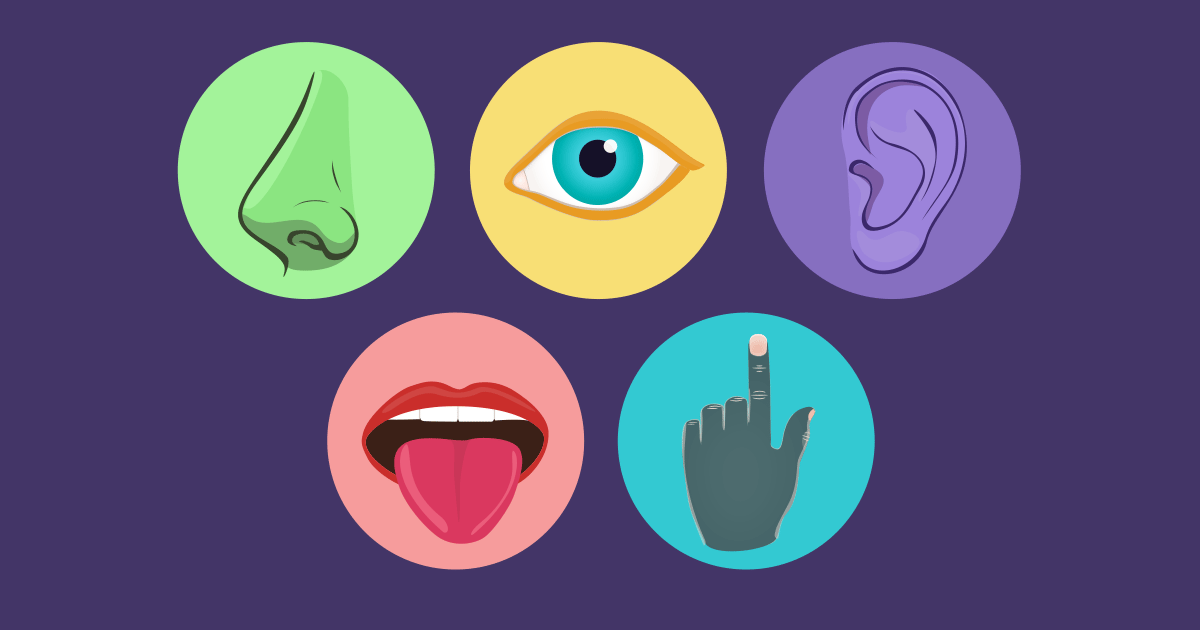
Sensor systems
Some people say that we have seven senses, while others count nine, ten, or twelve. When we talk about human senses, we traditionally assume that there are exactly five senses — sight, hearing, taste, smell and touch. The idea of the five classical senses was first expressed by Aristotle. In the book “De Anima” (“About the Soul”) he claims that every sense has its own organ.
Sensory systems can be very diverse in their specialization, but at the most basic level there are only a few types of signals that animals perceive from the environment (light, chemicals, movement, temperature). Each of these signals is detected by a specific type of sensory receptor (a specialized protein molecule). For example, light hitting the retina activates some of its cells containing photopigments. In the inner ear, proteins in some cells are sensitive to sound vibrations or head movements. Similarly, proteins in the membrane of skin cells detect the pressure exerted on it. Last but not least, odor molecules bind to proteins in the olfactory cells of the nose.
What all senses have in common is that they collect information from the environment and convert it into a message that gets to the brain. Although the transmitted signal, known as an action potential or nerve impulse, is identical for all receptors, it is the type of cell transmitting this message and the part of the body in which the cell is located that allow the brain to interpret the message.
So how many feelings does a person have? It all depends on how you count them. We can say that there are only three senses: chemical (sense of smell and taste), mechanical (hearing and touch) and light (vision). But many scientists still adhere to the classical model, which consists of five components.
Don’t miss the most important science and health updates!
Subscribe to our newsletter and get the most important news straight to your inbox
The five senses
Humans have five basic senses: touch, sight, hearing, smell, and taste. Touch is considered to be the first sense that develops in humans long before birth. It consists of several separate sensations transmitted to the brain through specialized neurons in the skin. Pressure, temperature, light touch, vibration, pain, and other sensations are part of the sense of touch and are associated with various skin receptors.
Our eyes detect light, or more precisely, they detect a limited range of frequencies in the spectrum of electromagnetic radiation. The four types of photoreceptors in our eyes (rods and three types of cones) allow us to distinguish between the frequencies of light that the brain perceives as color.
Interestingly, blind people can compensate for their lost eyesight by enhancing their hearing, taste, touch, and sense of smell. Their memory and language skills may be better than those born with eyesight. Dr. Lotfi Merabet, director of the Laboratory of Visual Neuroplasticity at the Schepens Institute for Eye and Ear Research in Massachusetts, together with colleagues, found that even in the case of deep blindness, the brain is rebuilt to interact more effectively with the environment.
After vision, hearing is the second most informative source of information perception. The normal range of human hearing ranges from 20 Hz to 20,000 Hz. It is also interesting that as a result of aging or certain diseases, a person may lose the perception of individual sound frequencies, while the rest will still be distinguishable. In addition to the auditory ones, there are receptors in the ear that allow you to determine your orientation in space and give you a sense of balance.
For decades, scientists have believed that humans have a worse sense of smell than other animals. But a 2017 study published in the journal Science found that humans can distinguish between at least 1 trillion different odors. John McGann, a neuroscientist who studies olfaction at Rutgers University in the United States, believes that smells influence how we perceive food and other people. For example, body odor can indicate whether a person is restless or aggressive. In addition, odors often trigger much deeper emotional reactions and they are closely related to memory.
Less developed than the sense of smell, the sense of taste informs about the quality and characteristics of the food and liquids consumed. Taste cells located on the papillae, small bumps on the tongue, determine the shades of taste and transmit the corresponding nerve impulses to the brain. It is believed that a person distinguishes between four or five elementary tastes: salty, sour, sweet, bitter and one more – umami (spicy, tart). However, the sense of taste alone is not enough to appreciate food, and the sense of smell also plays a very important role. There are two odor-sensitive olfactory areas in the nasal cavity. When we eat, the smell of food reaches these areas, which “determine” whether the food is delicious or not.
Do we have more than five senses?
There are many other sensory organs that provide us with information about the internal state of the body. The most noticeable among them are hunger and thirst, pain in internal organs and the need to empty the bladder or intestines. There are also more subtle feelings that most people don’t perceive. For example, there are receptors for detecting the level of stretching of muscles and tendons, helping people to control their limbs. There are also those that are more difficult to understand, such as signals about blood pressure, oxygen levels in the arteries, and so on.
In addition to the traditional five senses, there is another one – balance or a sense of balance. It allows you to feel the movement of the body, change direction, maintain position in space and not fall, as well as perceive gravity. Moving from one place to another is almost impossible without a sense of balance. Its sensory receptors are located in the inner ear and are part of the vestibular apparatus. However, this feeling worsens as a person gets older, which is why older people tend to fall and get injured more often.
But balance is not the only feeling that helps us move. Balance is closely related to proprioception – thanks to this sense, the brain can determine the position of limbs in space. For example, a person can type without looking at the keyboard, or walk without watching their feet. You can close your eyes and then touch the tip of your left elbow with your right index finger. The brain knows where the fingertip is and knows the position of the elbow. Proprioception is possible due to receptors in muscles, tendons, and joints.
Thermoreception, also called the sensation of heat, was once thought to be a simple variation of the sense of touch, but it is different nonetheless, as heat can be felt without actually touching an object. For example, the heat from a fire can be felt without touching the flame. Therefore, sometimes the feeling of temperature is considered a separate feeling.
As with thermoreception, nociception, or the sensation of pain, was considered part of the sense of touch. However, some also distinguish it as an independent feeling. Nociception is sometimes classified as three sensations rather than one, because different receptors perceive pain on the skin, joints, bones, spine, and body organs.
For many years, researchers believed that magnetoreception, the ability to detect magnetic fields, existed only in migratory birds, fish, and some other animals. However, in 2019, a group of researchers from the California Institute of Technology and the University of Tokyo published an article on human magnetoreception in the journal eNeuro. In the study, participants were placed in a chamber surrounded by a small artificial magnetic field. Then, using an EEG, the scientists observed how the subjects’ brains reacted to changes in the magnetic field. In the end, the participants recorded brain activity that resembled a reaction to other stimuli, such as sight or sound.
Perhaps the sense of the passage of time, chronoception, should also be included in the list. Although no mechanism has been found in humans that would allow them to perceive time. Experimental data has shown that people have an amazingly accurate sense of time, especially when they are younger. In addition, all people have internal biorhythms.
Conclusion
What we call feelings are the ways in which the brain processes information about the outside world, and the body is designed to collect this information in a variety of ways. Some feelings are not directly related to one organ or part of the body. But they all form the basis of our ability to understand the world around us, navigate it, and avoid danger.
Published
July, 2024
Duration of reading
About 3-4 minutes
Category
Body
Share

