The connection between the nervous, immune and endocrine systems
There is a wide variety of structures in the body: the immune system, which protects against pathogens, the endocrine system, which produces hormones, and the control centre, the nervous system. They produce substances that are used by the body as a common chemical language to communicate information within and between systems in different parts of the body. It is no secret that all of these systems are closely interconnected in the body and control us to maintain a constant internal environment, productivity and performance. Immune system cells increase their activity when inflammation occurs, neurons form new connections every second, hormones communicate with their target cells – and all of this can happen in the same organ at the same time!
What you will learn in the article
- How the nervous, immune and endocrine systems use signalling molecules as a shared chemical language
- How the hypothalamic-pituitary-adrenal axis participates in stress response and adaptation
- Why mental instability and anxiety are linked with increased inflammatory cytokine interleukin-6
- How leptin, adrenaline and dopamine can act on immunity as well as metabolism or stress responses
- How hormones and cytokines participate in regulation of the sleep-wake cycle
Table of Contents

The relationship between the nervous and endocrine systems (one example)
One of the best known complexes that fulfil the functions of both the nervous and endocrine systems is the hypothalamic-pituitary-adrenal axis. It is this axis that plays a key role during stress, which, as an organism’s response to unfavourable factors, provokes a number of physiological changes.
Thus, the trigger signal when a potential danger is detected is the activation of the hormonal system, namely the secretion of the key stress hormones corticoliberin and cortisol, which together with another hormone oxytocin and the parasympathetic (“inhibitory”) nervous system trigger the “calming of thoughts”. Together with the next hormone, corticotropin, oxytocin promotes concentration, and vasopressin, secreted a little later, activates memory mechanisms. The same hormones together with growth hormone stimulate the activation of the sympathetic (“excitatory”) nervous system, mobilising the adaptive capabilities of the organism.
Nervous+immune (as an example)
As we know, inflammation is one of the body’s defences: when an infection occurs in the body or when its own cells are destroyed, the immune cells near the site of damage release a variety of signalling molecules – cytokines. And this happens under the direct control of the nervous system: for example, it has been shown that mental instability (namely, the inability to concentrate and general anxiety) increases the level of the inflammatory cytokine interleukin-6, which can easily lead to a violation of carbohydrate metabolism.
In the opposite direction, immunoregulatory effects on the brain are mediated by the autonomic nervous system via the sympathetic and vagus nerves. Neurons are able to respond to pro-inflammatory substances secreted by immune cells: through activation of nerve reflex circuits, they are able to regulate acute and chronic immune responses.
Interrelationship of all three systems (by example)
In general, hormones and cytokines have a broad spectrum of action: the same signalling molecules can act on different targets and consequently fulfil different functions. For example, leptin, which acts as a hormone controlling energy metabolism and appetite, at the same time plays an important role in the formation of immunity: it enhances phagocytosis (destruction of pathogenic cells) and production of anti-inflammatory substances. Leptin, by the way, promotes wound healing, as evidenced by its increased production in the process of inflammation. And the hormone adrenaline (“stress hormone”) and the neurotransmitter dopamine (“pleasure hormone”) can regulate cell growth and the synthesis of antibodies by immune cells.
The neuroendocrine system is undoubtedly one of the key factors in triggering and regulating the sleep-wake cycle. The change of phases of the cycle depends not only on the level of light, but also on the level of secretion of hormones and cytokines. Thus, the hormone corticoliberin during drowsiness activates serotoninergic neurons causing inhibition of internal organs and skeletal muscles, while immune cell cytokines (interleukin-1 and interferon-alpha) in the slow-wave phase of sleep are produced with the same intensity as the most important hormones – melatonin and delta sleep peptide, ensuring immune homeostasis (i.e. stability).
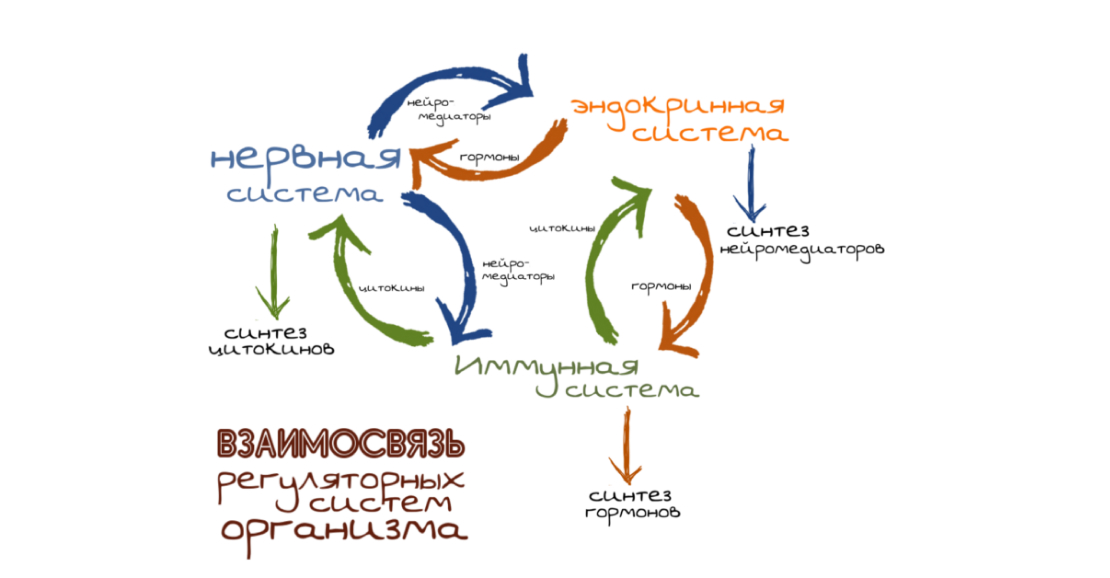
Photo: lta-travel.ru
Key takeaways
- The nervous, immune and endocrine systems are described as closely interconnected regulators of internal stability
- During stress, corticoliberin, cortisol, oxytocin, corticotropin and vasopressin participate in adaptation and concentration
- Immune-cell cytokines are released during inflammation under the direct control of the nervous system
- Leptin controls energy metabolism and appetite while also enhancing phagocytosis and anti-inflammatory substance production
- Interleukin-1, interferon-alpha, melatonin and delta sleep peptide are described as supporting immune homeostasis during sleep
Share:


Global health science — in clear language
We select and translate the best international publications. Read 3 key materials about longevity every week!
Published
June, 2024
Updated
Duration of reading
3-4 min
Category
Brain and nervous system
Share