Thanatotherapy: How did I manage to relax
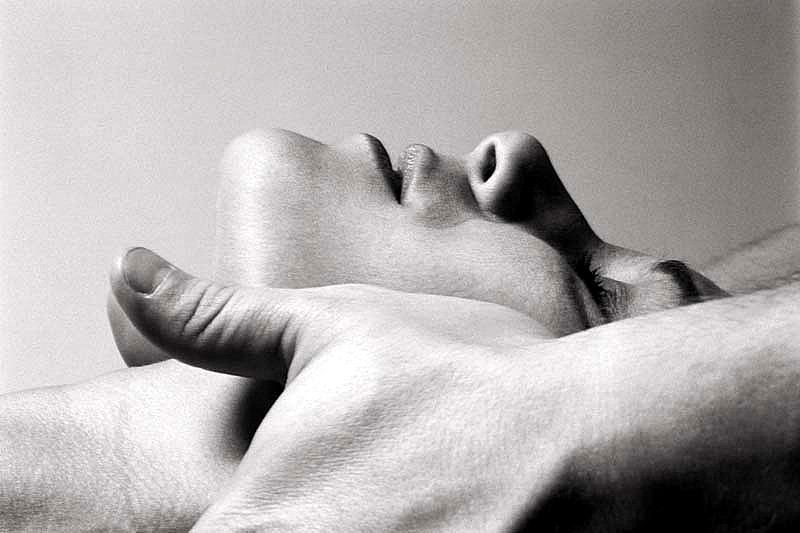
Thanatotherapy is a method of body therapy that relieves the fear of death. Death relaxes our body and is considered a state of perfect rest. You can get rid of stress and tension… imagining himself dead. So says the author of the unusual technique, Vladimir Baskakov.
Basic ideas
- The energies must be balanced. If there is tension, it should be replaced by relaxation.
- Thanatotherapy helps to achieve this balance.
We do not know how to relax, our rhythm of life does not allow us to do this. But it can be learned. - Thanatotherapy relieves the fear of death. The ability to accept your death relieves many psychological problems.
I think everyone who has ever successfully attended a training session will agree with me: it is impossible to get such a volume of feelings, thoughts, images and just pure energy in ordinary life. Well, except for doing extreme tourism. Anyway, one day I realized that I miss the band. It was time to go somewhere. But where to? I turned to a psychologist I know. “Go to Baskakov. Maybe you’ll like it.” What does “maybe” mean?
Vladimir Baskakov conducts trainings on thanatotherapy. Oh, that’s it! Death treatment…
“Are they burying them in the ground?” I asked cautiously. “No way! – my friend grimaced. – The ones who are burying are impostors. And Baskakov is the creator of the original method.”
It turned out that thanatotherapy is a branch of body psychotherapy. And that the thanatotherapist Baskakov once served in the Navy. A submariner. For some mysterious reason, it calmed me down.
And one fine autumn day, I signed up for a training session. I was also pleased that they didn’t ask me for an advance payment. “You’ll give it back at the end of the day,” the mustachioed man, who looked like the host, waved his hand. “great! I thought. “If you don’t like it, I’ll run away!” And stayed.
Don’t miss the most important science and health updates!
Subscribe to our newsletter and get the most important news straight to your inbox
Published
July, 2024
Duration of reading
About 3-4 minutes
Category
Social Psychology
Share


“Our whole civilization is built on yang energy,” the presenter addressed all of us, who were sitting in a circle on the “foam”. “We’re all in a hurry, trying to become the best, conquer, capture, achieve…”
Grab more and carry on, I mentally agreed.
“It’s like trying to constantly inhale and not exhale. Try it, maybe it will work?”
The circle laughed.
“You see, you understand that this is impossible. The energies must be balanced. If there is tension, it should be replaced by relaxation. We’re going to try to work with yin energy now.”
I started to recall everything I knew about the two types of energy in traditional Chinese philosophy.… However, at the beginning Baskakov warned that he was not going to present a theory, but used different terms to indicate the direction of his thought.
Of course, we will not achieve such a degree of relaxation in life. But we can get closer
“How does a massage therapist usually work? He made exaggeratedly energetic movements. – So that he gets tired and sweats, and pieces of flesh fly from the client in all directions. This is Jan. We will do something else.… But I need a volunteer.”
Everyone hesitated. Then I thought, since I’ve already come… and raised my hand.
“Lie down,” the presenter invited, pointing to the center of the circle. “And what should I do?” “Nothing, just lie down.”
And then it turned out that my body didn’t share my determination. It would seem that the difficult thing is to lie down and do nothing. But packing up in front of everyone, I felt extremely awkward. To get rid of my stiffness, I took the most relaxed pose possible: stretched out on my back, put my hands behind my head, and stared at the ceiling.
“Of course, you can’t work with such a client,” the presenter’s voice rang out above me. – Look, the whole body is pinched. Legs crossed, arms crossed…”
Oh, my God! And I thought… I uncrossed my legs and stretched my arms along my body. Will he be happy now? After all, I’m in the classic shavasana yoga pose for relaxation. The host seemed to hear my thoughts.
You can die in any position, so you can relax in any position.
“Shavasana,” he said, “is the pose of a corpse. But you know what? After all, the dead don’t lie like that. They are then laid like this. And sometimes they fold their arms over their chest… (I won’t give in to provocation! – I decided and didn’t move.) …and they close their eyes, giving the appearance of a sleeper. This is a way to avoid thoughts of death, to pretend that a person has just fallen asleep… And the real pose of a corpse is the most open pose, with arms and legs outstretched…”
“A Vitruvian man, like in Da Vinci’s drawing?” someone from the circle asked. “Approximately. Death is maximum relaxation. My eyes are wide open, my lower jaw is hanging open…” I realized from the restrained laughter that the presenter was showing what it looked like. “So if you meet someone like this, know that this is our man! After thanatotherapy…”
The laughter intensified. (I never would have thought that talking about death could be so hilarious.)
“Of course, we will not achieve such a degree of relaxation in life. But we can get closer… just you breathe, please. And you’re breathing too,” he said to me, and I realized that I was holding my breath…
Many exercises began with presence. Which felt strange even when there was no physical contact.
That is, before I was touched, I felt the warmth of an approaching hand. There were other exercises, “Jan” ones. For example, one of the training participants lay down pretending to be dead, and four of them tried to “stir him up” without using their hands, for example, to say something to make him laugh.
I’ve considered myself an introvert all my life – and now it turns out that it’s not so easy for me to withdraw into myself! Strangely enough, it was easier to get rid of physical impact rather than words: in another exercise, four other people pushed me, pinched and tickled me while I sank into the depths with my eyes closed, leaving my body on a distant surface.
…Large photographs are passed from hand to hand in a circle: a mountain climber frozen in the mountains, leaning against a stone; the yellow-white body of the Dalai Lama, which turned out to be incorruptible… There is silence, and suddenly the girl next to me can’t stand it: “How much can I?! Why are you showing us all this?” After a short pause, several voices are heard at once.: “What’s the big deal? If you don’t like it, don’t look. I’m curious!”
Four people were pushing, pinching, and tickling me as I sank into the depths with my eyes closed.
I wonder what the presenter will do. He will ask the girl, as is often asked in groups, “How do you feel?” But he answers her question directly.:
“I have two goals. I want you to see that real death looks very different from the fake death that is shown on screens every day. And it makes a completely different impression. Which one did you feel just now. The second goal is to see how quickly you can switch, restore balance.”
Yes, a meeting with death (even in a photo) can be unsettling. But how to restore balance? Confused, I look around the circle and see that everyone is exchanging glances. Meanwhile, the photos return to the presenter, who calmly puts them aside.
“Are there any more questions? If not, lunch break!”
And wow, everyone immediately gets up, starts talking as if nothing had happened, and packing up… Well, lunch is contact with food, with one’s own body. Maybe this is the restoration of balance?
I’ve tried a lot in these two days, and I’m slowly proud of my openness to new experiences and my ability to switch. But during this exercise, I felt that somewhere inside me there is a line that I am afraid to cross. It was innocently called the “Magic Carpet.” I chose Irina, a short, red–haired woman who looked like me in some ways.
First, all the participants took their seats, and I was already looking forward to lying down and closing my eyes and feeling some more extraordinary things.… But then it turned out that our “magic carpet” was going to fly through a dangerous area where only one “flier” could remain alive. We had to decide which of the two.
“I feel confused, I don’t know what to do,” I told Irina. “I know!” she replied decisively and pushed me in the shoulder.
And then, one by one, three quick thoughts came to my mind. First, our forces are about equal, it’s not a fact that I’ll be able to push her. The second: Instead, I can yank her ankles to make her fall. Third, Irina may hurt her head falling. And then she elbowed me in the chest. And I decided – no, it’s a game after all. She’s not worth my chest or the back of her head. And I got off the mat.
There was another unexpected result: I began to fall asleep remarkably easily.
When the exercise was over and everyone was sitting in a circle, the moderator asked, “Well, who died?”
“I am,” the young man replied. “I couldn’t push a woman.”
“And we hugged to be like one person!” the two girls happily responded.
“So,” said Baskakov, “we have three dead people. Who else?”
I raised my hand.
So I don’t know–maybe I was kidding myself that time? Maybe I just don’t have enough will to live? And I also remember that fleeting chill when I raised my hand… And a strange feeling of freedom: yes, I’m dead, and what can you take from me now?
I went to thanatotherapy not for the sake of therapy, but for the sake of the band. And I got what I wanted: it was a real adventure. But there was another unexpected result: I began to fall asleep remarkably easily. I remember once being on a long-distance bus tour. And recently I flew for eight hours and overslept half the time, although the chair is not the most comfortable bed in the world.
My method may seem gloomy, but it works for me.
I think so: is it an uncomfortable pose? But you can die in any position, right? This means that you can relax in any position. And I relax, and I wake up at a different point in time.
“In order to live, we need to be able to easily return to a state of balance”

Vladimir Baskakov, thanatotherapist
Psychologies: Why are you interested in death as a psychologist?
Vladimir Baskakov: I remember how and when it started. In Odessa, I was 5 years old. And suddenly I realized that I was going to die. I was so overwhelmed by this realization that I cried all night long. I was scared, but even more hurt.
It’s all going to end, because it’s so unfair! And I decided to defeat death. At first, I wanted to become a doctor. My parents were afraid to walk past pharmacies – I immediately demanded to buy the biggest and shiniest (as I understand it now, it was a syringe for gastric lavage).
Then I realized that medicine does not cancel death. Then I thought about immortality. And I decided to become a psychologist.
R: Why can’t you not think about it at all?
V.B.: The one who displaces the reality of death from his consciousness deprives himself of vitality. Life and death are connected, like inhaling and exhaling, meeting and saying goodbye. If we don’t say goodbye, we won’t have another meeting. If we cannot exhale, there will be no inhalation. Trying not to think about death, we freeze, freeze – and our life stops. Do you remember what yin and yang look like? There is a black dot in the center of the white. And vice versa. By maximizing one component, we find ourselves at the point of the other.
In the center of death, life begins. And it is important to understand this in order to feel the balance. This is one of the key concepts in thanatotherapy.
We believe that the basis of all psychological problems and somatic diseases is a disturbed balance of activity and passivity. If the balance is disturbed, the person becomes unstable. We are constantly being thrown off balance by something – stress, germs, various events.
In order to live, we must easily return to a state of equilibrium and be stable. Like a tumbler that returns to its equilibrium point, no matter how you push it in different directions.
R: What is the purpose of thanatotherapy?
V.B.: They say that the sight of the abyss causes despair for some, while others want to build a bridge. My task is to keep people from falling into despair. Reflecting on death, many people imagine a long, painful extinction, helplessness, illness, suffering. Why, I wonder? After all, when the clock stops, it happens in one second. Shooters don’t struggle in agony. And how does the candle go out? This is what a proper death looks like. It’s an easy death, at the peak of health.
In traditional culture, people had a premonition of their time long before, sometimes for years. And they calmly prepared, realizing that this event is a part of life, its natural conclusion, and not something terrible and hostile. We have lost this culture, but it can be restored.
In the classroom, we create conditions in which we can safely come into contact with the thought of our mortality. There are four types of psychological problems that we solve through working with the body.
- The problem of excess control is the head in the body projection.
- The contact disorder is the chest and arm area.
- Sexual relations are in the groin area.
- The problem of support and stability is legs and feet.
How does this happen? It’s useless to talk about it, you can only try and do it.S
Source: Psychologies
Photo: centrgl.com
Source
Journal Psychologies. Article: Thanatotherapy: How did I manage to relax