Dance and movement therapy: how to learn and change yourself through movement
Your plasticity and the way you move directly affect your self-esteem and emotional reactions. You can learn and change your personality through natural dance. It is impossible not to be able to dance. It’s the same as not being able to run or jump. Yes, you may not be able to dance rumba or salsa, but you can dance. You don’t have to learn that. This is a natural activity of our body.
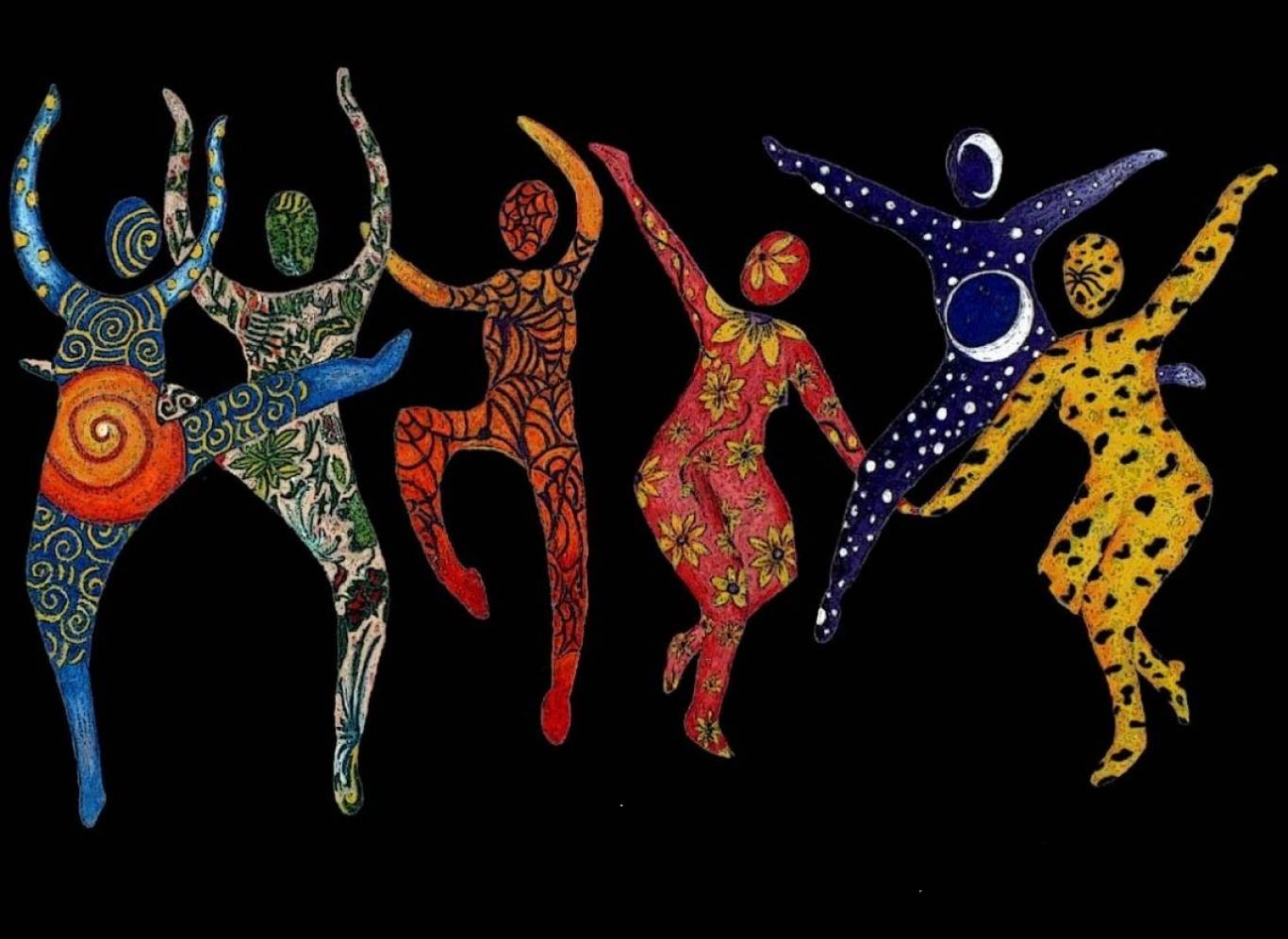
People danced around the campfire long before the first dance styles were invented. One—year-old babies dance to the music – they squat, spin around themselves, and wave their arms. They haven’t learned to dance anywhere, they already know how to do it. Just like you.
Why is it important to dance
Dance can affect more than just the body. It can change your thoughts, attitudes towards yourself and others.
Have you ever noticed that all emotions are immediately reflected on the body, and the position of the body affects how you feel? Here’s a great story from social psychologist Amy Cuddy about this: Our body language determines what we think of ourselves. It depends not only on others, but also on ourselves. The body changes consciousness.
Moreover, body behavior is directly related to thinking, feelings, and sensations. Moshe Feldenkrais’s book Awareness through Movement: Twelve Practical Lessons mentions the inextricable link between muscle contractions and feelings: Behavior is the mobilization of muscles, sensations, feelings, and thinking. Theoretically, each of the components can be used as the main one. But muscles play such an important role that if we exclude their patterns in the motor part of the cerebral cortex, the other components of this action disintegrate.
Feldenkrais notes that the motor part of the cerebral cortex, responsible for muscle contractions of the body, is located in close proximity to the structures that control thinking and feelings. Due to this arrangement, as well as the diffusion and spread of the process in the brain, changes in the motor part cause changes in thinking and feelings.
In addition, the body is able to remember the positions in which it spends most of its time. If you often experience negative emotions, they freeze in your body and turn into motor patterns. If you are constantly experiencing fear, insecurity, or embarrassment, you shrink, pull your head into your shoulders, and slouch. The muscles responsible for these positions get used to being in constant tension. To relax them, you will have to make a conscious effort.
It turns out to be a vicious circle — emotions form muscle clamps, constant tension fuels emotions, and you can no longer get rid of this situation so easily.
The good news is that this way you can not only get a negative habit, but also fix it.
Moshe Feldenkrais: A fundamental change in the basis of the unit integration pattern will destroy the connection of the whole. In such conditions, it is easier to change thinking and feelings: the habit has lost its main support, and change has become possible.
The body doesn’t know how to lie
We pay so much attention to verbal communication, whereas from 60 to 80% of information is transmitted non-verbally. This means that all muscle clamps directly affect how other people perceive us. You can lie with words, but the body does not lie, and others read it.
It’s much worse when you start lying to yourself without realizing it. The social attitudes that hinder you and the fear that you learned in childhood form a picture of yourself, create psychological blocks and limit your potential.
To understand what prevents you from living and get rid of it, dance is useful — a real authentic movement, without memorized patterns and patterns.
A natural dance for self-knowledge
Body movements show who you are and what you think of yourself, and natural dance tells your story.
Why not just go dancing? Any dance is wonderful if it brings you pleasure. Moreover, by changing your muscle patterns, you can change your character. You can choose any dance style.
But all dance styles have one significant drawback compared to authentic movement — they don’t tell you anything about you.
Moshe Feldenkrais: We can observe how natural practice is gradually giving way to acquired methods. Society generally denies the individual the right to use the natural method, forcing him to master the accepted method of action, and only then allows him to work.
The natural method reveals your personality and allows you to get to the bottom of your problems. This is the moment when movement turns into psychotherapy and a way of knowing oneself.
How to learn and change yourself through movement
There is a special area of psychotherapy — dance and movement therapy (TDT). And authentic (natural) movement is a part of it.
If there are TDT or authentic movement courses in your city, study with professionals. If that’s not possible, but you want to try, we’ll tell you how to get started.
Dance Analysis
In authentic dance, it is important to monitor your emotional state and how your movements affect your feelings. It is a kind of meditation that requires full concentration.
You can start with some kind of experience or focus on your feelings for a person, attitude to work, hobbies, whatever. Thought will generate movement.
You can split the session into several steps.:
- Focus on inner feelings.
- The choice of vivid experience and movement.
- If there is any special movement, you concentrate on it, repeat it, reinforcing the emotion it causes.
Let’s take an example. You start moving with the idea of a relationship with a person, you notice a sharp chopping movement with your hands from top to bottom. You repeat this movement, watching what emotions it causes — rejection, rejection, anger.
You’re pulling out hidden emotions from your subconscious. In addition, by living emotions in dance, you release repressed experiences that can affect your life — generate fears, keep you from moving forward.
If you are not ready for a session with another person yet, you can record your dance on camera and then analyze it.
Pair therapy
Even more interesting and effective is the lesson in pairs, where one person is dancing and the other is watching. This is the basic structure of authentic movement, consisting of the mover and the witness.
The witness performs several functions:
- Provides security. Everything is allowed during the dance — you can look around, in the mirror, only up or down, move with your eyes closed. You can jump around, crawl on the floor, and move sharply in different directions. It is clear that in such conditions you can stumble on something, fall or crash into nearby objects. Therefore, one of the functions of a witness is to protect you from danger.
- Gives feedback. While moving, you can immerse yourself in the unconscious, your emotions and feelings, and not track any connections or side emotions. The witness should be sensitive and not lose concentration on your movement, so that after the session he could describe what was happening, what feelings arose in response to your dance.
At the same time, the witness should not make specific judgments about your movement or about any parts of the dance. After the session, you can discuss the dance.
Let’s say you tell us what you felt or imagined at that moment when you were slowly crawling across the floor, and you ask the witness what associations or feelings this movement evoked in him. Together, you can create a more accurate picture of what is happening. Someone else’s vision may lead you to interesting thoughts.
Just don’t force someone who isn’t ready to be a witness. You may encounter criticism, misunderstanding, lack of empathy and concentration.
Who is suitable for an authentic movement
This practice is not for everyone. On the one hand, this is not dance in the general sense of the word, but rather psychotherapy in motion. On the other hand, it is a dance in its original form — the expression of emotions through plastic, revealing oneself in motion.
Authentic movement will do:
- Those who have poor control of their bodies.
- People who want to learn more about themselves, to remove psychological blocks, to live emotions driven deep into themselves.
- Dancers who want to express their emotions in dance, rather than live someone else’s, discover new ways of plastic expression.
Dancing does not require the ability to sit on the splits, a perfect sense of rhythm, athletic physique, knowledge and skills. All you need is your body, emotions, and music. Turn on music, the sound of drums, a metronome, or listen to silence. Make a few movements and let your emotions and sensations guide your body. Dance.
Don’t miss the most important science and health updates!
Subscribe to our newsletter and get the most important news straight to your inbox
Published
July, 2024
Duration of reading
About 3-4 minutes
Category
Complementary medicine
Share

