Thomas’s Theorem: Why do prophecies fulfill themselves?
Why does life “play along” with optimists and “set up” pessimists? Why is it that a person who is sure that luck awaits him finds it everywhere, while someone who believes that “the world is unfair” is faced with disappointing situations over and over again? All of this can be explained using a postulate known as Thomas’ theorem: “If people believe situations are real, they turn out to be real in their consequences.”
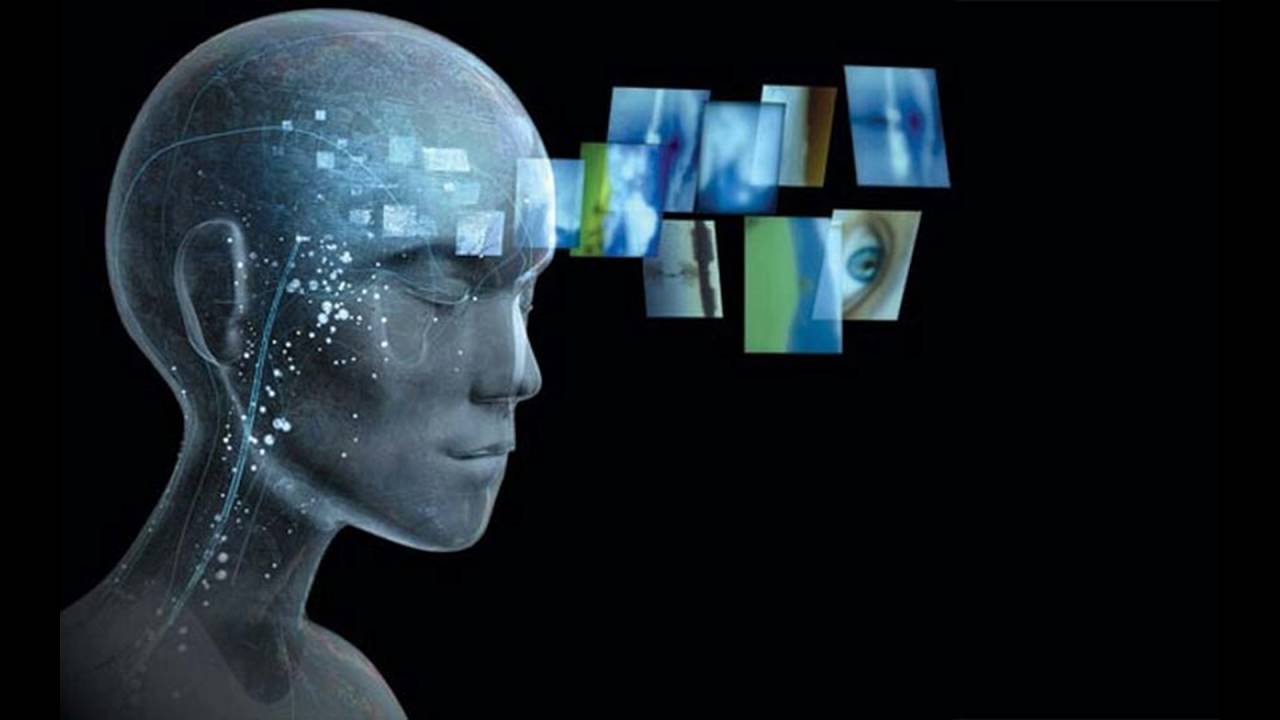
This statement, originally formulated by American sociologists William Thomas and Dorothy Thomas in 1928, is now used by scientists from a wide variety of scientific fields, including psychology, psychiatry, neurophysiology, neurobiology, etc.
Thomas’s theorem became widely known thanks to another famous sociologist from the United States, Robert Merton, who in 1942 called this statement a “theorem”: in his words, it was “the most important phrase ever printed by any American sociologist.” Merton also introduced the concept of “self-fulfilling prophecy” into sociology, speaking about predictions that come true because people believe in them. This is a statement that was not originally true, but if it was perceived as true, it had an impact on reality (due to people’s behavior), and eventually turned out to be true.
Don’t miss the most important science and health updates!
Subscribe to our newsletter and get the most important news straight to your inbox
Examples of Thomas' theorem in sociology
The simplest example of how Thomas’ theorem “works” in society is the situation with the bank. Imagine a bank that has certain assets and is quite firmly “standing on its own two feet.” However, let’s say someone starts a rumor that the bank is not doing well and is about to go bankrupt. This statement does not correspond to reality. But if people believe this rumor and start withdrawing their deposits en masse, the bank will really come to an end very soon. Thus, a situation that was initially unrealistic, but was perceived by investors as real, has very real consequences.
Another example of how Thomas’ theorem works in society is the “model (or metaphor) of a beauty contest” proposed by British economist John Keynes. There are portraits of girls participating in the contest in a certain newspaper: readers should vote and determine which one of them deserves to win. According to Keynes, only a part of the readers will vote for the participant whose face they found beautiful, and another part will be guided not by personal preferences, but by generally accepted criteria of beauty. And some will try to take into account that other readers may also think this way, and try to guess what most of the other readers will think.
Keynes proposed this model to describe the situation in stock markets, where the value of shares is determined not so much by real collateral as by the attempts of most shareholders to understand what other shareholders think and act based on how they think other people assess the situation. Thus, the situation, which has no real basis, results in very real consequences – the rise and fall of the stock price.
Thomas's Theorem and Self-fulfilling Prophecy in Medicine, Psychology, and Neuroscience
William Thomas, one of the authors of the idea of “the real consequences of unrealistic situations,” explained its effect using an example from psychiatric practice: a mentally ill man shot a member of his family because he considered them “fiends of hell.” Thus, a false idea, perceived as the truth by one person, turned into real tragic consequences for others. As examples of the real consequences of imaginary situations, modern psychiatrists cite various forms of delusion, when a person imagines himself to be a prophet, a famous person, and behaves based on this assumption; crowd psychosis, when many people find themselves at the mercy of some false idea, perceive reality through its prism and behave accordingly.
In psychology, many situations are also considered from the point of view of the theory of self-fulfilling prophecy. Thus, the attitudes given to parents in childhood – “you are successful” or “you are a loser” – form a person’s behavior style, and from an idea that originally existed only in the head of the parent and then the child, they turn into real actions with real consequences.
Recent research in the fields of psychology, neurobiology, biochemistry, etc., shows that ideas influence not only the mental structures of a person, but also his biochemistry and the work of his genes. Thus, the famous American biologist Bruce Lipton, in his book The Biology of Faith, devoted to the influence of thoughts and attitudes on the biochemistry of the body and the activation or suppression of gene activity, points out that “a positive perception of the mind strengthens health by activating immune functions, and inhibition of immune activity due to negative perceptions can lead to its weakening.”.
As an example of the “real influence of unreal events”, we can consider a person’s perception of the past, his memories. Unlike a historian, for whom it is necessary to establish the authenticity of certain events, an ordinary person, thinking about the past, does not set himself the task of accurately remembering all the details. For him, the feelings and emotions that thoughts about this event evoke here and now are more important.
That’s why people look back on the times with nostalgia. which objectively (within the framework of society) can be called difficult, but for them personally they are associated with pleasant sensations. As a result, the details of reality are “omitted”, and memory reproduces a “picture” that evokes the necessary feelings at the moment. In fact, we are talking about partially (and sometimes completely) fictional events, thoughts about which cause real consequences – a change in mood that is reflected not only on a mental, but also on a biochemical level.
A striking positive example of a self-fulfilling prophecy in medicine is the placebo effect. The patient takes a “pacifier” that does not contain components that have any effect on the course of the disease. However, the belief – in this case without any real basis – that he was given an “effective medicine” has real consequences, which manifest themselves in the disappearance of symptoms, improvement of well-being, and sometimes in full recovery. Studies show that the placebo effect can reach 90% in some cases.
Published
July, 2024
Duration of reading
About 3-4 minutes
Category
The placebo
Share

