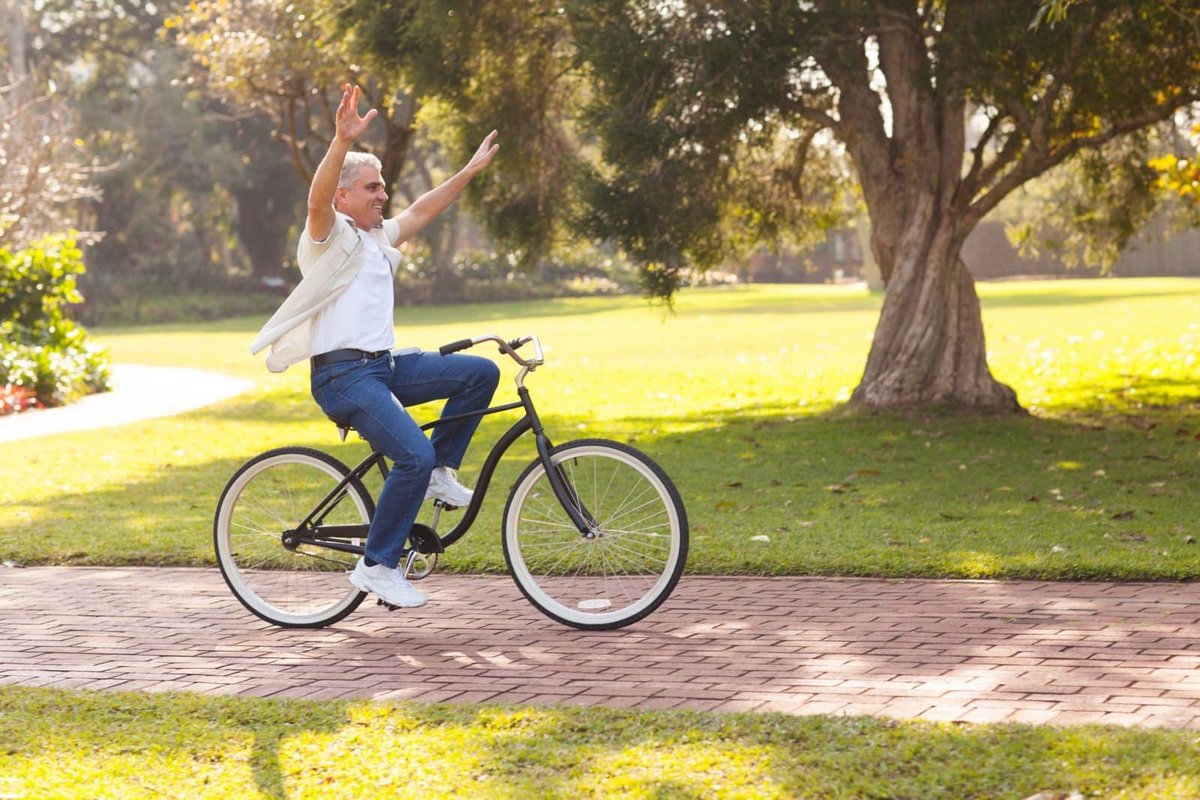
In psychology, the difference between chronological and subjective age is called a cognitive illusion. When older people subjectively assess themselves as older than their age, then we are talking about a negative cognitive illusion; when older people feel, think, and act like younger people, then we are talking about a positive one.
Older people in the first category rate themselves less happy and also
report lower satisfaction with old age. U.S. and Canadian researchers
have found that feeling older is associated with negative age-related changes, including declining vision, and psychosocial problems, such as intergenerational disconnection and an inability to absorb and utilize new information. A number of other studies have shown that negative attitudes towards aging and assessment of subjective age as older than chronological age cause corresponding consequences for the body: general physical and mental condition deteriorates, cognitive functions
decrease, which contributes to the development of dementia, walking speed
slows down, blood concentration of C-reactive protein – a marker of inflammation –
increases, the risk of vascular crises,
depression and other diseases increases, pathological changes in the brain
occur, and the risks of hospitalization increase. In addition, a large study of subjective age, conducted by psychologist Yannick Stephan and colleagues, showed that feeling 8-13 years older
increases the risk of premature death by 18-25%.
People in the second category, on the contrary, tend to describe their well-being as good,
feeling happy and in demand. Younger subjective age is associated with better cognitive abilities in the elderly: they
have better episodic memory, executive function, and cognitive activity – the latter is also consistent with the results of another marketing study: older people who feel younger are more
focused on trying new brands, and are active in seeking consumer information. In addition, they are better able to cope with stress, have a more positive attitude towards other people, and adapt more successfully to new life conditions. There is also a low risk of
mortality among them.
There are many reasons why subjective age has such an impact on health. All this can be the result of cumulative changes in character. For example, a person who feels younger than their chronological age may continue to enjoy life, new travels, and interesting activities well into old age. Positive thinking can have an
epigenetic effect on the body, through which physiological indicators of health are improved.
However, the mechanism linking physical and mental health can work in both directions: if a person is depressed, feeling physically weak, forgetful and inattentive, they will almost certainly feel old. Thus a vicious circle is formed: psychological and physiological factors add years to subjective age, which in turn makes the person feel older and more vulnerable.
Thus, subjective age can predict health much better than the date on a passport.