Cell Science: Seven Facts about the Body’s Most Basic System
Life is complicated enough, the basis of its existence in its modern form is a kind of elementary system, a cell. As they say, “there is no life outside the cell.” This idea may not be very new, but until recently they tried to challenge it. In fact, of course, there are still conversations going on, because there is a so-called “non-cellular form of life” – viruses, prions. Yes, indeed, the virus can escape from the cell, but, nevertheless, it is a temporary escape from the cell, it is some kind of set of genes escaped, but it must return in order to exist forever.
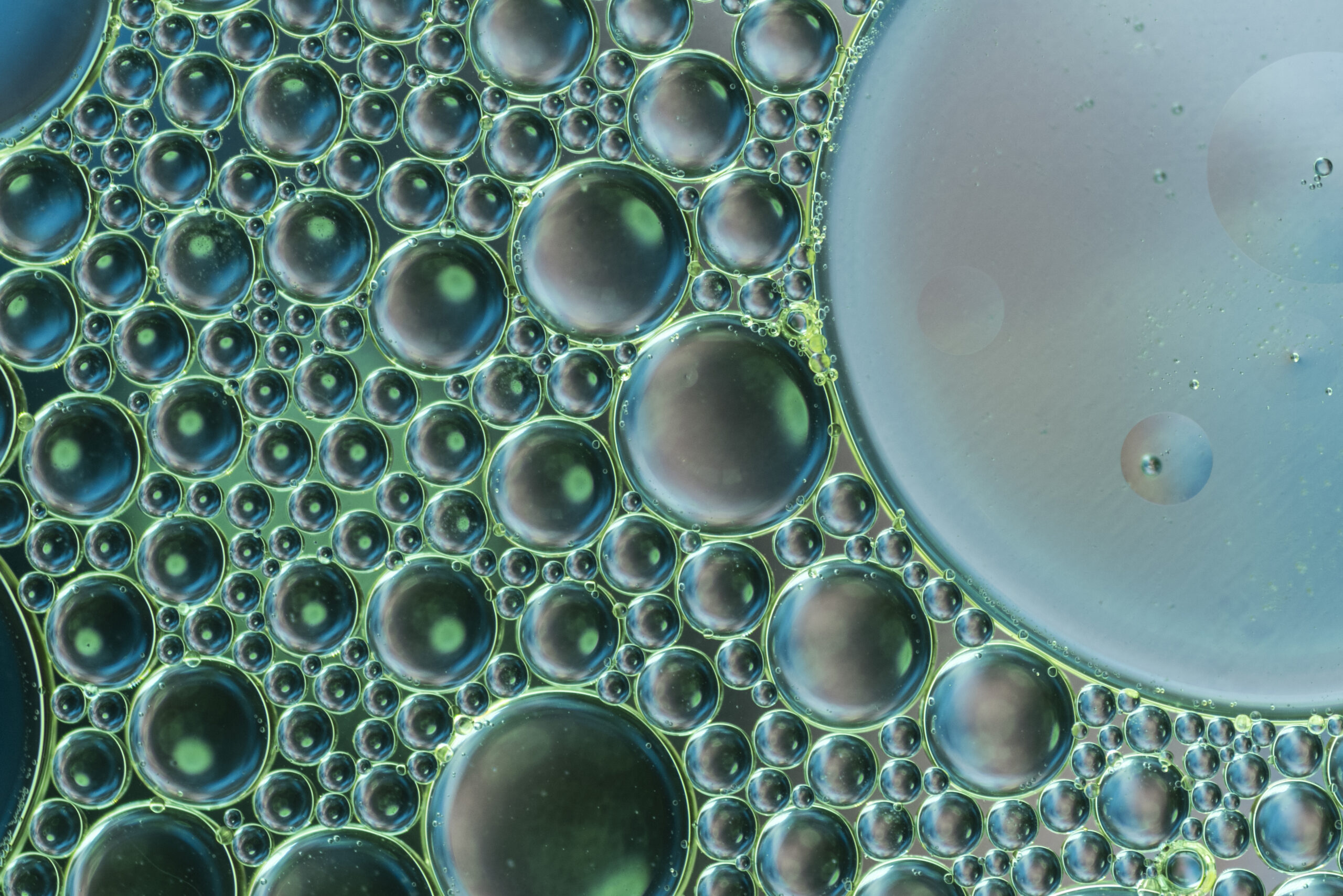
1.Without the cell, outside the cell, and with the destruction of the cell, life ceases. Life is a cage. Therefore, the sciences that study the cell are fundamentally important. The science of the cell, which is now commonly called cell biology, is very old, and various sciences have constantly branched off from it, because you can study a lot in a cell and in very different ways. Throughout the history of cell biology, which is more than three centuries old, many different sciences have separated from it.
Chentsov Yu.S. Introduction to cell biology. Moscow: ICTS “Akademkniga” 2004.
2. On the one hand, cells are very complex, and on the other hand, all cells can be divided into approximately two main types: prokaryotic and eukaryotic cells.
Prokaryotic are pre—nuclear life forms, eukaryotic are real nuclear organisms, which include us humans. There is only one fundamental difference: how the genome is organized in the cell. Either the genome “floats” inside the cell, as in prokaryotes: in bacteria, in cyanobacteria, or, as they used to be called, in blue-green algae, archaea. Or as in eukaryotes: the genome (i.e., genes) is surrounded by a special shell and exists in a separate, structurally isolated domain of the cell.
Alberts B. , Bray D. , Lewis J. , Raff M. , Roberts K. Watson J. Molecular biology of the cell. Moscow,: “Mir” 1994.
3. The difference is very simple, but it has far-reaching consequences. Eukaryotic cells were able to become larger, and therefore created those ecological niches that were fundamentally inaccessible to prokaryotes. And to do many things that prokaryotes could not do well. The simplest thing is that eukaryotes were able to become large and, as a result, were able to effectively “eat” prokaryotic cells. Thanks to this, they have reached another evolutionary level. Another thing that eukaryotes have really been able to do and prokaryotes have not been able to do is to create multicellularity. That is, these are organisms that have become even larger and have been able to “eat” not only bacteria, but also other unicellular eukaryotes. Again, evolution has moved to a qualitatively new level. Prokaryotes can’t do that. When the genome, genes, and genetic information are not isolated, it is impossible to do something very complex and large.
Cells. Editors B. Lewin, L. Cassimeris, V. P. Lingappa, D. Plopper. M:”Binom. Laboratory of Knowledge” 2011.
4. This does not mean that prokaryotes did not try to do this either, they have a certain form of interaction when they form some kind of communities that in many ways resemble multicellular organisms in eukaryotes. But they are fundamentally different. In recent years, the so-called “bacterial films” have been very actively studied, when bacteria live in a film and in this state, antibiotics that kill ordinary bacteria well no longer work on them. And, accordingly, this is extremely important for medicine, because such patients also need to be treated somehow. And conventional antibiotics may not work. This is a very serious problem. But still, a bacterial film is not a multicellular organism! A multicellular organism is something else.
Speaking generally about the structure of the cell, it consists of only a few parts. Next, everything will relate to eukaryotes: first, the cell must be separated from the environment by some kind of obstacle. On the one hand, we have a non—cellular environment, “non-life”, on the other hand, life, a cell. This is the thinnest membrane with a thickness of 10 nanometers. These are the nanotechnologies that everyone is talking about, but no one has seen them.
The rest of the cell’s interior is divided into two parts.: this is the nucleus, where the deoxyribonucleic acid molecule, DNA, is located, that is, genes; and then the rest of the outside of the nucleus (cytoplasm). This separation allows us to isolate different processes: here we have genetic information, it is somehow implemented; other processes occur in the cytoplasm, proteins are synthesized, etc.
But all three parts are important: the plasma membrane, which separates the cell from the non-cell, the cytoplasm, in which processes occur that ensure the maintenance of cell life, and the nucleus, where the cell genome is located.
5. In fact, the nucleus is the most important part of the cell, because it is there that the information that creates this cell is located and which allows the cell to exist from generation to generation. This is very important because genetic information is evolving, changing, mutations and complications are constantly occurring, these are huge, complex processes that have been studied and are being studied. Genetics and genomics are developing with incredible intensity in the 21st century.
It is also important that when cells created a multicellular organism (this happened only in eukaryotes), fundamentally new qualities emerged. First, the cells have learned to interact in a different way, to communicate more closely with each other. There are many cells in a multicellular organism and they are very different. But thanks to the system of interactions, they form a very complex and very orderly, well-functioning integrated system.
6. In order to create this multicellular organism, the cells had to become different, so that some performed one function and others another. If it is a unicellular organism, some kind of unicellular ciliate is a very complexly organized cell that is also an organism. In a multicellular organism, different cells took on different functions and therefore became different. And they had to learn how to coordinate their actions, often from a very long distance. In humans, cells can be located at a distance of a meter, and nevertheless send a signal to each other. Different information is flowing through the body.
And when a multicellular organism arose, the cells had to learn to consciously die. If organisms are unicellular, they are potentially immortal. A cell divides, two are formed from one, four from two, but in principle there is a constant transfer of genetic information if the cell does not die in one way or another “violent” way.
In a multicellular organism, most of the cells are doomed! They will not transfer the genetic information anywhere else, this information is a dummy. With the advent of multicellular organisms, the problem of death becomes very urgent, many cells must constantly die, because some cells are short-lived, while others are durable. Brain cells live for a lifetime, while other cells live and work for only a few days, and then die.
7. There is even a separate science that studies complexes formed by individual cells, histology. Some people think that this is a branch of cell biology, some people separate it because it is a really new quality and the individual cell is no longer important here, their community is important, because in a multicellular organism cells have learned to do things that they would seem to be unable to do. They are so small and communicate at a distance of a meter. They take so much care of their genome, and they have learned to die because it is necessary for the whole organism.
And the whole range of issues: the structure of a cell, how it functions at the molecular level, how genetic information that is important to preserve is passed down from generation to generation, and how cells communicate with each other, how they eat, how they reproduce, how they create a multicellular organism — this range of issues is the subject of cell biology, histology, and some other disciplines that They have distinguished themselves from cell biology in its three-hundred-year history.
Don’t miss the most important science and health updates!
Subscribe to our newsletter and get the most important news straight to your inbox
Published
July, 2024
Duration of reading
About 3-4 minutes
Category
Body
Share

